
The WASZP class has published the Notice of Race for its 2027 Games on northern Lake Garda, giving dinghy sailors a much firmer basis for planning entry, travel, equipment and accommodation than the earlier event announcement alone. The original class notice dated 14 November 2026 divides the programme into Junior and Masters racing from 28 June to 1 July and a separate Open Championship from 3 to 7 July, with the wider event period running from 27 June to 7 July. The class expects more than 300 sailors from over 30 countries and says entry opens on RaceHub on 1 December. Those are organisers' expectations and published administrative dates, not a final entry count or completed sporting outcome. The importance of the new notice is that prospective competitors can now test their own eligibility and logistics against a defined event structure rather than an informal calendar description.
Returning to the setting of the first Games
Northern Lake Garda holds particular significance for the WASZP class because its first Games were sailed at Campione del Garda in 2017. The 2027 edition is being framed as a tenth-anniversary homecoming, with the Italian Sailing Federation and Consorzio Garda Trentino Vela involved in hosting. An anniversary is a compelling part of an event's identity, but the sporting value will still depend on fair race management and the quality of the fleet. Returning to familiar waters does not guarantee a particular wind pattern for the June and July dates. Sailors will need to understand the local course areas, launch arrangements and the official procedures established for the expanded programme rather than assuming prior visits provide all necessary information.
Two blocks create different competitive pathways
The published format separates the Junior and Masters Games from the subsequent Open Championship instead of forcing every sailor into the same schedule. Block One runs from 28 June through 1 July, with registration beginning 27 June. Block Two races from 3 through 7 July, following registration on 1 and 2 July. This structure accommodates different rigs, ages and competitive goals while allowing some sailors to enter both blocks under the published rules. It also spreads the operational demands across a longer period for organisers and host clubs. For visiting small-boat sailors, the distinction matters when booking transport, storage or holiday leave, especially because entering one block does not automatically register them for the other.
The Junior and Masters fleets
The class lists 5.8 and 6.9 rigs in the combined Junior fleet, while Masters and Super Masters can race with 7.5 or 8.2 configurations. The precise eligibility and scoring arrangements must be read from the official Notice of Race, rather than guessed from the rig numbers alone. Different rig configurations serve different sailors and formats, but a fleet split also means that owners should confirm which sail and mast configuration is eligible before transporting equipment. The organiser says all Block One racing will be based at Circolo Vela Torbole, which gives competitors an operational anchor for arrival and boat preparation. The class website should be treated as the authority if a subsequent amendment changes any of these details.
The Open Championship has a separate programme
Block Two is designed around the 7.5 and 8.2 rig fleets and includes windward/leeward, leeward/windward, sprint and distance racing formats. The 8.2 fleet is intended to qualify before splitting into Gold and Silver groups. That creates a different sporting challenge from a single short-course race repeated throughout the week. Competitors may need to balance rapid manoeuvres, physical endurance and consistency over a variety of courses, although the final completed racing programme will depend on conditions and the race committee. The class lists both Circolo Vela Torbole and Circolo Vela Arco as host bases for this block, with allocations to be confirmed after entries close. Owners should not assume they can choose their preferred base unilaterally.
Entry opening on 1 December
The official notice says RaceHub opens to entries on 1 December 2026. Block One is open to all within the relevant eligibility requirements, while the Open Championship initially prioritises sailors who have competed in designated higher-tier WASZP events in the 2025–26 period, along with eligible Masters and Super Masters participants paying the stated deposit. From 15 December, Block Two is scheduled to become open to all eligible 7.5 and 8.2 sailors, subject to available capacity. This is an administrative sequence designed to allocate places, not a prediction about which individuals will qualify. Competitors should check the current published entry status before paying travel deposits, as fleet caps and offers may affect availability.
The published early entry fees
Early fee figures in the class statement are €330 for Junior entries, €380 for Masters or Super Masters and €450 for the Open Championship, running to 15 February 2027. The notice also describes a €100 deposit as a means of reserving a place before the balance deadline. These are organiser-published race entry amounts and should not be mistaken for a complete event budget. Transport, accommodation, launching, insurance, additional equipment and the cost of supporting crew can easily alter the real expense of participation. The association says payments are made to WICA by bank transfer, in a participant's own currency where feasible. Sailors should use current RaceHub instructions rather than transfer money based only on a secondary article.
RaceHub becomes the operational reference point
WASZP's RaceHub is the stated entry route and hosts event information and updates. That centralisation is valuable for an international class because sailors need one reliable place to see accepted entries, notices, amendments and potentially venue-specific procedures. Social-media posts can be useful prompts, but the official notice board should prevail whenever details differ. Organisers of a two-block event may need to alter fleet allocations, launch arrangements or the sailing schedule as the entry list develops. Sailors should build time into their travel plans to review those updates and check their documents before arriving, rather than assuming the first published outline covers every operational question.
What 300-plus expected sailors implies
The organiser expects over 300 competitors from more than 30 countries. That indicates an ambitious international event, but the figures are targets, not confirmed entries as of 28 November 2026. A fleet of that potential size would require space for dinghy storage, rigging, launch queues, trailers, technical inspections and shore support. Splitting competition into two blocks can help spread some of those demands, although peak activity may still be considerable. Sailors should clarify where support trailers, vehicles and gear can be stored and which access times the organising clubs permit. Those seemingly mundane arrangements have a direct influence on whether a racing day begins smoothly or becomes an avoidable logistical problem.
Sailing conditions on Lake Garda are never guaranteed
Lake Garda's northern end is celebrated for wind-driven dinghy and foiling sailing, but a characteristic local weather pattern should not be treated as an event forecast months in advance. The specific wind direction and strength during the Games will determine which races are safe and feasible. Foiling sailors need adequate room, reliable equipment and clear expectations about abandonment or postponement decisions. A large mixed-experience gathering also increases the need to distinguish training areas from active racecourses. Owners and parents should consult event safety instructions and local sailing authorities, rather than using an attractive promotional photo as evidence that every session will take place in flat water and manageable conditions.
Equipment rules and cross-border travel
WASZP's class status and published rules give prospective competitors a reason to check the eligibility of their equipment before travel. Rig choice, replacement foils, safety kit and modifications should be compared with the latest class documents. A boat can be perfectly suitable for recreational foiling yet need specific checks before entering a formal championship. International travel introduces customs, transport insurance and trailer or container arrangements that differ by country. A competitor with limited time should address those administrative issues well before the venue's opening day, since a missing document or unsuitable spare part can be harder to resolve after crossing a border. The current notice is a starting point; detailed rules and amendments remain decisive.
The connection with World Sailing recognition
The class also announced official World Sailing recognition in November 2026, but that governance development should be distinguished from the Games Notice of Race. One announcement concerns the class's place in the international structure; the other sets out an already planned competition with practical rules, dates and entry fees. World Sailing class status may support more formal future championship pathways, but it does not automatically change the title or historical significance of a particular Games edition. Readers and sailors benefit from keeping the two developments distinct. The class's tenth-anniversary Games are newsworthy through their own expanded format and published participation process, irrespective of predictions about subsequent officially recognised world events.
What sailors should check next
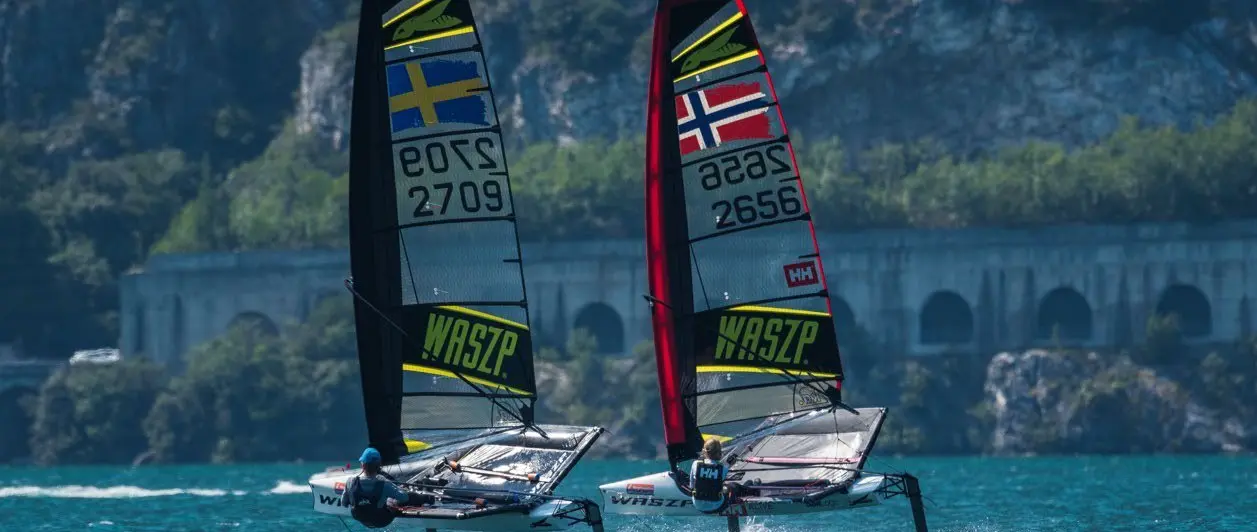
The immediate milestones are the 1 December RaceHub entry opening, the subsequent general entry stage for eligible Open Championship sailors and the 15 February early-fee deadline. Competitors should verify the current WASZP Games official information before making commitments and should look for any amendments affecting fleet capacities, venue allocations or support vessels. The original photograph accompanying this report shows a genuine WASZP fleet sailing on Garda in an earlier season; it is not an image of a 2027 race that has yet to occur. The newly published Notice of Race turns the event from a broad homecoming announcement into a practical sporting programme that sailors can begin preparing for now.
Explore related Leisure Boat Guide reporting
- World Sailing Approves 2027 Para Classification Rules and RS Aero Class Status
- Ryde School Wins RYA Schools Match Racing Title with Eight Straight Victories
- Angel of the North Team Racing Returns to Derwent Reservoir on November 28–29
- RYA Youth Nationals Set Weymouth 2027 Dates for Dinghy Fleets
Primary reporting and image credit
Primary manufacturer and organiser source(s): https://waszp.com/news/waszp-games-2027-notice-of-race/. © WASZP / Anna Suslova. Original Lake Garda foiling-fleet photograph on first-party 2027 Games notice page, not a 2027 event-day image. Image is used only for correctly attributed factual editorial coverage and never represented as open-licence stock photography.