
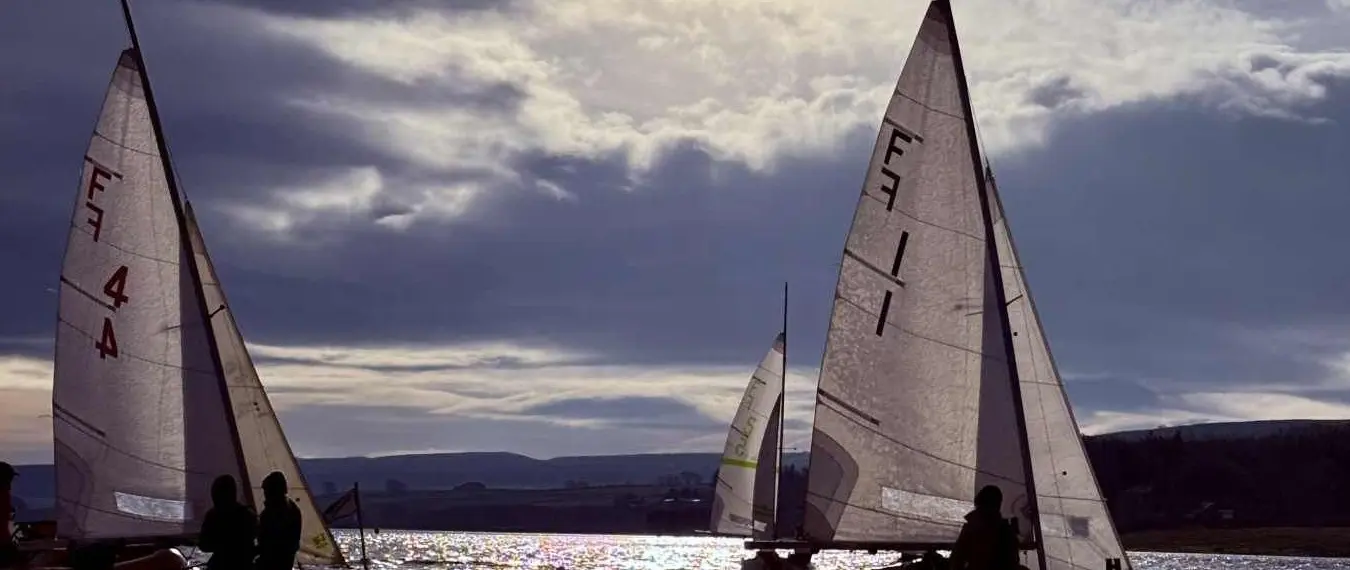
The British Universities Sailing Association has confirmed that the Angel of the North team-racing weekend will return on 28 and 29 November 2026, with sailing based at Derwent Reservoir Sailing Club and social activities arranged in Newcastle. The organiser’s official event listing names Durham and Newcastle university sailing representatives as the people responsible for the programme and provides a registration link for interested teams. This is a genuine forthcoming small-dinghy event, not a result from racing that has already happened. For university sailors, short-course team racing provides an opportunity to practise close-quarters rules, tactical coordination and rapid decision-making in boats smaller than twelve metres. The weekend also depends on the volunteers, race officials and safety crews who organise activities on a reservoir during a late-autumn period when weather conditions may change quickly.
A confirmed two-day fixture in the north of England
BUSA’s original event notice identifies Saturday 28 and Sunday 29 November and places on-water racing at Derwent Reservoir Sailing Club near Blanchland and Consett. It also says that evening social activity will take place in Newcastle, which is a separate location from the sailing venue. Participants should not confuse the social programme with an overnight sailing arrangement at the reservoir. The event is organised by representatives from Durham and Newcastle, and the public listing provides contacts for questions and registration. Those facts support a clear programme preview, but they do not confirm the number of entries, the final race format or the finishing order. Teams should consult the formal notice of race and any later sailing instructions before making operational or travel decisions.
Team racing is not ordinary fleet racing
In fleet racing, competitors usually concentrate on how their own boat finishes against the wider field. Team racing adds the responsibility of helping teammates achieve a better combined result, sometimes through tactical positioning that appears counterintuitive to someone watching only one boat. Skippers and crews have to understand the racing rules, communicate quickly and identify how an opponent’s movement affects the overall team position. Events often use short races, but the exact number of boats and scoring format must come from the organiser’s documents for the specific weekend. It would be inappropriate to invent the 2026 Angel’s race count or claim that every university uses the same team configuration. The essential appeal is the combination of individual boat-handling ability and collective tactics.
Why small dinghies are suitable
Small sailing dinghies respond quickly to changes in wind, body position and helm movement, making them well suited to short-course racing and close tactical exchanges. The relatively compact hulls also allow clubs to run repeated races when enough organisers and support craft are available. The drawback is that manoeuvres can happen quickly, leaving little time to correct a poor decision. Competitors need a solid understanding of right-of-way rules and the space required for safe tacking, gybing and mark rounding. The choice of class and rig should follow official event instructions. BUSA’s brief listing confirms the fixture but does not identify the exact boats to be used, so participants should check whether the organisers supply a fleet or require teams to bring their own equipment.
The reservoir setting changes the challenge
Derwent Reservoir is an inland sailing venue, so participants should be prepared for conditions that differ from coastal racing. Wind can be affected by surrounding terrain, and shifts or lulls may alter a race in a short distance. Water temperature in late November can also be significant, even when the weather ashore feels manageable. Crews should arrive with appropriate thermal protection, footwear and buoyancy equipment, and they should follow the club’s launching and recovery arrangements. The absence of ocean swell does not make an inland venue free from risk. A sudden wind increase, poor visibility or an equipment failure can still demand a prompt response. The organising authority should apply its established safety procedures and decide whether a course remains suitable for the participants.
Starts and first tactical decisions
A team-racing start is important because each boat’s position affects its teammates’ options. Sailors may need to judge not only the line bias and time remaining but the relative position of opposing boats. That creates opportunities for tactical cooperation, but it also increases the risk of congestion and rule infringements. Crews should practise maintaining control at low speeds and responding appropriately when another boat changes course. Excessive manoeuvring just before the start can be counterproductive if it causes damage or penalties. Competitors should follow the current racing rules and any event-specific changes. A good start is one that helps the team establish useful positions without creating a situation that its boats cannot manage safely.
Clear communication within each boat
University crews frequently include sailors who have developed their skills through different clubs, classes and training programmes. When they race together, consistent communication can be more valuable than assuming everyone interprets the same situation identically. A helm and crew should agree how tactical calls will be made, who will look for approaching competitors and when a manoeuvre is confirmed. Abrupt or ambiguous instructions can lead to fouled sheets or a poorly executed gybe. Teams should also know how to recover from a mistake without becoming distracted by criticism. Such skills are transferable to ordinary recreational sailing, where clear teamwork helps during docking, sail handling and unexpected changes in weather.
Fair racing needs effective umpiring
Team racing can involve decisions about rule compliance that are more frequent and complex than in some general club races. Qualified umpires and race officials therefore have an important role when the event uses an umpired format. BUSA’s public announcement does not identify the full umpiring team or the precise procedures for 2026, so no unsupported claims should be made about those appointments. Competitors should review the official notice of race and sailing instructions to understand how incidents, penalties and protests are handled. Good sportsmanship matters especially in close racing, where participants may be under pressure to gain a small positional advantage. The aim is competitive and skilled sailing within clear rules, not aggressive behaviour that endangers another crew.
Supporting teams ashore
The sailing weekend will require more than the people sitting in racing boats. Shore teams may help with launching and retrieval, checking equipment, organising boat rotation and making sure participants are accounted for after races. Safety boat crews need reliable communication and a clear procedure for assisting sailors. The club must also manage parking, boat storage and access to changing facilities for visitors. University teams should nominate someone to coordinate logistics and monitor official updates so that competitors are not relying on unverified messages. The smaller practical tasks can influence the success of the weekend as much as the quality of the competition. Clear responsibilities reduce delays and help the organisers focus on safe and fair racing.
Travel between Derwent and Newcastle
The organiser’s announcement separates the reservoir venue from the Newcastle social programme. That means participants should plan transport between the two locations and not assume that all activities are within walking distance. Check where vehicles can be parked and whether there are restrictions on trailer or equipment storage. Anyone taking part in evening activities should arrange safe transport and remember that sailing may begin again the following morning. Social activity is an important part of the university sailing community, but it should never impair a competitor’s judgment or ability to operate a boat safely. Teams should also consider the impact of cold and fatigue after a long day on the water when planning their evening and next-day schedule.
What new team members can gain
A weekend such as the Angel of the North can be especially useful to sailors progressing from introductory university sessions to more demanding competition. Watching experienced teammates can help newer participants understand why boat positioning matters and how the crew’s role changes through a tactical exchange. Competitors may also meet sailors from other universities and see different approaches to training and preparation. That learning depends on a supportive atmosphere and appropriate supervision. A team should not place someone in conditions beyond their competence simply to complete an entry list. Structured feedback after each race can help participants improve without making the event unnecessarily intimidating for those still gaining experience.
Equipment preparation for November conditions
Before travelling, a team should confirm that all required sails, rigging and personal equipment are complete and in sound condition. Check buoyancy aids, thermal clothing, gloves, footwear and any club-approved protective items. If boats are supplied by the organiser, participants still need to understand their rigging and safety features before competing. Crews should be prepared for cold hands and reduced dexterity, which can make line handling more difficult. Spare dry clothing and a sensible plan for warming up between races are practical necessities. A coach or team captain should also understand how to respond if a participant becomes unwell or unable to continue. Good preparation does not remove all risk, but it makes routine problems less likely to escalate.
The result is still unknown
The BUSA listing establishes the dates, venue and organisers of the 2026 Angel of the North. It does not establish which universities will finish first or whether every scheduled race will be sailed. Weather, equipment or organisational factors may affect the final programme. The appropriate place to obtain results is the official organiser’s scoring or post-event report once it becomes available. A published preview should therefore focus on the confirmed fixture and the value of the event rather than predicting winners. Even a race that is shortened or altered because of conditions can provide useful experience, provided those decisions follow the authority’s safety procedures.
An important date for university dinghy sailing
Angel of the North 2026 gives Durham, Newcastle and visiting university sailors a late-November opportunity to practise competitive small-boat team racing at Derwent Reservoir. The event’s value lies in the technical skills, collective decision-making and friendships built around the sailing, alongside the responsibilities of running a safe sporting programme. The organisers have confirmed the two-day fixture and published registration information. Teams should make final arrangements using current official instructions rather than assume every detail is settled by a brief online notice. Until the races are complete, results and attendance remain unverified. What is certain is that the northern university sailing calendar has an upcoming fixture aimed squarely at the dinghy-racing community.
Original industry sources and image credits
Reporting based on Original first-party angel dated product or event announcement with direct verifiable facts.
Lead image: Original British Universities Sailing Association Angel of the North dinghy photo, archival event illustration not taken at the upcoming 2026 race. © British Universities Sailing Association and original event photographer.. Original supplier image.