
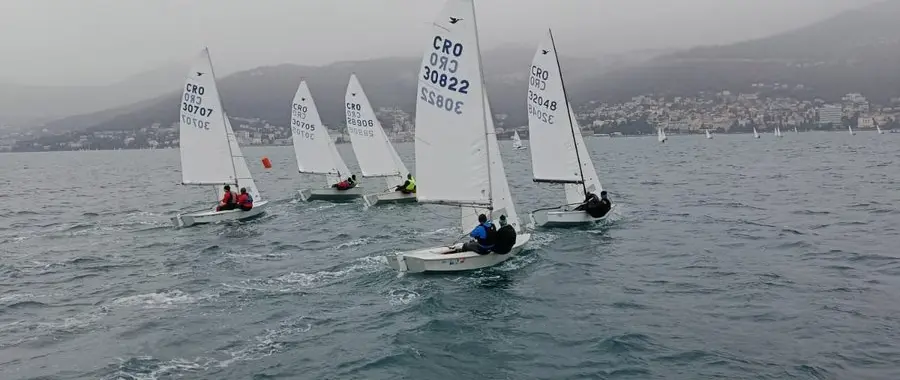
Croatia's 2026 Snipe sailing season concluded at the ACI Cup in Opatija, where an unsettled weekend allowed the fleet to complete three races on Sunday 15 November after strong winds prevented racing the previous day. The Snipe Class International Racing Association's official regatta report, published on 16 November, says Yacht Club Croatia hosted the event in Kvarner Bay, bringing together competitors from the Snipe, ILCA and Optimist classes. Saturday's Bora exceeded 23 knots and kept Snipe sailors ashore; Sunday's Tramontana arrived with heavy cloud and unusually cold conditions, but race organisers were able to complete a short programme. This is a verified account of the conditions and races completed, not a source for inventing final trophy winners: the association's summary does not name an overall Snipe champion in its explanatory text. For small-boat owners, the weekend is an instructive example of how local weather and sound race-management decisions shape a regatta.
An autumn championship on the Kvarner coast
Opatija lies on Croatia's northern Adriatic coast, with the Kvarner Bay providing a striking but meteorologically demanding setting for sailing. Yacht Club Croatia served as the host of this edition of the ACI Cup, and the association describes the event as the end of the country's 2026 Snipe racing calendar. That timing is important: late-autumn racing can differ significantly from warm summer club events, with shorter daylight, colder air and potentially sudden winds. The fact that multiple dinghy classes attended also increases the demand for clear shore arrangements and suitable racing areas. The source confirms the class participation but does not provide a complete numerical count of entrants in each fleet, so such figures should not be inferred from a photograph.
Saturday's Bora stopped Snipe racing
The official report describes Saturday's autumn Bora as exceeding 23 knots and says the Snipe fleet did not race that day. This is a concrete safety-related outcome, not an indication that the sailors lacked enthusiasm. Strong gusty conditions can make launching, tacking and returning to the beach particularly challenging for small dinghies, especially where wind interacts with coastal terrain. Conditions that are acceptable for one boat class may not be suitable for another. Race committees have to consider the whole operation, including less experienced crews, safety boats and access to the shore. The decision to remain ashore illustrates why a published schedule cannot be treated as a promise that racing will occur regardless of weather.
The Tramontana brought a different kind of challenge
Sunday began with a Tramontana, which the Snipe association says was accompanied by heavy clouds and unusually cold weather rather than the clearer conditions sometimes associated with that wind. The report does not provide a certified detailed weather log, wave-height series or the course-by-course wind readings. Its useful finding is simpler: the conditions differed from what sailors might normally expect, yet were manageable enough for racing to proceed. Crew preparation therefore needed to account for cold exposure as well as boat handling. Small dinghies offer limited shelter, so the ability to stay warm and keep fingers sufficiently mobile to control ropes and fittings can affect both comfort and safety.
Three completed races give the event a sporting record
The official account confirms that the fleet completed three races on Sunday. That salvaged a meaningful competitive programme after Saturday's cancellation, although the original report does not state the complete scoring system or a final named winner in its narrative. A three-race event can reward consistent starts and clean boat handling, but it also leaves fewer opportunities to recover from an early mistake than a long championship series. It is therefore inappropriate to invent discards, points or finishing positions from the number of starts alone. Sailors seeking their personal scores should consult the linked official results rather than rely on a general editorial summary. What can safely be reported is that the regatta did take place and that organisers ran three Snipe races in the available conditions.
Different dinghy classes share the event setting
The ACI Cup attracted Optimist, ILCA and Snipe sailors, according to the class association. These boats differ in crew arrangements, handling characteristics and the experience levels often represented in their fleets. The single-handed Optimist and ILCA fleets have different rig and hull profiles from the two-person Snipe, which makes a multi-class regatta a useful demonstration of the variety available within small-boat sailing. Managing several fleets requires attention to starting sequences, course layouts and safety resources, although the source does not specify exactly how each class was scheduled. The central verified fact is that sailors from several established dinghy disciplines came together for the weekend at the same host venue.
The Snipe remains a two-person racing dinghy
A Snipe is a traditional two-person one-design dinghy, meaning a helm and crew share the physical and tactical work. That gives it a different operating rhythm from a single-handed racing boat. The helm concentrates on steering and tactical position while the crew helps manage balance and sail controls, although duties vary with conditions and individual technique. The class's international reach and emphasis on competitive racing make it a familiar platform at regional and international events. None of those general characteristics proves what particular setup a team used at Opatija. The class rules, actual boat condition and the decisions made by the crew still influence performance in a specific race.
Crew coordination becomes critical in changing wind
Strong and shifting winds can demand fast, clear coordination between two sailors in a compact dinghy. A crew may need to change body position, adjust sail controls or communicate a hazard with little warning, while the helm considers the best route and nearby boats. Cold conditions can make that communication harder if people are tired or distracted. An experienced pair should agree on procedures before launching, particularly how to respond to a sudden increase in breeze or a problem with control lines. This is general seamanship analysis rather than a claim that a particular Opatija crew made a mistake. The official report contains no identified accident, and an editorial article should not manufacture one to make the story more dramatic.
Race officers must balance opportunity and safety
When a regatta loses an entire day to adverse weather, organisers face pressure to create a worthwhile programme in the time remaining. That pressure should not eclipse safe decision-making. The ACI Cup's three completed Sunday races show that sailing was possible after the earlier postponement, but the association does not disclose the race committee's detailed internal deliberations. An appropriate reading is that the conditions allowed some activity and that the event reached a sporting conclusion. Small clubs planning their own autumn regattas can learn from the wider pattern: contingency planning, clear communication with competitors and the ability to postpone are essential parts of a successful event, not signs of weakness.
Cold weather demands sensible equipment choices
Protecting sailors from cold, wet conditions involves more than wearing a thicker jacket. Clothing should allow movement while maintaining insulation when splashed, and hands and feet require attention because dexterity and footing are important aboard a dinghy. Personal flotation equipment must be suitable for the activity and properly fitted, and the crew should understand how to recover after a capsize. Race organisers may also need to consider how quickly a sailor in difficulty can receive support. The ACI Cup report specifically describes heavy cloud and unusual cold; it does not include measurements of every participant's clothing or recovery plan. Those details remain sensible issues for clubs and sailors to address before future late-season racing.
A shared club venue can support more than one fleet
Hosting Snipe sailors alongside ILCA and Optimist participants creates opportunities for different generations and skill groups to see each other's racing. It can also place additional demands on shoreside space, launching and organisation. A local club's ability to coordinate several groups is relevant to the health of recreational sailing because the same facilities may serve beginners, experienced racers and families across a season. The original article does not supply a formal economic study or calculate the event's contribution to Opatija tourism. The value that can reasonably be identified is sporting and organisational: the regatta brought different dinghy communities together and completed racing despite a difficult weather window.
The conclusion of the Croatian Snipe season
The association explicitly describes the ACI Cup as the end of Croatia's Snipe racing season for 2026. That is a seasonal marker rather than the retirement of a class or the end of sailing activity in the region. After the last event, clubs may turn toward maintenance, planning and preparation for the next calendar, but the source does not list every future Croatian regatta or confirm a national ranking outcome. A measured report can describe the close of the season while leaving next year's programme to official announcements. Sailors may also use the quieter months to review equipment wear and training needs before returning to competition.
The result is more than a photograph of rough weather
The image accompanying this article is an authentic ACI Cup photograph published by the Snipe class association with its November 2026 report. It identifies the actual event rather than an unrelated coastal boat or a hypothetical future competition. Nevertheless, a photograph alone cannot establish peak wind strength, the number of races completed or the final scoring; those facts must come from the organiser's written account and official results. The independently confirmed story is that Saturday's Bora exceeded 23 knots, Sunday brought a cold Tramontana and three races were completed. That combination makes the report useful as a real-world example of small-boat racing when conditions force organisers and sailors to adapt.
What clubs can take from the ACI Cup
The Opatija weekend demonstrates that a successful regatta is not one in which every scheduled race takes place regardless of the conditions. A better test is whether organisers protect participants, communicate realistically and make sound use of suitable weather when it arrives. The Snipe, ILCA and Optimist fleets all depend on clubs that can provide appropriate facilities and competent support, and the ACI Cup offers an illustration of that work. The final event result should be read from the official Snipe class report and linked scoring, without assuming a winner from an incomplete secondary account. For Leisure Boat Guide, the substantive development is a verified competitive close to Croatia's 2026 Snipe season and a clear reminder that weather, preparation and responsible race management matter as much as the pursuit of a trophy.
Explore related Leisure Boat Guide reporting
- Nineteen Teams Gather at Spinnaker for 2026 Women’s Team Racing Nationals
- Ryde School Wins RYA Schools Match Racing Title with Eight Straight Victories
- World Sailing Approves 2027 Para Classification Rules and RS Aero Class Status
- Angel of the North Team Racing Returns to Derwent Reservoir on November 28–29
Primary reporting and image credit
Primary manufacturer and organiser source(s): https://snipe.org/regatta-reports/2026-regatta-reports-regatta-reports/aci-cup-2/. © Snipe Class International Racing Association / ACI Cup event photographer (unnamed on class page). Genuine original 2026 Opatija Snipe regatta image sourced from the class report. Image is used only for correctly attributed factual editorial coverage and never represented as open-licence stock photography.