
The International Musto Skiff Class Association has opened its 2026 Class Survey, inviting not only current dinghy owners but also former sailors and people considering joining the fleet to contribute to the class's future direction. The association's announcement, published under its own byline on 21 November 2026, describes the annual consultation as an important way for its international committee to understand what has worked well, where improvements are possible and which priorities participants want to see addressed. The class says the survey tradition dates back to 2003, giving the current exercise a history far longer than a one-off social-media poll. What has been announced is a consultation, not its results. Responses have yet to be evaluated, and no rule change, regatta venue decision or equipment modification should be presented as a consequence of this survey until the association publishes a verified decision.
Why the class is consulting again
An international dinghy fleet has to balance competitive racing, accessibility, training, equipment rules and the social experience that encourages people to stay involved. Feedback from owners can help the international committee recognise issues that may not be evident from championship results alone. A new sailor may be more concerned about initial handling and finding a suitable second-hand boat, while a highly experienced racer may focus on rules, major event formats or consistent measurement. Both perspectives can be useful if the class wants to grow without losing established strengths. The association's announcement explains the broad purpose of the survey but does not publish an exhaustive list of questions, so an editorial article should not invent a ballot on a particular technical change.
Feedback is invited beyond current owners
The class explicitly welcomes people who used to sail a Musto Skiff and those who are thinking about becoming involved. That is significant because consultations limited to existing members can miss the obstacles encountered by people who never make the first purchase or who leave after a short time. An interested dinghy sailor may want to know whether there are nearby fleets, opportunities for supervised practice or equipment suitable for different experience levels. The class can learn about these questions only if it listens to people outside the most active racing group. The announcement is an invitation to participate, rather than proof that any one barrier has been identified or solved.
A survey that has run since 2003
The association says its class survey has been undertaken annually since 2003. A long-running consultation can be useful for tracking changing attitudes, although interpreting trends requires care. Questions, response rates and the makeup of participants may differ across years, so a rise or fall in a percentage is not automatically a direct change in the whole class population. The public announcement does not disclose how many responses the 2026 survey has already received, and no total should be invented. The value of continuity is the possibility of asking comparable questions over time and using them alongside other evidence, such as event participation or membership records. A good committee also considers who may be underrepresented among those who reply.
The 2026 World Championship offers an obvious point of reflection
The association highlights its World Championship in Carnac, France, as a significant event of the preceding 12 months. Major regattas can reveal strengths and weaknesses in the competitive programme, from course management and communication to travel expense and accessibility. But a championship's sporting outcome is not the same as a participant satisfaction survey. A sailor may be pleased with their result yet still suggest practical improvements, or may appreciate excellent organisation despite a difficult week on the water. The current class announcement does not state that Carnac organisers failed in any particular respect; it cites the event as one of several activities whose experience can inform the consultation. Reporting should preserve that distinction.
National championships broaden the perspective
The class also points to national championships held in the United Kingdom and Australia during the past year. These provide different regional experiences from a world event and can expose variations in travel distances, local fleet numbers and volunteer resources. A policy that works well for a large European regatta may not translate unchanged to an association with boats scattered across a wider geographic area. The international committee can therefore benefit from feedback from several national fleets, provided their views are interpreted in context. The announcement does not publish individual country rankings of survey preferences. It simply invites the wider class community to participate in a common exercise.
Lake Como training is another part of the season
A regatta training week at Lake Como is among the activities cited in the 2026 survey announcement. That illustrates the role of structured practice beyond formal championships. In a demanding single-handed dinghy, technique and confidence may improve when sailors can practise with others under informed guidance, with time to discuss controls and handling without the pressure of a race result. The consultation may help the class assess what forms of training participants value, although the official statement does not claim that a particular course will be expanded or repeated. Owners looking to develop skills should continue checking the class's published event calendar rather than assuming any future training arrangement has already been approved.
A small-boat class is built through local activity
For many members, the most important class experience is not the world championship but whether they can launch and sail regularly near home. Active local groups help sailors share knowledge about rigging, repairs, weather decisions and club procedures. They may also provide a practical route for interested people to try a boat before buying one. The survey invitation is a chance for the international committee to hear about the support needed at this everyday level. The association's current press statement mentions well-attended event circuits across core fleets but does not provide a definitive count of active sailors in each country. The presence of organised racing does not mean that every region has the same access to suitable water or equipment.
Class rules are sensitive governance decisions
One-design racing depends on a shared understanding of which equipment changes are legal. Proposals affecting sails, fittings or measurement can alter cost and competitiveness, making consultation particularly valuable when technical matters arise. Yet the 2026 announcement does not specify that a new technical amendment is under vote. It would be misleading to use a historical debate from another year as if it were a confirmed current ballot. If the association subsequently proposes a change, owners should read the exact wording, effective dates and transitional arrangements. A class survey may identify concerns or preferences, but formal rules should be changed only through the procedures provided in the class constitution and applicable governing documents.
Existing sailors may want continuity as well as change
Consultations can produce a natural tension between ideas that make a boat more appealing to newcomers and features that long-time members value. A more flexible equipment rule might help someone maintain an older hull, for example, but it could also raise questions about competitive advantage or costs. The point is not to assume that change is always good or always harmful. Evidence, technical review and clear communication help a class choose which proposals deserve action. The current survey has not yet produced findings that would justify a definite editorial position. A fair account of the invitation can encourage thoughtful participation without framing any group of sailors as an obstacle to progress.
Prospective members face questions of cost and learning
A high-performance single-handed skiff can attract sailors looking for exciting racing, but ownership involves more than the purchase price. Training, storage, protective equipment, sails, travel and routine repairs all contribute to the real cost of participation. A prospective member may also need the opportunity to try the boat with knowledgeable assistance before deciding whether it suits their skills and local sailing area. The association says it wants to understand how to attract and support new members, but it has not released a definitive list of obstacles from the latest survey. Those practical factors are useful subjects for future investigation, not results that can be attributed to an uncompleted consultation.
The class has a busy 2027 programme ahead
Separately from the survey, the Musto Skiff class has confirmed a July 2027 World Championship at Lake Garda. That venue announcement and the survey are distinct pieces of official class business. One sets a date and host for a future sporting event; the other invites participants to express views on broader class priorities. Feedback gathered this season may inform long-term planning, but there is no basis to assume it will change the already announced event or automatically decide future championship locations. The distinction matters to members: they can prepare for the confirmed calendar while participating openly in a process whose eventual recommendations have not yet been declared.
How a useful consultation should be followed up
After the survey closes, readers should look for an official summary of responses and, where appropriate, explanations of which recommendations the international committee intends to pursue. An association can strengthen trust by making clear which matters are within the committee's authority, which require member votes and which depend on outside organisers or suppliers. The current release does not confirm a closing date in the material reviewed here, so it would be wrong to announce an invented deadline. Sailors interested in contributing should check the official class channels for the live form and any eligibility rules. An invitation alone is a useful news item, but accountability lies in how the association interprets and communicates what it eventually hears.
The immediate development is the invitation itself
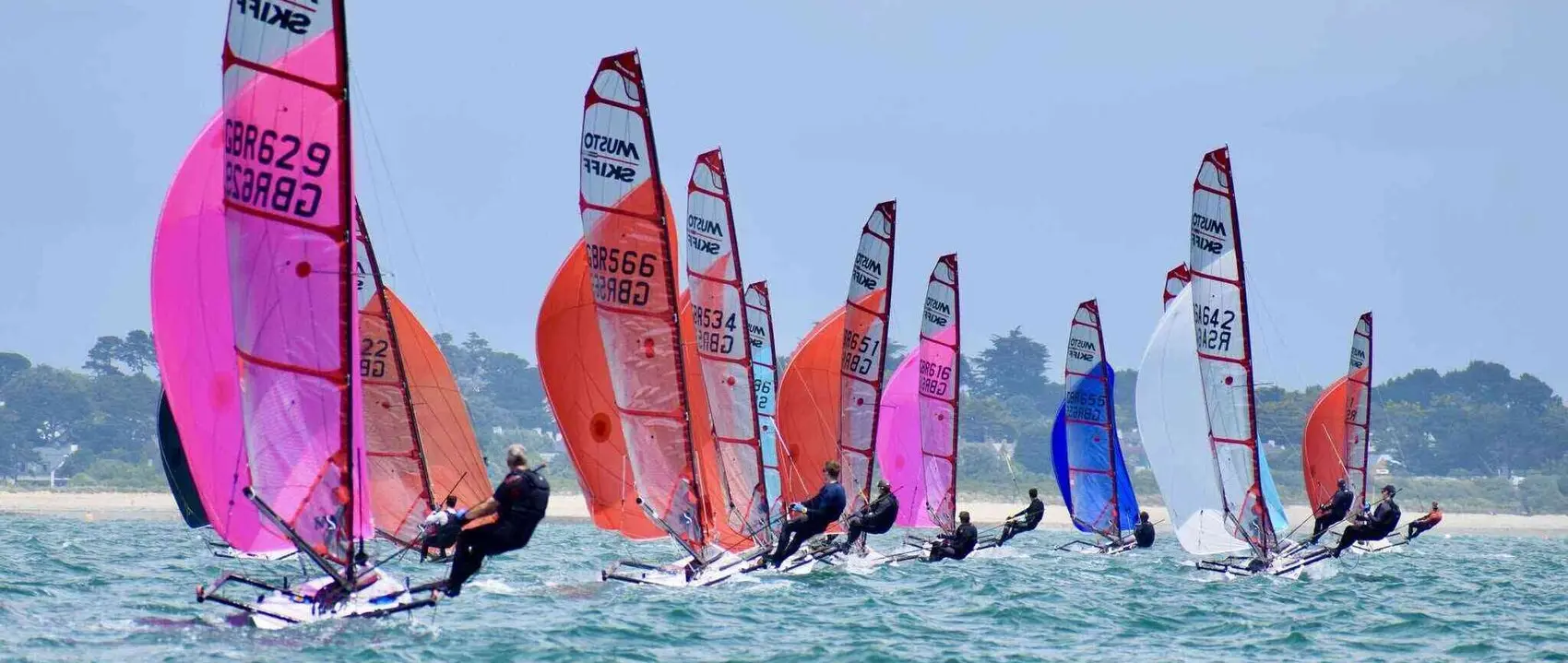
The 2026 survey is open to active, former and prospective Musto Skiff sailors, with the association asking the community to reflect on a season that included Carnac, national championships, Lake Como training and regional racing. No result, rule revision or financial commitment has been announced through this notice. The first-party lead image used in this report comes from the German Musto Skiff national class association's 2026 pre-championship sailing coverage; it illustrates actual Musto Skiff racing but is not a photograph of survey participants voting. The value of the news is that a class with a two-decade consultation tradition is again asking how it can improve, an important governance exercise for a small-boat community whose future depends on people continuing to sail and support it.
Explore related Leisure Boat Guide reporting
- WASZP Gains World Sailing Class Status After 2026 Governance Reform
- WASZP Games Publishes Two-Block 2027 Lake Garda Notice of Race
- OK Dinghy Joins Palma’s 2027 Princesa Sofía Regatta Programme
- Ryde School Wins RYA Schools Match Racing Title with Eight Straight Victories
Primary reporting and image credit
Primary manufacturer and organiser source(s): https://www.sail-world.com/news/301740/Whats-next-for-the-Musto-Skiff-Class. © Deutsche Musto Skiff Klassenvereinigung e.V. / photographer not named on the class page. Genuine 2026 Musto Skiff pre-championship sailing photo, not a survey-result photograph. Image is used only for correctly attributed factual editorial coverage and never represented as open-licence stock photography.