
Thomas Hansson-Mild heads the final OK Dinghy World Ranking release of 2026, with Ben Flower and Ulli Kurfeld in second and third positions respectively, according to the OK Dinghy International Association's official ranking notice. The November list, designated No. 62, encompasses 677 sailors from 21 countries, a substantial international pool for a compact, single-handed racing class. Although the association published the explanation on 29 October, the standings apply to its November ranking release, following the European autumn regattas. The news is not an additional world championship victory or a new boat launch. It records the evolution of performance across a defined set of events and offers small-boat racers a useful view of how consistent results can influence an international leaderboard.
Hansson-Mild retains the leading position
The association's published summary identifies Hansson-Mild at the head of the list rather than announcing a newly won head-to-head race. That distinction matters because a ranking combines results under a scoring system, while an individual regatta has its own race series, entries and championship title. The notice says Hansson-Mild maintained his advantage after autumn events in Europe. A sailor can therefore lead an international list even without winning the latest particular championship. For club competitors, that is a reminder to look at consistency, qualifying events and the period covered by the calculation rather than treating any single finish as a complete measure of performance. Rankings are useful when their underlying methodology remains transparent and comparable across venues.
Flower and Kurfeld move into second and third
Ben Flower climbed one place to second in the November release, while Ulli Kurfeld also advanced one position to third. Those movements are small numerically but meaningful at the top of a competitive table. They indicate that recent results have changed the balance between closely placed sailors, without proving that a single boat or equipment configuration has become intrinsically faster. The association has not claimed such an equipment explanation in its announcement. A fair interpretation is that the revised ordering reflects the class's published ranking process. To understand the margins, sailors should consult the full standings rather than extrapolating points differences from the statement that someone rose one place.
Six September and October events were included
Ranking release No. 62 incorporated six events from September and October. One was the OK Dinghy European Championship at Bruinisse in the Netherlands, where Nick Craig won ahead of Pim van Vugt and Hansson-Mild. That sequence is independently identified in the association's summary and should not be confused with the overall world ranking order. A championship winner can be outside the top three of a rolling list, just as a ranking leader can finish third at a particular event. The different results reflect different questions: who performed best over one championship, and who has amassed the strongest ranking record within the defined system? Both contribute to understanding the strength of the fleet.
The Netherlands European result provides context
The Bruinisse European Championship is particularly useful context because it brought together competitors who also feature prominently in the world rankings. Nick Craig's first place, Pim van Vugt's second and Hansson-Mild's third establish a verified podium for that event. Those results can be discussed without inventing race-by-race wind conditions, boat settings or protest decisions absent from the official ranking summary. The diversity of results also shows why rankings need a series of events rather than a single snapshot. Conditions at different venues test sailors in different ways, while a long-term points table seeks a broader measure of competitive achievement. Readers interested in the championship itself should consult the full association results for detailed placings.
Stefan Hoffmann makes a major move
Germany's Stefan Hoffmann advanced 19 places to fourth, making him the biggest climber within the published top ten. A jump of that size is one of the striking details of the latest release, because it can rearrange expectations for future events. It does not establish a sudden increase in boat speed or prove that the sailor changed equipment; the association makes no such claim. Rather, the relevant news is the official position change after qualifying events were added to the calculation. For racers studying the table, sharp movements highlight the effect that a strong sequence of recent finishes can have within an international ranking programme.
Sean Cleary also rises sharply
New Zealand's Sean Cleary moved up 19 places to seventh, according to the same announcement. That places another international competitor among the prominent autumn movers, illustrating that the final ranking is not simply a count of European nationality entries. Individual sailors from outside Europe may still be affected by European regatta results and the way their qualifying scores compare. How easily sailors can travel to distant competitions also influences participation patterns, but the announcement does not provide a detailed national funding or travel-cost analysis. The grounded point is that the ranking encompasses an international field and records the New Zealander's strong upward movement after the autumn calculation.
Greg Wilcox returns to the leading ten
Former world number one Greg Wilcox is listed back among the top ten after climbing 11 places. The significance is not a new title but renewed prominence on the official ranking board. Experienced sailors can remain competitive across many seasons, especially in a one-design class where preparation, handling and tactical judgement matter repeatedly. That observation does not erase the importance of fitness or changing conditions. It simply places the official movement in a broader context familiar to club racers: accumulated experience and disciplined event preparation can continue to contribute to strong competitive outcomes. Rankings remain a snapshot and future events may change the order again.
The German Championship drew 75 entries
The official notice also refers to the German Championship at Ratzeburg, where André Budzien won from a fleet of 75 entries, ahead of Pim van Vugt and Cord Prignitz. A field of that size demonstrates meaningful national participation in a long-established single-handed dinghy class. Its result should be reported as the German championship outcome, not as a substitute for the world ranking itself. The number of entries is a verified organiser figure in the association's summary; no extra race totals or sailing conditions should be inferred. For an international ranking, a substantial national championship can contribute relevant results while also fostering the local fleet that supports regular weekend competition.
What 677 sailors and 21 nations suggest
The list's breadth is important because a class needs an active constituency to sustain major events and meaningful rankings. A table encompassing 677 people from 21 countries is evidence of a broad pool of participating helms, but not necessarily a count of all boats ever built, paid class members or sailors currently active every week. Those measures are different and would require their own data. A healthy ranking system also depends on fair access to qualifying events and consistent administration. Geography and travel can impose real costs on amateur sailors. The class's challenge is to maintain international competition without making local racing feel peripheral to the people whose clubs underpin the sport.
One-design racing places the helm in focus
An OK Dinghy is a single-handed sailboat, and its class rules constrain equipment so that racing revolves around preparation, boat handling and decisions. That does not make equipment maintenance irrelevant. Sail shape, spars, control systems and the condition of hull and foil surfaces can still matter, within what the rules allow. The ranking release does not link any particular sailor's position to a specific technical upgrade. As a result, the most responsible editorial use of this table is to examine competitive results and class participation, not to insert unverified brand claims. Someone purchasing a used OK Dinghy should check its measurement documentation and suitability for local conditions regardless of a famous sailor's standing.
Ranking positions are not permanent titles
A ranking is a dated calculation, not an award for all time. This is the last list released in 2026, but future events and recalculations can change it. An athlete's current place should therefore be quoted with the applicable release date, especially when comparing tables from different years. It is also sensible to avoid describing world-number-one status as a world championship result. The class's website separately maintains championship records, results and rankings, precisely because those categories tell related but distinct stories. Editors, race organisers and sponsors can support the sport by preserving that distinction in event programmes and reporting.
A full calendar continues beyond the rankings
The OK Dinghy International Association is preparing its 2027 calendar, including championships in different regions and the confirmed class opportunity at the Princesa Sofía regatta in Palma. That event calendar is a separate development from the final 2026 ranking table, although competitive sailors may plan future travel in light of their recent form. It would be wrong to assume that all 677 ranked sailors will participate in any one event, or that a ranking place automatically grants entry rights. Each regatta publishes its own eligibility and entry conditions. The useful connection is that a strong year-end list can offer a starting point for following which sailors return in the new season.
How to check the official results
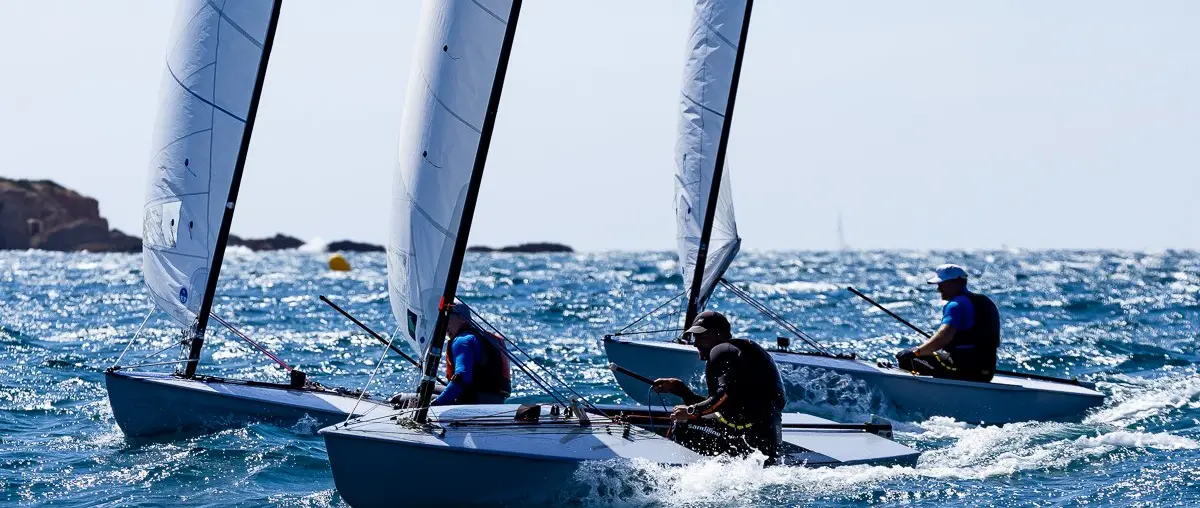
The definitive source is the association's No. 62 ranking announcement and linked standings. The image accompanying this report is an original association-sourced photograph of OK Dinghy racing at Bandol's 2026 Autumn Trophy, credited to Robert Deaves. It is a related autumn event image, not a portrait of Hansson-Mild accepting the ranking lead and not a photograph from an imagined November race. The confirmed facts are the leading three, the movements in the top ten, the six added events and the total pool of sailors. Those are sufficient to tell a significant competitive small-boat story without manufacturing a new result.
Explore related Leisure Boat Guide reporting
- OK Dinghy Joins Palma’s 2027 Princesa Sofía Regatta Programme
- WASZP Gains World Sailing Class Status After 2026 Governance Reform
- WASZP Games Publishes Two-Block 2027 Lake Garda Notice of Race
- World Sailing Approves 2027 Para Classification Rules and RS Aero Class Status
Primary reporting and image credit
Primary manufacturer and organiser source(s): https://okdia.org/news/international/thomas-hansson-mild-leads-last-ok-dinghy-world-ranking-of-2026/. © OK Dinghy International Association / Robert Deaves. Original 2026 Bandol Autumn Trophy OK Dinghy race photograph, a contextual autumn regatta not the ranking certificate. Image is used only for correctly attributed factual editorial coverage and never represented as open-licence stock photography.