
The Snipe Class International Racing Association has confirmed Porto Alegre as the venue for Brazil's 2027 Snipe National Championship, with the event scheduled from 22 to 30 January. The official class announcement published on 18 November 2026 identifies Veleiros do Sul as the host and provides routes to the event's notice board and registration form. It is a current planning announcement, not a report on a championship that has taken place. For a class built around two-person dinghy racing, confirmation of the venue and dates gives crews time to organise boat transport, prepare equipment and assess the sailing programme they wish to enter. The class has not yet published a definitive final entry list or a winner for 2027, so claims about numbers or results would be premature.
Veleiros do Sul provides the host setting
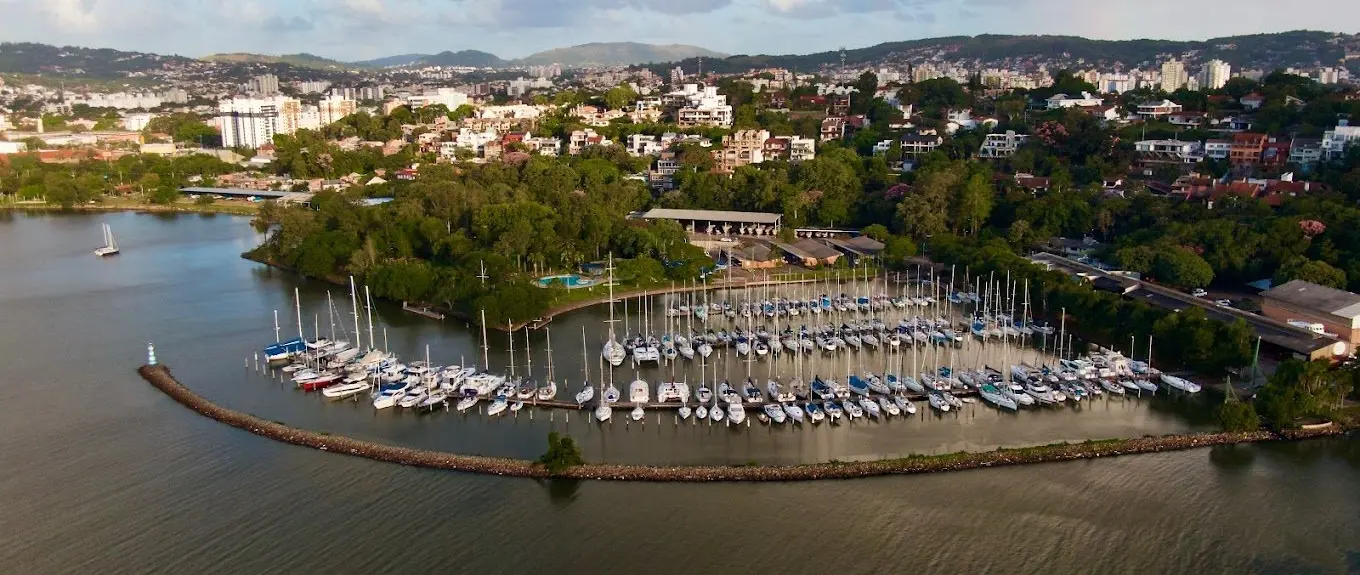
Veleiros do Sul is an established sailing club in Porto Alegre, in southern Brazil, and the association's notice links the 2027 championship directly to that venue. This gives competitors a concrete place from which to begin investigating launching, boat storage, parking and local accommodation. The aerial image used with this report is a genuine original photograph of the club site, included by the class with its November announcement. It shows the real host location, not a completed race from next January. A club's available facilities can influence how smoothly a major dinghy event runs, but the announcement does not specify every berth, ramp, storage area or service. Those details should be confirmed through the organisers as preparations develop.
Why the date window is useful information
A period from 22 through 30 January provides a substantial planning window for national-level competition, but it should not be mistaken for nine full days of racing. The current class notice gives the overall event dates without setting out the completed daily programme in the text reviewed here. Some days may involve registration, measurement, practice or administrative activity rather than racing; the definitive Notice of Race and sailing instructions will provide the authoritative schedule. Sailors who must book travel should allow time for delivery of boats, arrival formalities and the possibility of changes. That is especially important for dinghy owners whose equipment may travel separately from the people who race it.
The Snipe remains an accessible two-person racing format
The Snipe is a two-person one-design dinghy with an established international competition structure. Racing requires the helm and crew to coordinate sail handling, balance, navigation of the racecourse and tactical choices. The class attracts sailors of differing experience levels, though entry requirements for a national championship must be taken from the event documents rather than assumed. Because the boats compete under common technical rules, preparation and seamanship play important roles alongside the physical equipment. A crew considering its first larger event should ask whether it can practice consistently in conditions similar to those expected and whether it understands the class measurement rules applicable to its boat.
Logistics can dominate the first weeks of preparation
Registering for a championship is only one part of getting a dinghy onto a distant start line. Crews need a suitable trailer, working road lights, safe hull supports, protection for spars and sails and appropriate insurance. Boats transported between regions may face administrative or tax questions that depend on the journey and ownership arrangements. The organiser's official website should be the starting point for venue-specific instructions. No published estimate of transport cost can apply equally to a crew based in Porto Alegre and one travelling from another Brazilian state or overseas. A realistic budget needs to include time and a contingency for repairs or transport delays.
Registration links require current verification
The class announcement directs readers to a registration form as well as the event's notice-board communication channel. Such links are useful but should be checked for currency before submitting personal information or making payments. A social-messaging group can help share operational updates, yet it should not replace formal race documentation where rules, amendments or official notices are required. Participants should confirm deadlines and payment instructions from the actual organiser and read the data-handling terms of any registration service. The presence of a link does not guarantee that every application is accepted automatically, nor that all entrants have satisfied class or national-association requirements.
Fair competition depends on class compliance
One-design racing relies on an agreed set of technical restrictions and measurement methods. Owners should inspect the condition and legality of sails, spars, rudder, centreboard, hull and rigging before transporting a boat to a championship. A replacement fitting may be satisfactory for a casual club sail but could require further checking against class rules at a formal event. The 2027 Brazilian Nationals announcement itself does not announce a new technical rule or an exception for particular equipment. Competitors therefore need to consult the latest authoritative rules and any official championship measurement instructions. That preparation may prevent difficulties at the venue and helps ensure competitors race on a fair basis.
Conditions cannot be forecast months ahead
Porto Alegre's sailing environment is one of the reasons crews may be attracted to an event in the region, but weather on specific January 2027 race days cannot be established from a November 2026 calendar notice. Skippers should plan for variable wind and potential changes that affect boat balance, course choice and recovery arrangements. Race officers will determine whether conditions are suitable when the event begins. The class's published venue image is not a forecast and should not be described as representative of the upcoming championship weather. A prudent crew can learn about local sailing conditions from the host while remaining prepared for conditions outside the familiar range of its home club.
Crew partnership is central to Snipe competition
A good championship campaign depends on the relationship between helm and crew over many races and preparation sessions. When a boat is sailed by two people, communication during manoeuvres, mark roundings and changes in wind pressure affects performance and safety. The partners need a shared understanding of priorities and a way to discuss mistakes constructively. The regatta's national status does not change those fundamentals; it simply raises the importance of consistency across a more demanding event. A crew may be tempted to focus entirely on equipment upgrades, but time spent practising starts, boat handling and recovery procedures can provide more useful preparation than a last-minute untested change.
A national championship strengthens local club activity
National championship venues do more than accommodate visiting competitors. They can give a host club's volunteers, race officers and younger sailors experience in supporting a substantial event. A visible racing programme may also encourage local sailors to consider the class or move from recreational participation to structured competition. Those are potential benefits, not documented economic outcomes of this particular championship. The November notice does not contain a financial impact report, attendance forecast or detailed volunteer roster. It is appropriate to recognise the club's role while avoiding invented statistics about tourism or membership growth. The value of such events is built through competent organisation and a welcoming environment for the fleet.
The Brazilian fleet has an international context
Brazil is an important part of the Snipe's international racing community, and sailors from the country regularly appear in class regatta reporting. The 2026 season also included notable competitive results at events in Niterói and elsewhere. Those historical results can provide background without implying that the same crews have registered or will dominate the 2027 Nationals. Participation and eligibility need to be established separately for the January event. The class's international governance and rules create continuity between national fleets, but national championship organisers still make their own practical decisions within the authorised framework. Prospective foreign participants should verify whether the event accepts their entries before committing to travel.
Safety arrangements remain an organiser responsibility
A championship involving many small dinghies needs appropriate safety cover, reliable communications and clear procedures for boats returning to shore. Weather limits, rescue-boat placement and race postponement decisions should be planned for the local venue rather than copied from another regatta. The current class notice does not publish the complete safety plan, so no account should claim that particular rescue boats or medical facilities have been assigned. Competitors still have personal duties to carry suitable flotation equipment, maintain their boats and respond to race-committee instructions. The presence of a national title does not justify racing in conditions beyond what the boat, sailors and available safety organisation can reasonably handle.
A successful event begins before the first start
For the host, the months before January provide time to establish registration processes, equipment controls, race management and communication with visiting sailors. For competitors, the same period is an opportunity to inspect boats, train and organise a realistic journey. Clubs wishing to support less experienced entrants can help them understand the administrative steps without pretending that registration alone guarantees a successful championship. Good preparation also leaves room for unforeseen changes, whether a repair issue or an amended race notice. The value of publishing dates early is that these tasks can be handled before the pressure of race week arrives.
The confirmed story is the championship announcement
The official Snipe event listing establishes the host club, city, dates and published entry-information channels. It does not yet establish final entrants, race results, conditions or champions. Leisure Boat Guide's coverage consequently focuses on what owners and crews can do with reliable information now. The aerial first-party venue photograph helps locate the real club without misleading readers about a race still in the future. For the wider small-boat community, the January 2027 Brazilian Nationals is a useful international calendar milestone, illustrating the role of a local club in sustaining an established two-person dinghy class.
Explore related Leisure Boat Guide reporting
- Hansson-Mild Tops Final 2026 OK Dinghy Ranking Ahead of 677 Sailors
- ACI Cup Ends Croatia’s 2026 Snipe Season With Three Races in Opatija
- OK Dinghy Joins Palma’s 2027 Princesa Sofía Regatta Programme
- WASZP Games Publishes Two-Block 2027 Lake Garda Notice of Race
Primary reporting and image credit
Primary manufacturer and organiser source(s): https://snipe.org/events/brazilian-nationals-2027/. © Snipe Class International Racing Association / Veleiros do Sul, original venue photographer unnamed. Actual Porto Alegre sailing-club venue from class notice, not a 2027 race. Image is used only for correctly attributed factual editorial coverage and never represented as open-licence stock photography.