
Parks Canada explains Trent–Severn paddling and lockstation camping. Plan Ontario canoe holidays with seasonal navigation checks, route safety and permits. This independent guide is based on official government or park-operator information and must be used with up-to-date local access and weather notices.
A waterway designed for exploration
Ontario's Trent–Severn Waterway links a succession of rivers, lakes, channels and historic locks, making it an appealing destination for travellers in canoes, kayaks and smaller leisure boats. Parks Canada's paddling guidance describes several distinct environments rather than one continuous stretch of identical water. That is an essential point for anyone arranging a holiday: a quiet channel, a larger lake and a reach beside a busy navigation lock demand different skills. The official site also describes overnight possibilities at many lockstations, giving visitors the chance to build a trip around more than a single afternoon launch. At the end of November, however, published visitor guidance must not be confused with a promise of operational lock service.
Paddling and powered boating share the route
The Trent–Severn is both a heritage site and a working recreational navigation. Paddlers should expect to encounter motor cruisers and other craft, particularly where boats converge on lock approaches or narrow channels. A kayak or canoe has its own handling advantages but remains vulnerable to wash and changes in wind. Parks Canada publishes rules for all users of the navigation, and those rules need to inform trip planning. Understanding where to wait, how to be visible and which instructions lock staff give is more useful than merely knowing the distance between stops. A sensible first visit leaves extra time for other boats, changing water conditions and unfamiliar facilities.
Five types of water
The national historic site's official paddling description identifies lakes, marshes, open rivers, narrow channels and populated rivers as different settings along the journey. On an open lake, wind direction and crossing exposure may dominate the day. In marshes, route finding and ecological sensitivity may be more important. Rivers can introduce current, while narrow channels leave less space when other craft approach. Populated reaches can have docks, boat traffic and land access that is not automatically public. Thinking in terms of these environments helps the group select a suitable section. It also discourages the mistaken idea that any two points a short map distance apart will be equally straightforward to paddle.
Lockstations as places to pause
Parks Canada says paddlers can camp at many lockstations, subject to the applicable fees and rules. That is an unusual feature compared with a wilderness journey where overnight places may be remote shoreline sites. Facilities at a lockstation can provide a comfortable structure for a tour, although they should never be assumed identical at every location. Some destinations have specialised accommodation, while others offer different levels of service or limited space. Check the actual lockstation's operating dates, camping conditions and reservation procedure. A tent carried in a canoe does not grant a right to set up wherever grass is visible beside a historic lock.
The appeal of a short first trip
For visitors new to this waterway, a manageable out-and-back route from a confirmed access point can provide a better introduction than immediately attempting a multi-day crossing. It allows time to learn how the local boat traffic behaves and whether the group is comfortable in the forecast conditions. A longer journey should be assembled from verified sections with clear take-out points and transport. Where lockage is involved, confirm that paddlecraft will be handled during the relevant service period and understand any fees or requirements. Do not build a schedule around published summer hours without checking the actual season and date.
Why lockage is a separate skill
A lock raises or lowers vessels between different water levels, but the process is not equivalent to drifting through an ordinary canal channel. Operators and paddlers must obey staff instructions, keep clear of machinery and moving gates, and know where to hold position. A canoe can respond quickly to turbulence or contact with a wall, particularly if heavily loaded. Parks Canada's lock guidance is the authoritative starting point. Paddlers should not improvise a locking method from watching a larger powerboat. If uncertain, discuss the route with park staff before committing to a section requiring lock passage. A safe alternative may be to choose a paddle that remains on one level.
Historical waterways and living communities
The contemporary route occupies landscapes travelled by Indigenous peoples long before the construction of the modern navigation system. Parks Canada's interpretation acknowledges this heritage, and visiting paddlers can use the opportunity to understand the area beyond mechanical engineering and scenic photographs. The waterway also runs through communities with homes, waterfront businesses and private docks. Do not assume that every shoreline lawn is public parkland or that a dock can be used without permission. Respect cultural places, avoid disturbing private property and support local businesses by using established visitor services. Leisure boating is at its best when it complements life on the banks rather than displacing it.
Choosing equipment for a mixed route
A touring canoe packed for camping will be affected by wind, load distribution and the shape of the water ahead. A sea kayak may track well on a lake but need careful handling near a busy lock or crowded landing. Select craft suited to the route and participants rather than the most attractive hire photograph. Every person needs appropriate flotation equipment, and the group should have spare warm clothing, reliable dry storage, navigation information and a means of communication. A boat that handles a sheltered half-hour trial may behave differently after several hours with supplies aboard. Practise getting back into the craft or assisting a swimmer before beginning a remote leg.
Water levels and seasonal changes
Parks Canada's guidance warns paddlers to respect changing flows and conditions, including times of higher water. Seasonal differences also affect the availability of navigation services, camping and certain visitor facilities. A route that is suitable at one time of year may require another approach later. Before travelling, consult the national historic site's current alerts and 2026 visitor updates, and obtain specific advice about intended locks or water bodies. Do not infer that the historic waterway is fully operational simply because its website contains general summer paddling recommendations. Late-season trips in particular require careful checking for closures and the risk associated with colder water.
Camping without making the trip a race
Overnight travel should leave room for the pleasures of the route: stopping at a safe landing, viewing a historic structure or taking time to appreciate a village waterfront. A group whose timetable allows only the theoretical minimum travel time may become vulnerable to headwinds, queues or tired participants. Camping equipment also needs to stay dry, and the day's final approach should ideally occur in good light. Check whether a particular site is first-come or reservable and what food, water, sanitary and waste facilities exist. Treat camping charges as separate from any navigation or lockage requirement unless Parks Canada expressly says otherwise.
A quiet approach to wildlife
Marshes and shoreline habitats can support birds, fish and other wildlife. Moving under paddle offers a relatively quiet way to observe them, but visitors should not approach animals aggressively for photographs or enter sensitive vegetated margins without permission. Wash from other craft can disturb banks; paddlers can contribute by choosing recognised landings and keeping unnecessary noise down. Cleaning, draining and drying boats and equipment before moving between waters reduces the risk of transporting invasive species. An enjoyable holiday does not require entering every bay or getting as close as possible to a nesting site. Conservation practices are part of responsible navigation.
Family and group planning
Some families may prefer a guided half-day section or a calm lake venue close to facilities. Others with established paddling skills may be comfortable organising a series of lockstation nights. The important question is not the age of the youngest visitor alone but the competence, stamina and expectations of everyone. Children should have correctly fitted safety equipment and understand how to remain seated, manage a paddle and respond to instructions. Give the group a clear plan for breaks, weather changes and ending early. An experienced trip leader should be willing to choose a less ambitious section rather than make the whole group follow the fastest boat.
Budget and practical services
Trip costs may include boat hire, camping fees, transport, parking, accommodation before or after the paddle, and any required lockage or permit charges. Some specialised overnight facilities may have different booking arrangements from a standard tent site. Because fees and services change, ask for current prices rather than reusing an article's past season figures. Check whether equipment hire includes paddles, flotation devices, dry storage and instruction. Travellers arranging a one-way journey need a realistic return-vehicle solution. Before paying a deposit, establish the cancellation process if waterway services close, weather turns unsafe or a planned lock cannot be used.
A navigation checklist before departure
Choose a route through the official Trent–Severn paddling pages and identify the type of water on each leg. Confirm the current operation of locks, bridges and services from Parks Canada's traveller updates. Check local forecasts, water conditions, warnings and individual camping arrangements. Verify launching and landing rights, not just parking proximity on a map. Make sure a responsible person ashore knows the intended route and return schedule. Carry a plan that works without mobile signal, and do not rely on obtaining supplies at an unverified lockstation. Finish the planning process by asking whether every participant can manage the most difficult expected section.
A heritage route worth taking slowly
The Trent–Severn's appeal comes from the combination of human engineering, changing freshwater landscapes and communities reached by water. Canoe camping can allow visitors to appreciate those elements at a quieter pace than a fast road itinerary. The official guidance makes the possibilities clear, but it does not replace careful planning or confer automatic access to every lock and campsite. Seasonal operations matter especially near the end of the year. A successful small-craft holiday is one that respects lockstaff, other users and the environment, and that can adapt when weather or access conditions demand a shorter day.
Official references
Parks Canada's Trent–Severn paddling guidance, paddling routes and visitor guidelines provide the basis for this guide. Check current navigation bulletins before travelling.
Explore related Leisure Boat Guide lifestyle reporting
- Pukaskwa's Hattie Cove by Kayak: Lake Superior's Wild Canadian Shore
- Ardèche Gorges by Canoe: France's Natural Stone Arch and Protected River Journey
- Lake Akan by Sightseeing Boat: Hokkaido's Marimo Island and Volcano Views
- Soča Valley by Guided Kayak: Slovenia's Emerald River and Alpine Rapids
Primary reporting and image credit
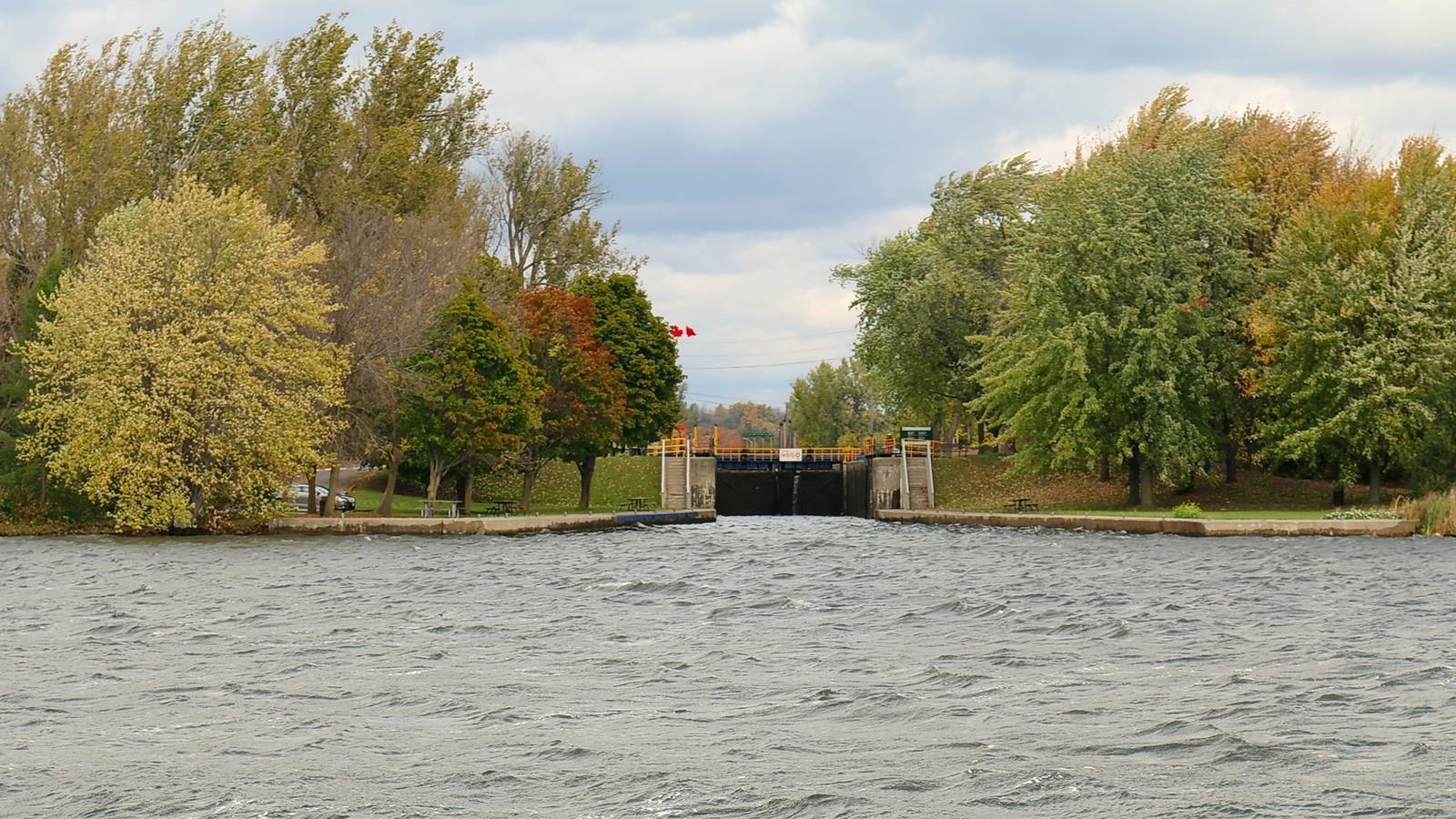
Contextual hero photo by Robert (Bob) Linsdell, resized adaptation. Original photo and attribution; CC BY 2.0 licence. Photograph is not evidence of new or open facilities or current conditions.

Primary manufacturer and organiser source(s): https://parks.canada.ca/lhn-nhs/on/trentsevern/activ/pagaie-paddling. Trent–Severn Waterway Lock 20, photo © Robert (Bob) Linsdell, via Wikimedia Commons/Flickr, CC BY 2.0. Resized photograph of an existing lock, not 2026 operations. Image is used only for correctly attributed factual editorial coverage and never represented as open-licence stock photography.
Source
Parks Canada