
Original Hattie Cove kayaking guide covering Pukaskwa National Park, Lake Superior conditions, shore trails, rental checks and conservation.
A quiet bay on a very large lake
Pukaskwa National Park protects a dramatic stretch of Lake Superior's northern shoreline in Ontario, Canada. Parks Canada describes Hattie Cove as a place from which visitors can experience sheltered paddling and the wider landscape, while also distinguishing those opportunities from demanding coastal expeditions. That distinction is central to a successful visit. A kayak can reveal rocky shores, forest and reflections at a human pace, but Lake Superior behaves more like a sea than an ordinary small inland pond. The best excursion is one chosen for the actual weather and the party's ability, not the most distant landmark visible from a viewpoint.
Why Hattie Cove makes sense as a starting point
Hattie Cove provides a protected setting in the park's visitor area, making it attractive to people who want to try a short paddle without committing to an exposed coastline journey. Parks Canada lists canoe and kayak rentals among the visitor services associated with the park, subject to current arrangements. A sheltered cove is not a guarantee of perfect conditions, and paddlers still need flotation equipment, instruction and a clear plan to return. Confirm where boats may be launched and the designated operating area before arriving. Visitors should not assume that a name appearing in a travel guide is a standing invitation to travel across any part of the lake.
The scale of Lake Superior
The lake's enormous surface allows wind to build serious waves, and the water can remain cold even during apparently pleasant weather. A narrow horizon seen from a beach may conceal the exposure beyond a point or island. Someone accustomed to paddling a sheltered river should not equate that experience with independent travel on the open coast. The park's official material presents the coastline as an exceptional wilderness paddling destination, which implies a need for skills and planning. For many visitors, the wiser goal is to explore an appropriate portion of the cove, return comfortably and then enjoy the broader shoreline on foot.
Exploring from near the water
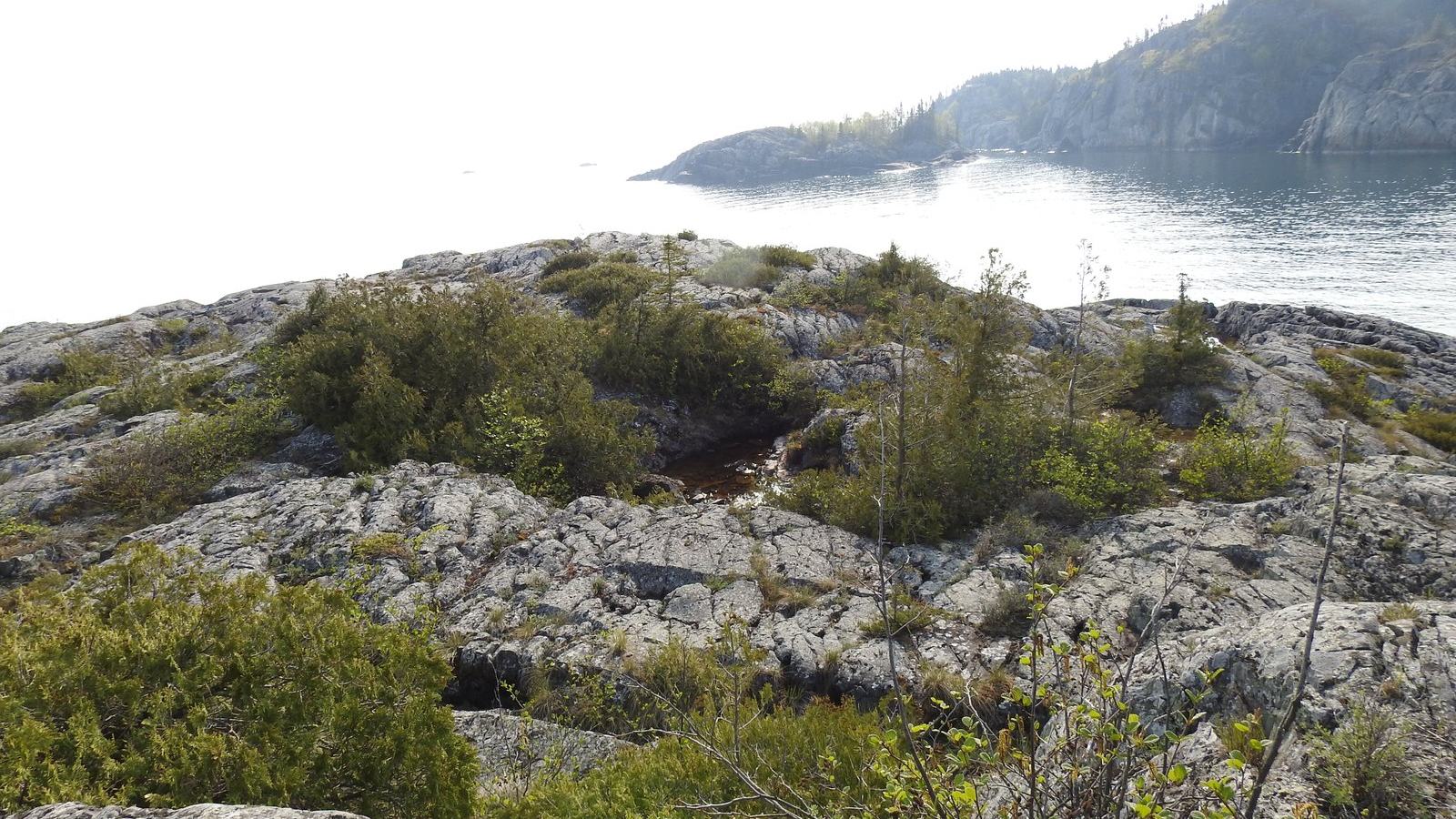
A kayak changes the perspective on a Canadian Shield shoreline. Rock textures, small inlets and the edge of the forest become more prominent, while distant features seem to move slowly as the boat advances. Hattie Cove's shape can create a feeling of enclosure that encourages quiet observation. The best photographs may be reflections close to shore rather than grand open-water views. Keep a sensible distance from rocks and avoid paddling into breaking waves simply because the surface looks smooth between sets. There is no need to land in every bay or reach the cove's outer edge. A modest circuit can provide a complete experience.
Reading conditions before launching
Review the relevant marine and local weather forecasts as well as Parks Canada's current alerts. Pay particular attention to wind direction, waves, cold temperatures and visibility. A light offshore breeze can make leaving the launch easy while complicating the return. A cloudless sky does not mean the water is warm or calm beyond the sheltered section. Establish a clear turn-back point and do not rely on a mobile phone as the sole source of navigation or emergency contact. Local staff can help visitors understand suitable access, but each paddler remains responsible for recognising limits and deciding not to launch when conditions are wrong.
Cold water is the principal hazard
Unexpected immersion in Lake Superior can be dangerous even for a strong swimmer. A personal flotation device must fit correctly, and clothing should be selected with the water temperature in mind. Ask the rental provider about appropriate immersion protection and what happens if someone capsizes. A dry bag containing spare layers is useful only if it remains secured and accessible. Visitors should practise basic boat handling and understand assisted-rescue procedures before heading away from a safe landing. A short paddle does not remove the risks associated with cold water; it simply makes a conservative route more practical when the other safety conditions are suitable.
A guided first experience
A person new to kayaking may benefit from an organised introduction or a briefing with experienced local staff. Ask whether the provider offers instruction, what equipment is included and whether the activity is appropriate for children or inexperienced adults. Practise steering, stopping and turning in sheltered water before exploring further. Group members should agree how to remain together and what signals will be used if someone needs help. A rental is not necessarily a guided excursion, so confirm whether supervision continues after launch. The best beginner experience provides confidence through a clear plan rather than encouraging visitors to test their limits on a vast lake.
Navigation beyond the cove
A kayak expedition along the wider Pukaskwa shoreline is a significantly different undertaking from an easy recreational paddle. Parks Canada describes extended routes through remote coastal country, where weather, landing options and emergency access can be challenging. Such trips require appropriate sea-kayaking experience, reliable navigation and communication equipment, food and contingency planning. A map line may appear to follow the shore while still involving long stretches without safe landing. Travellers should never treat a scenic photograph from a coastal expedition as proof that a novice can reproduce that route. The right preparation is more substantial than choosing a larger boat or bringing extra snacks.
Rock, forest and shoreline ecology
The park's shoreline combines rocky outcrops, pockets of beach and forest. These environments support plants and animals that visitors should observe without damaging. Avoid dragging kayaks across sensitive vegetation or creating new access points beside nesting or resting wildlife. Keep a distance from birds and never feed animals. Follow park guidance on handling food and scented items when on shore. The landscape's apparent emptiness does not imply it is unoccupied or without ecological significance. A slow paddle can encourage careful observation of changes in habitat, provided the group resists turning every interesting patch of shoreline into an unplanned landing.
Indigenous connections to place
Pukaskwa lies within a region with deep Indigenous history and relationships to the land and water. Parks Canada's information recognises the area's cultural heritage alongside its natural features. Visitors should approach this dimension respectfully, learn from authoritative interpretation and avoid treating cultural places as decorative stops. Do not disturb archaeological or culturally significant objects. A place name or viewpoint may have meaning beyond what a short travel article can convey. The best approach is to listen, follow signs and guidance, and acknowledge that the lake shore forms part of a living cultural landscape rather than an empty wilderness for the visitor alone.
A shore walk can deepen the day
The park offers trails and shoreline viewpoints that complement a short kayak trip. A visitor might see the mouth of Hattie Cove from a headland and later understand that view from near the surface. Walking can also provide a satisfying alternative when conditions make launching inadvisable. Check official trail status, distance and accessibility before choosing a route. Wet rock can be slippery, and a seemingly short trail may take longer than expected if visitors pause to observe or photograph. Combining water and land is most enjoyable when there is no pressure to rush, especially after time paddling in cool weather.
Equipment and supplies for a short paddle
Pack a correctly fitted flotation device, suitable clothing, drinking water, sunscreen and a secure dry bag for essentials. Ask the operator whether paddles, safety gear and emergency contact arrangements are included. Keep car keys and medication protected from immersion and avoid attaching loose items that could interfere with boat handling. A waterproof phone is useful but should not replace the more appropriate communication equipment when the planned route calls for it. Leave a route and expected return time with a responsible person. A simple, disciplined kit makes the activity more comfortable and reduces the risk of losing valuable equipment after a capsize.
Wildlife without a checklist
Visitors may encounter birds, traces of mammals or other wildlife around the lake, but sightings vary naturally and cannot be guaranteed. Observe from a respectful distance and avoid using a kayak to pursue animals or approach nests. Camera zoom and binoculars are preferable to entering a sensitive shoreline. Keep noise and movement considerate, especially if other visitors are enjoying a quiet cove. Pukaskwa's appeal lies partly in the possibility of watching nature without controlling it. The trip remains worthwhile if no dramatic animal encounter occurs: rock shapes, reflections and changes of light tell their own story.
Photography under safe conditions
Kayaking offers striking photographic viewpoints, but the paddler should keep both hands available when conditions require steering. Secure the camera, avoid leaning sharply and do not block another user's passage while trying to capture a reflection. Photographs taken from a safe shore can sometimes give a broader view than those captured from a moving boat. Any editorial image should be licensed and accurately identified as a photograph of the destination; it should not be presented as a current weather or rental-vessel record. The purpose of a good photograph is to convey the character of Hattie Cove without compromising the person taking it.
Rental terms and current park information
Consult Parks Canada's current visitor information for services, activity rules, access and relevant alerts. Verify rental availability and whether advance booking is required, rather than relying on descriptions from a past summer. Ask about permitted paddling areas, operating hours, returns, age restrictions and the provider's policy if conditions deteriorate. Seasonal access matters: a park that offers equipment rentals during one part of the year may have different services at another. Check any applicable park entry requirements and fees directly. A carefully verified booking makes the visit easier and leaves more time to appreciate the lake.
A realistic plan for the first visit
An approachable day could begin with a forecast review and conversation with park staff, followed by equipment fitting and a controlled paddle in a suitable sheltered portion of Hattie Cove. Keep the route close enough that returning remains manageable if the wind changes or someone becomes tired. Land safely, account for all equipment and then enjoy a short designated trail or viewpoint. This is a planning example, not a published guided itinerary. The actual conditions and the chosen provider's guidance must define whether the paddle is possible. If the answer is no, exploring the shoreline on foot is an equally valid choice.
Choosing the right scale of adventure
Pukaskwa invites ambition because Lake Superior's vastness and rugged shore are so compelling. The better decision is often to reduce the scale of the outing while increasing the quality of observation. Hattie Cove can provide a meaningful introduction to the park without asking beginners to undertake an exposed coastal passage. Experienced paddlers may plan more substantial journeys, but only with the skills and preparation those routes demand. Parks Canada's official guidance distinguishes these possibilities and provides the right starting point for travel decisions. A careful paddle can leave visitors with both an appreciation of wild scenery and a stronger respect for freshwater boating.
Sources and photograph attribution
Official destination and boating guidance: Parks Canada — Pukaskwa Experiences. Current access, rules, weather and reservations must be checked independently before travel.
Photograph: Hirgax — Hattie Cove Pukaskwa Park.jpg (CC BY-SA 4.0) via Wikimedia Commons. Original image resized as JPEG. Authentic historic photograph of Hattie Cove in Pukaskwa National Park, Ontario, Canada; not a current boat rental, weather forecast or exact guided departure. Source: https://commons.wikimedia.org/wiki/File:Hattie_Cove_Pukaskwa_Park.jpg. Licence: https://creativecommons.org/licenses/by-sa/4.0. Original rights remain with the credited creator or as specified by the source and licence.
