
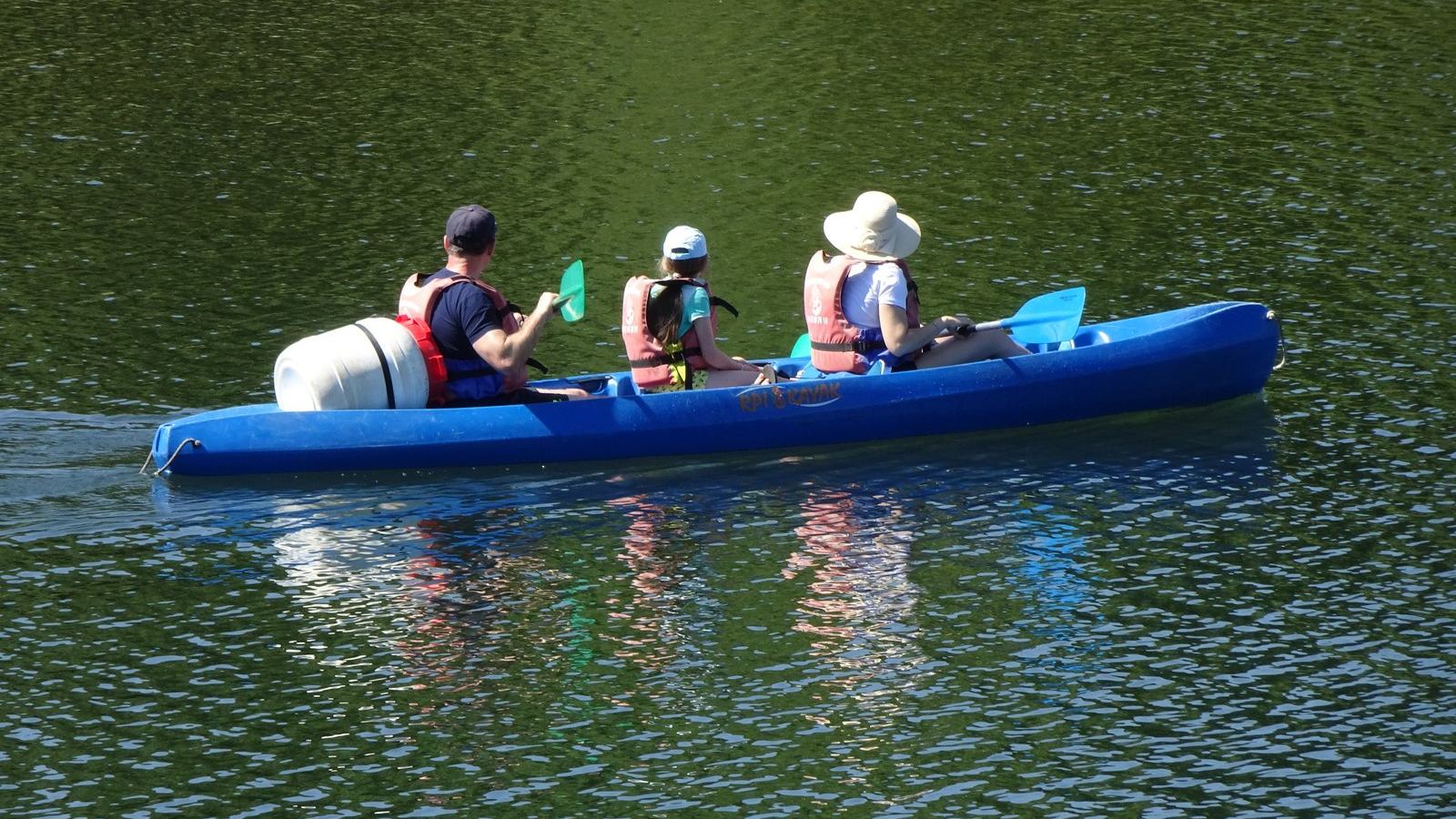
Original Ardèche canoeing feature covering limestone gorges, Pont d’Arc, river levels, outfitters, protected habitats and visitor preparation.
A river journey through limestone country
The Ardèche Gorges are among France's most recognisable canoeing landscapes, combining river travel with limestone cliffs and the famous natural arch of Pont d'Arc. The region's official tourism organisation describes canoe and kayak excursions that range from accessible introductions to longer journeys through protected scenery. The correct route depends on experience, river conditions and the time available, not simply on the most dramatic photograph. A small craft places visitors at water level, where the rock formations and forested banks feel especially close. The opportunity is compelling, but the river should be treated as moving water that deserves careful preparation rather than an amusement ride with a guaranteed outcome.
The significance of Pont d'Arc
Pont d'Arc is a natural rock arch spanning the river, often presented as the defining image of an Ardèche canoe holiday. Travelling beneath or near the arch can be memorable when a permitted route and conditions allow it. However, the visual importance of a landmark should not encourage visitors to drift into a busy area or stop in a place where current makes control difficult. A guide or hire provider should explain how to negotiate the route safely and where photographs can be taken. The arch is part of a broader geological setting, and observing the shape of the gorge before and after it can be equally rewarding.
Understanding the different trip lengths
The official Ardèche tourism information lists multiple canoeing possibilities, including guided and independent options on different reaches. A short introduction is not the same undertaking as a full-day gorge descent, and a longer itinerary may require sustained paddling, safe river handling and logistical transport. Ask whether the distance refers to actual paddling or the full advertised excursion. Establish the launch and finish locations, the likely time on the water and how participants return to the starting point. Do not interpret a published route length as a promise of a comfortable duration for every person. Flow, stops, weather and group competence can all alter the day.
Selecting a route for the group
An enjoyable route is one that the least experienced paddler can complete without being pushed beyond their ability. Beginners may prefer an organised short stretch with clear instruction and easy access, whereas experienced river paddlers may seek a longer descent. The provider should describe the sections involved, likely current and any features requiring particular manoeuvres. Ask how the operator responds when conditions differ from those expected. It is better to enjoy a modest section well than to become exhausted halfway through an ambitious itinerary. A professional assessment should be based on the actual river, not on a general claim that canoeing is suitable for everyone.
The river changes after rain
Water levels and current strength influence how a canoe handles and which routes are appropriate. Heavy rain upstream can make a familiar reach more demanding even when the sky over the launch looks clear. Before departure, consult current official advice and the operator's river assessment. Respect closures and cancellation decisions. A low-water day can bring different difficulties, including shallow areas and the possibility of damaging equipment or sensitive habitat. No single photograph or travel anecdote accurately represents all conditions. A flexible itinerary offers the freedom to change activities when the river is unsuitable, rather than attempting to force a booked descent.
The right canoe and safety equipment
A boat used for a commercial river outing should be appropriate for the expected reach and the number of occupants. Everyone needs a correctly fitted personal flotation device and a briefing on paddling, steering and what to do after a capsize. Ask whether protective footwear, waterproof storage and other equipment are supplied. Loose objects are easily lost when a canoe tips, so medication, phones and keys require secure protection. The operator should explain how to avoid entrapment and what signals to use when assistance is required. A casual-looking river trip can still demand attention to safety, and it is wiser to clarify procedures on land than during an unexpected incident.
The skill of travelling downstream
A river carries the boat, but that does not remove the need to steer. Paddlers must learn to recognise the direction of flow and adjust their approach to bends, rocks and other users. The guide may demonstrate how to position a canoe for a chosen channel and how to regroup in an appropriate calm area. Beginners should practise basic control before entering a faster section. Avoid attempting to imitate the techniques of more experienced paddlers encountered along the route. A safe line is not always the most visually dramatic one, and a calm passage is often the best way to enjoy the scenery while building confidence.
Rock walls and restricted landings
The gorge's limestone walls can make the landscape feel enclosed, with landings less frequent than they appear from a map. A gravel edge may be inaccessible because of current, unstable footing or environmental restrictions. Choose rest stops from the operator's guidance and do not scramble onto rock ledges for photographs. Never leave a boat in a position where it can drift away while passengers explore. The protected landscape should be treated with the same care as the water itself. A scenic stop is valuable only when everyone can arrive, leave and maintain the river's condition without unnecessary risk or damage.
Swimming is not automatic
Warm weather may make clear water look irresistible, but swimming depends on local rules, current, depth and the particular place. Do not jump from cliffs or approach a pool without knowing what lies below the surface. The operator should identify any permitted locations and precautions. A group should not treat swimming as a guaranteed feature of every route, and anyone uncomfortable entering the water should be able to enjoy the canoe journey without pressure. Staying afloat in a buoyancy aid is not the same as being trained to manage moving-water hazards. Careful decisions prevent a refreshing pause from becoming a serious problem.
Respecting the nature reserve
The Ardèche Gorges include a protected natural environment whose flora, fauna and geological features deserve care. Official tourism information encourages responsible access and the use of established routes. Avoid damaging riverside vegetation, disturbing wildlife or removing stones and other natural objects. Pack out every item brought to the water and keep soaps or other contaminants away from the river. Some sections may have special restrictions for landing or camping. These should be understood before departure rather than discovered when the group is tired. The attraction of a canoe journey is the chance to witness the landscape with minimal disturbance.
Kayaking and the wider local culture
A visit to the Ardèche can combine time on the water with local villages, walking routes and food, rather than being measured only by the length of a descent. Vallon-Pont-d'Arc is commonly associated with the area's canoeing services, but each operator's meeting point must be verified. A gentle evening in a village can make a rewarding contrast to an active morning on the river. Check the practical travel distance between activities and allow time to recover after paddling. A schedule packed with attractions may overlook the simple pleasure of watching the gorge from a safe viewpoint once the canoe has been returned.
Weather and seasonal planning
The number of available canoe services and the suitability of routes can vary with season. Ask the provider about the proposed date, opening arrangements and what happens if rain or difficult flow prevents departure. Sunshine does not remove the risk of dehydration or excessive heat, so carry water, sun protection and suitable clothing. At other times, cool water and air may call for additional thermal protection. Avoid relying on an operator's historical website announcement as proof of current availability. Confirm bookings directly, and keep a shore-based alternative for days when a river outing would not be appropriate.
Taking photographs without losing control
The natural arch, cliffs and reflections are compelling subjects, but the camera should never become more important than steering. Use photographs at safe, permitted stopping places or ask a guide whether conditions allow a brief pause. Keep devices attached or waterproofed so that they cannot become hazards or litter after capsize. Do not stand in an unstable craft for a higher view, and avoid obstructing another group's route while composing a shot. Images used in an article should accurately show the destination and credit their creators. A historic photograph is context, not evidence of the current river level or a particular operator's departure.
Choosing between guided and independent travel
Guided trips can be a strong option for visitors who lack local knowledge or whose experience is limited. A competent leader brings understanding of conditions, clear communication and practical assistance with route choices. Independent paddlers need their own appropriate skills, navigation and rescue plan, and must comply with the applicable rules. Ask whether a rental company provides transport, a safety briefing and support in case a trip cannot be completed. Do not confuse a hire agreement with supervision throughout the descent. The right format depends on the river and the people travelling, not on which option appears more adventurous.
Questions to ask before confirming a booking
Establish the exact start and end points, the route's expected difficulty, the provider's requirements, equipment included and the transport arrangements after the paddle. Confirm minimum age or swimming competence rules, the cancellation policy and what conditions would lead to a route change. Ask about accessible facilities and whether important belongings can be left securely at the departure point. If an overnight or extended descent is proposed, verify permitted camping arrangements separately. A clear account of these details can prevent a disappointing experience and gives everyone a realistic understanding of what is being purchased.
A balanced first-time excursion
A sensible introduction might begin with a briefing and basic paddle practice, followed by a carefully selected reach that provides limestone scenery without excessive commitment. The group can travel at a comfortable pace and pause only in safe, permitted areas. The provider's instructions should govern any approach to Pont d'Arc or another prominent feature. On reaching the finish, participants can rest, recover belongings and explore the village or nearby shore on foot. This is an illustration of appropriate pacing, not a guaranteed route or current timetable. The river and the operator's judgement determine what is possible.
The real reward of the gorge
The Ardèche Gorges offer the unusual experience of moving through a landscape that appears almost sculpted around a river. From a canoe, visitors can appreciate the relationship between water, limestone and the human settlements nearby. That pleasure is greatest when the group has enough time and skill to observe without rushing. The official Ardèche tourism guidance provides a trustworthy starting point for understanding the activities on offer; the day's flow and a competent provider define the safe itinerary. Careful preparation, respect for nature and an ability to adapt can turn a popular excursion into a more thoughtful river journey.
Sources and photograph attribution
Official destination and boating guidance: Official Ardèche Tourism — Water Activities. Current access, rules, weather and reservations must be checked independently before travel.
Photograph: Celeda — Canoë en bas des Gorges de l'Ardèche.jpg (CC BY-SA 4.0) via Wikimedia Commons. Original image resized as JPEG. Location-specific historical photograph of canoeing in the Ardèche Gorges in France; not the river’s current water level, an identified operator or today’s departure. Source: https://commons.wikimedia.org/wiki/File:Cano%C3%AB_en_bas_des_Gorges_de_l%27Ard%C3%A8che.jpg. Licence: https://creativecommons.org/licenses/by-sa/4.0. Original rights remain with the credited creator or as specified by the source and licence.
