
Explore Killarney National Park's lake excursions and canoe permits. Understand the distinction between guided trips, paddling access and private boating. This independent guide is based on official government or park-operator information and must be used with up-to-date local access and weather notices.
A lake landscape with access rules
Killarney National Park in Ireland is celebrated for its lakes, mountain backdrop, woodlands and historic estates. Its official visitor service lists boating among the ways to experience the scenery, while also publishing separate information on permits for canoe and kayak use. That distinction matters to the small-craft audience. A sightseeing passenger, a guided kayaking customer and an owner who wants to launch a privately operated boat may face different arrangements. The park's current official overview states that no private boating permits are currently available, so visitors must not interpret the existence of passenger boats as a general invitation to bring their own motorboat. Planning starts with identifying the exact activity and the specific permission it requires.
The beauty of seeing Killarney from the water
The lakes are part of a landscape that rewards looking slowly: wooded edges, changing light on the mountains and views that can be missed from a road. A boat excursion provides a different perspective from a shoreline walk, particularly where the natural setting and historic buildings come together. That does not mean every lake or cove is available for recreational landing. Protected habitats, wildlife, estates and local navigation rules shape access. Visitors who want to combine a boat trip with walking should check whether the operator's landing arrangements actually support that plan. A lake seen on a map may be straightforward to admire yet complicated to use with an independent craft.
Passenger boats are not private boat permits
Official tourism material describes traditional boat rides and other visitor activities, but an organised excursion is not the same as permission to launch an individually owned vessel. The national park's boating guidance needs to be read carefully and may change. At the time of this report, the official park home page explicitly notes that private boating permits are not available. Readers should check that notice again before departure and avoid taking a boat to a launch on the assumption that a fee can simply be paid on arrival. Operators offering authorised trips can explain embarkation points, duration, ticketing and any seasonal limitations that apply to their own services.
A separate process for canoes and kayaks
Killarney's official visitor resources also include a canoe-and-kayak permit guide. The existence of that guide does not mean approval is automatic or that paddlers may enter the water without following the stated process. Anyone proposing an independent canoe or kayak outing should read the current application instructions, identify any eligibility and insurance requirements, and wait for the appropriate confirmation where necessary. Club outings, training sessions and commercial guided activities may involve arrangements different from those for an individual visitor. Do not conflate a general boating restriction with an explicit refusal of every paddle activity, or a paddle permit process with authorisation for powered boats.
Choosing an experience that suits the group
A family visiting for a single afternoon may gain more from a planned passenger outing than from attempting to organise equipment and permissions. Travellers who already paddle frequently might be interested in an authorised guided or permitted activity, subject to the park's current rules. Older visitors, guests with limited mobility and people travelling with young children should ask operators about boarding steps, seat arrangements, exposure to weather and available assistance. It is better to discuss these details before purchasing tickets than to discover at the lakeside that a particular boat is unsuitable. A lake holiday can offer plenty of enjoyment without assuming everyone needs to be the person holding a paddle.
Weather changes the character of a lake
Even an enclosed freshwater lake can produce uncomfortable or unsafe conditions when wind strengthens. The shore may appear sheltered while a longer crossing becomes choppy, and a sudden shower can reduce visibility. Cold water is an additional consideration beyond the air temperature: immersion, wet clothing and wind can quickly become serious. Boat-trip operators should assess conditions for their own vessels, but passengers still need suitable layers and awareness of possible cancellations. Independent paddlers require a more detailed weather and rescue plan, where authorised. A calm morning photograph is not evidence of what an afternoon passage will be like, and itineraries should retain flexibility.
Conservation is central to the visit
Killarney National Park is not merely a scenic boating venue. The lake margins form part of a protected environment whose value depends on sensitive management. Wildlife should be viewed from a respectful distance, particularly around feeding and nesting areas. Visitors should avoid disturbing vegetation, leaving litter, introducing species or taking shortcuts through vulnerable shoreline ground. Any excursion must follow the operator's and park authority's conservation rules. A quieter passenger trip may reveal birds and reflections that would be lost in an approach focused on speed or access to every bay. The park's ecological character is a reason to respect restrictions rather than a justification for requesting exceptions.
The best shore-based complement
The national park's official visitor pages describe a broad set of things to do, including walking, cycling and exploration of the landscape surrounding the lakes. For a leisure-boating holiday, those options make a sensible complement to time on the water. A group can reserve a boat trip for favourable weather and use marked land routes when wind or rain makes boating unattractive. It also reduces pressure to stretch a short permitted water session into an exhausting full-day outing. Check the opening arrangements at historic sites and visitor facilities independently, since seasonal schedules can differ. The combination of water views, woodland paths and local heritage is part of Killarney's appeal.
Access and transport deserve attention
A carefully planned day accounts for more than the boat departure time. Visitors need to know where an authorised trip begins, what parking or public transport is available, and how long it takes to move between points of interest. In busy periods, arriving with little time to spare may result in missed tickets or rushed boarding. Anyone bringing paddling equipment, where permission has been secured, should confirm the precise permitted access point and whether vehicles may approach it. Map applications cannot establish lawful entry, parking rights or safe launching. Booking confirmations, current park notices and operator instructions are the proper reference documents.
Understanding insurance and responsibility
Passengers should ask the operator what conditions of carriage apply, particularly in poor weather or where a trip includes walking ashore. Independent paddlers need to consider liability, personal insurance, emergency arrangements and the specific conditions attached to any permit. A permit, even if granted, does not certify the holder's skill, equipment or ability to handle changing weather. Clubs and guided operators may have their own qualifications and supervision standards. A responsible visitor checks the practical arrangements rather than treating the paperwork as an end in itself. For a small craft, a suitable buoyancy aid, communication system and workable recovery plan remain essential where independent activity is authorised.
Avoiding misleading seasonal promises
The lake scenery is worth visiting across different seasons, but the available boating products and park services are not necessarily identical all year. A website page may describe an activity without confirming that a particular trip is scheduled on a given November day. Prices, departure points and timings may be adjusted by operators. Anyone making travel arrangements should confirm directly rather than relying on an old photograph or generic brochure. This distinction is especially important for an overseas visitor organising lodging around a single boat excursion. Keep a land-based alternative ready and review the cancellation terms for both transportation and paid activities.
Photography with restraint
Killarney's lakes invite pictures of distant mountains, traditional boats and changing light. Photography is most enjoyable when it does not interfere with safe boarding, distract an operator or disturb other passengers. Drones and other equipment may be subject to park-specific restrictions, so a standard consumer drone should not be flown on the assumption that an open landscape means unrestricted airspace. Check the park's current policy before arriving. For travellers sharing photographs online, clear descriptions also matter: images of a licensed passenger excursion should not be presented as proof that private motorboat cruising is permitted. Accurate captions help other visitors make informed plans.
What to check before setting out
Start with the official Killarney National Park home page and its things-to-do section. Determine whether the intended outing is an organised passenger trip, a guided paddle or independent use of a private craft, because each has distinct access questions. Read the current canoe or kayak permit instructions if relevant, and verify the separate statement on private boating permits. Contact the authorised operator for tickets, departure point and weather procedures. Pack clothing suitable for a potentially cool and wet lake environment. Finally, respect posted land and water restrictions even when another person appears to be using an area informally.
A thoughtful lake day
Killarney is a particularly good illustration of why leisure boating should not be equated with unrestricted boat ownership. Water access exists within a protected place, but it is managed to balance visitors, operators, wildlife and the landscape. A passenger excursion may be the appropriate way to experience the lakes; a permitted paddling experience may be possible under a separate current process; private motorboat permissions cannot be presumed. Travellers who make that distinction early can build a rewarding itinerary around what is genuinely available. The result is a lake day focused on observation, respect and enjoyment rather than a disappointing disagreement at the shoreline.
Official references
The Killarney National Park visitor website, its things-to-do and boating guidance, and the park's canoe permit instructions are the primary sources. Current rules and availability must be reconfirmed before travel.
Explore related Leisure Boat Guide lifestyle reporting
- Pukaskwa's Hattie Cove by Kayak: Lake Superior's Wild Canadian Shore
- Ardèche Gorges by Canoe: France's Natural Stone Arch and Protected River Journey
- Lake Akan by Sightseeing Boat: Hokkaido's Marimo Island and Volcano Views
- Soča Valley by Guided Kayak: Slovenia's Emerald River and Alpine Rapids
Primary reporting and image credit
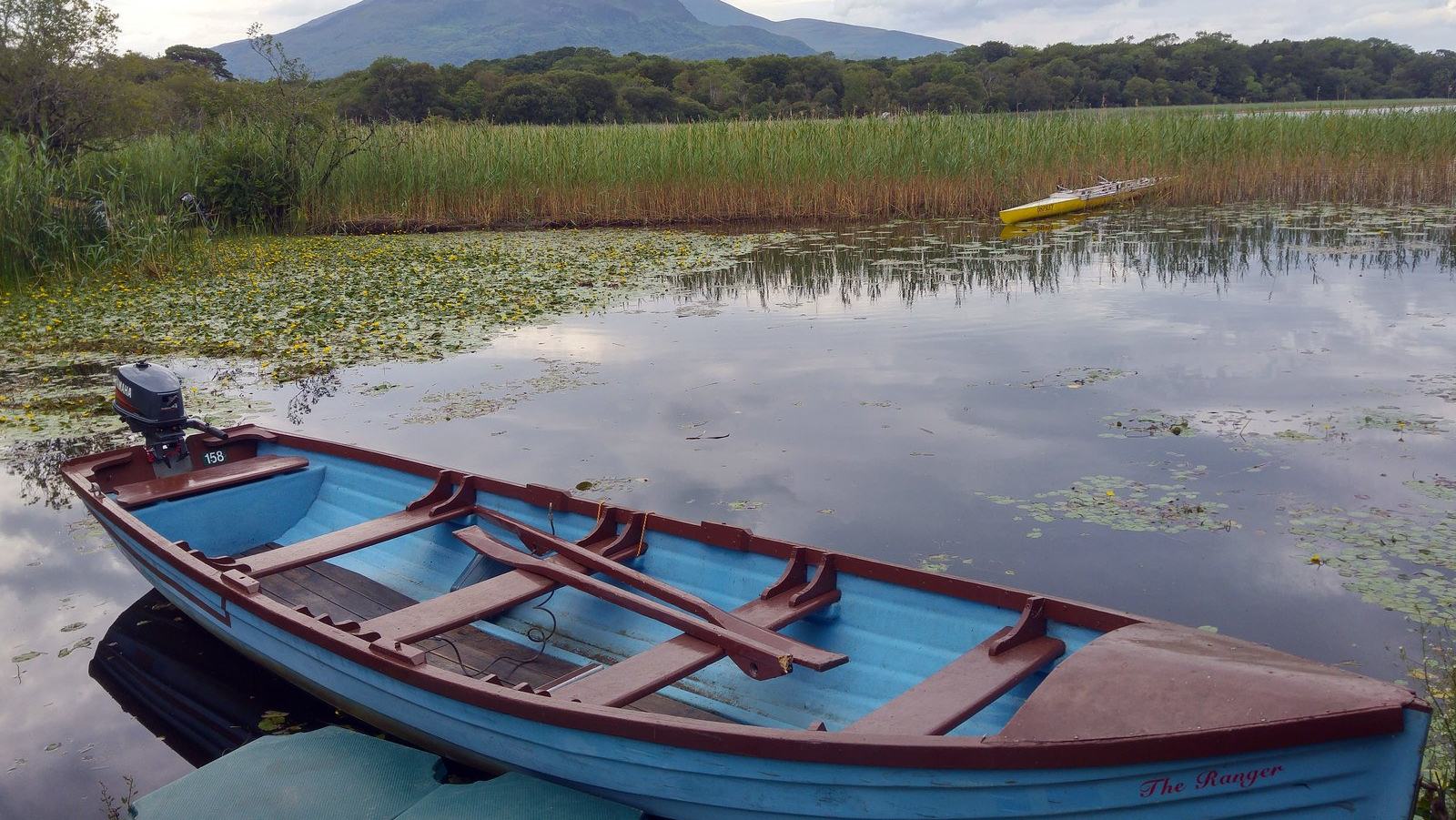
Contextual hero photo by Phil Champion, resized adaptation. Original photo and attribution; CC BY-SA 2.0 licence. Photograph is not evidence of new or open facilities or current conditions.

Primary manufacturer and organiser source(s): https://www.nationalparks.ie/killarney/things-to-do/. Boat on Lough Leane, photo © Phil Champion, via Geograph and Wikimedia Commons, CC BY-SA 2.0. Resized adaptation, contextual photograph. Image is used only for correctly attributed factual editorial coverage and never represented as open-licence stock photography.