
Channel Islands National Park explains guided sea kayaking at Santa Cruz Island, where dramatic caves and marine cliffs demand good weather and experienced p. This independently written small-craft guide uses official park, operator and tourist-board information; all seasonal arrangements must be rechecked before travel.
California's Channel Islands National Park offers an unusual way to experience a protected island shoreline: travelling close to the water in a sea kayak, with cliffs, coves and marine life providing the backdrop. The National Park Service's official kayaking guidance identifies eastern Santa Cruz Island, especially Scorpion Anchorage, as a popular base for guided outings. It also makes a point too important to miss: this is a high-risk activity, and the park strongly advises visitors to use authorised guides rather than attempt independent coastal paddling without appropriate experience and equipment. For Leisure Boat Guide readers, the attraction is not merely a dramatic photograph of a cave. It is the opportunity to explore a particular marine environment responsibly, taking account of surf, swell, marine protection, transport arrangements and the expertise needed for safe small-craft travel.
Santa Cruz Island is a natural starting point
The eastern end of Santa Cruz Island has become one of the park's best-known kayaking locations because of its accessible landing at Scorpion Beach and the availability of transport from mainland harbours. The NPS highlights clear water, a varied coastline and nearby camping possibilities. The setting can be appealing to paddlers who prefer a guided day rather than a longer expedition. But popular does not mean risk-free or suitable for every visitor. Crossing the Santa Barbara Channel is a separate journey from paddling close to the island, and the ability to reach Scorpion Anchorage by a licensed passenger vessel should not be confused with permission or readiness to kayak independently across open water. Guests need to understand exactly which part of the trip they have booked.
Sea caves require more respect than photographs suggest
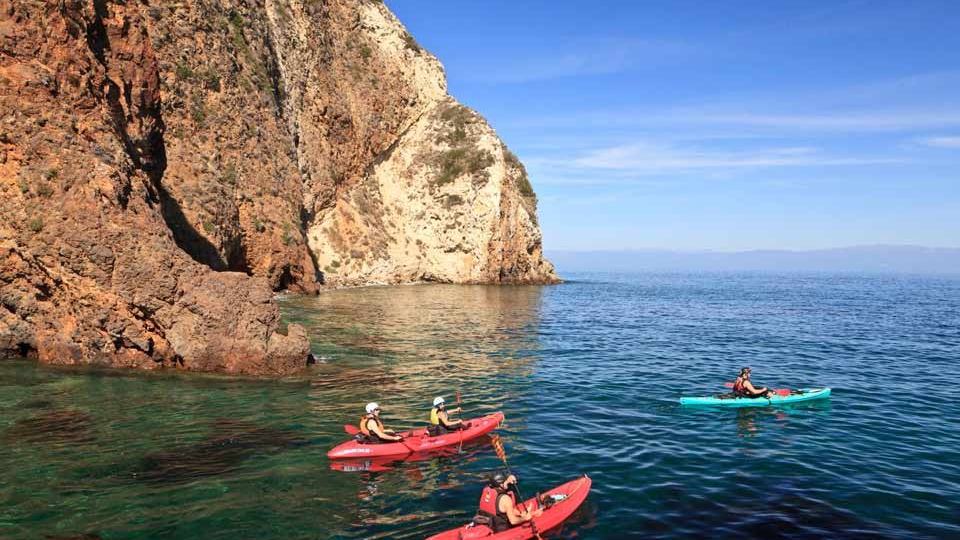
The park's coastal caves are a major reason people are attracted to the island, but they can be hazardous even when the shoreline looks calm from a distance. A wave can enter or fill a cave rapidly, while rocks, narrow passages and changing swell can reduce the margin for error. The National Park Service explicitly warns about dangerous caves and deaths and near-fatal incidents associated with sea kayaking in the park. That advice belongs near the beginning of any travel guide, not hidden after promotional language. Visitors should not treat a photograph of kayakers close to the cliffs as proof that the same route is safe on a chosen day. The final decision must follow current conditions and qualified local guidance.
Authorised tours are the recommended option
The NPS identifies Channel Islands Adventure Company as the authorised provider for guided kayak experiences in the Scorpion Anchorage area of Santa Cruz Island. It also points to other operators authorised for different locations within the park. Guided trips may be described as moderate or strenuous, and some do not demand previous kayaking experience, but that is not a blanket guarantee of suitability. People should disclose their fitness level and experience honestly and ask what the operator expects. The park notes that kayaks are not available to hire independently on the island at Scorpion, a useful correction to the assumption that a visitor can simply arrive and rent one. Reservations should identify equipment, instruction, transport and weather procedures clearly.
Mainland transport is part of the itinerary
Most visitors arranging a day at the islands need to consider the boat journey to the island as well as the time spent paddling. The authorised concessionaires offer transport services and may carry privately owned kayaks for an additional charge, subject to their arrangements. Schedules and availability vary, and no article can guarantee a fixed crossing or return on every day of the year. It is sensible to establish the order of travel, luggage arrangements, where equipment is handed over and how the group will return if plans change. A guided kayak excursion may integrate these elements, whereas a privately organised visit can require several separate bookings. The NPS park information and concessionaire terms should be consulted directly rather than inferred from a general travel description.
The islands differ in exposure and difficulty
Channel Islands National Park is not a single uniform paddling environment. The NPS distinguishes eastern Santa Cruz from more exposed islands and warns that sea kayaking at San Miguel and Santa Rosa is generally suitable only for very experienced, skilled and properly equipped paddlers. This difference matters for travellers comparing photographs or selecting a destination by name alone. Wind, swell, landing conditions and distances can vary greatly. A comfortable inland lake paddler should not assume that experience transfers directly to a remote Pacific coastline. The best choice may be a guided, comparatively sheltered outing near Scorpion rather than a more ambitious route advertised elsewhere. Matching the trip to the participant is part of enjoying the island responsibly.
Weather can change the plan quickly
Coastal California may bring bright skies, but the park warns of rapidly changing weather and sea conditions. An acceptable forecast at the start of a trip is not permission to ignore developments later in the day. Kayak plans should consider wind strength and direction, swell, temperature, visibility and the operator's cancellation criteria. A professional guide can adjust a route or abandon it if conditions change, and travellers should accept that decision without pressure to complete a particular cave. Families booking a short holiday should leave room for an alternative activity if the outing cannot proceed. Safe planning often looks less impressive than an adventurous itinerary, but it is what makes another day on the water possible.
Suitable kayaks and protective equipment matter
Sea kayaks used in exposed waters are designed for different conditions from basic recreational boats intended for sheltered lakes. The exact equipment supplied on a guided tour should be confirmed with the provider, including flotation, clothing, safety gear and how assistance is managed. Personal flotation devices need to fit correctly and be worn according to local guidance. Visitors bringing their own boats should consider their ability to recover after a capsize, communicate with other craft and manage unexpected conditions. A short article cannot substitute for practical training or site-specific advice, and the National Park Service does not endorse a casual approach to equipment. Confidence should come from preparation and appropriate supervision, not from owning a boat that looks capable in photographs.
Marine protection shapes the experience
Channel Islands National Park protects coastal habitats and sensitive wildlife, and kayaking is most rewarding when visitors understand that the landscape is not simply a recreational playground. Landing, wildlife viewing and paddling may be subject to park regulations or protected-area restrictions. A close encounter with a seabird or marine mammal should not be sought through chasing or disturbing the animal. Guides can help visitors recognise sensitive areas and keep an appropriate distance. The fact that the water appears open does not mean every inlet is available for access or that collecting objects from the shore is permitted. Responsible small-craft travel means allowing the environment to remain as undisturbed as possible after the group has passed.
Landing permissions and island boundaries must be checked
The NPS provides separate island-by-island guidance because areas of the archipelago have different ownership, landing rules and sensitive sites. It would be misleading to claim that every beach is open for casual landings. Visitors should consult the current park rules, particularly if they are bringing a private kayak or planning to explore beyond the recognised guided area. Camping reservations, landing procedures and transport requirements can be separate issues. An organised operator may incorporate much of this work, but guests should still understand which services are included. For boaters accustomed to open coastal cruising, the park is a reminder that protected shorelines often require a different level of planning from ordinary anchorages.
Sea kayaking provides an intimate view of the coast
A kayak places the paddler near the surface of the water, allowing the cliffs, sheltered pockets and texture of the shoreline to be experienced differently from a larger sightseeing boat. The slow pace can encourage observation of light, rock formations and the sounds of the marine environment. That perspective helps explain the popularity of guided trips around Santa Cruz. The aim should not be to travel the greatest distance or enter the most caves. A shorter route under the supervision of an experienced guide may provide a more memorable experience than an overly ambitious day. Paddling invites attention to surroundings, but safety still demands awareness of changing water and traffic conditions.
Families should assess ability rather than age labels alone
A family trip can be appealing where the operator accepts beginners, but individual suitability depends on physical ability, comfort in water, stamina and the group's capacity to follow instructions. Parents should ask about minimum ages, boat arrangements and what happens when one participant becomes tired or anxious. Conditions may require a route change regardless of anyone's enthusiasm. The NPS's warning about risk applies to every participant, including adults who are confident swimmers but unfamiliar with sea kayaking. Before booking, discuss realistic expectations for the activity and consider whether a shore-based island visit might suit some members of the group better. A successful holiday does not require everyone to participate in the same demanding activity.
An island visit can extend beyond paddling
The wider park offers natural history, coastal landscapes and opportunities to experience life away from the mainland, but visitors should verify current access to hiking routes, camping sites and other activities. Guided kayaking can be one part of a day rather than the entire purpose of travelling to the island. Time on shore may also offer a way to appreciate the setting without taking additional risks at sea. The combination of ferry transport, a designated kayak route and an island walk should be planned conservatively to avoid missing return travel. This is especially important because accommodation and services are limited compared with mainland tourist destinations. A flexible itinerary is more realistic than a tightly timed list of attractions.
The official photograph is specific to the park
The lead photograph accompanying this article comes from the National Park Service's Channel Islands kayaking information page. It is a genuine source image of the protected coastline, not AI artwork or an unrelated California beach photograph. The photograph illustrates the activity and location; it does not certify that the water conditions it depicts will recur on a future trip. Attribution is maintained to the park authority, and any applicable photographer rights remain respected. For readers comparing different small-craft destinations, source-specific imagery is valuable because it shows the landscape the official guidance discusses. It must be paired with the NPS's safety warnings rather than used to downplay them.
Plan the trip around the guidance, not the dream image
The original NPS kayaking guidance confirms that Santa Cruz Island's Scorpion Anchorage is a recognised location for guided sea kayaking and that sea caves, weather and remoteness create serious hazards. It recommends authorised guides and makes clear that remote islands can demand expert-level skills. This destination rewards a thoughtful approach: selecting an appropriate tour, understanding ferry transport, confirming local rules and accepting that weather can change the plan. For Leisure Boat Guide readers interested in paddling beyond familiar rivers and lakes, Channel Islands offers a compelling marine experience, but its greatest lesson may be that an unforgettable view is best reached with realistic preparation and experienced support.
Explore related Leisure Boat Guide lifestyle reporting
- Pukaskwa's Hattie Cove by Kayak: Lake Superior's Wild Canadian Shore
- Ardèche Gorges by Canoe: France's Natural Stone Arch and Protected River Journey
- Soča Valley by Guided Kayak: Slovenia's Emerald River and Alpine Rapids
- Gwaii Haanas by Sea Kayak: Haida Gwaii's Islands, Wildlife and Remote Shores
Primary reporting and image credit
Primary manufacturer and organiser source(s): https://www.nps.gov/chis/planyourvisit/kayaking.htm. © National Park Service, Channel Islands National Park. Official NPS visitor-information sea kayaking photograph, reproduced for attributed factual park reporting. Image is used only for correctly attributed factual editorial coverage and never represented as open-licence stock photography.
Source
U.S. National Park Service