
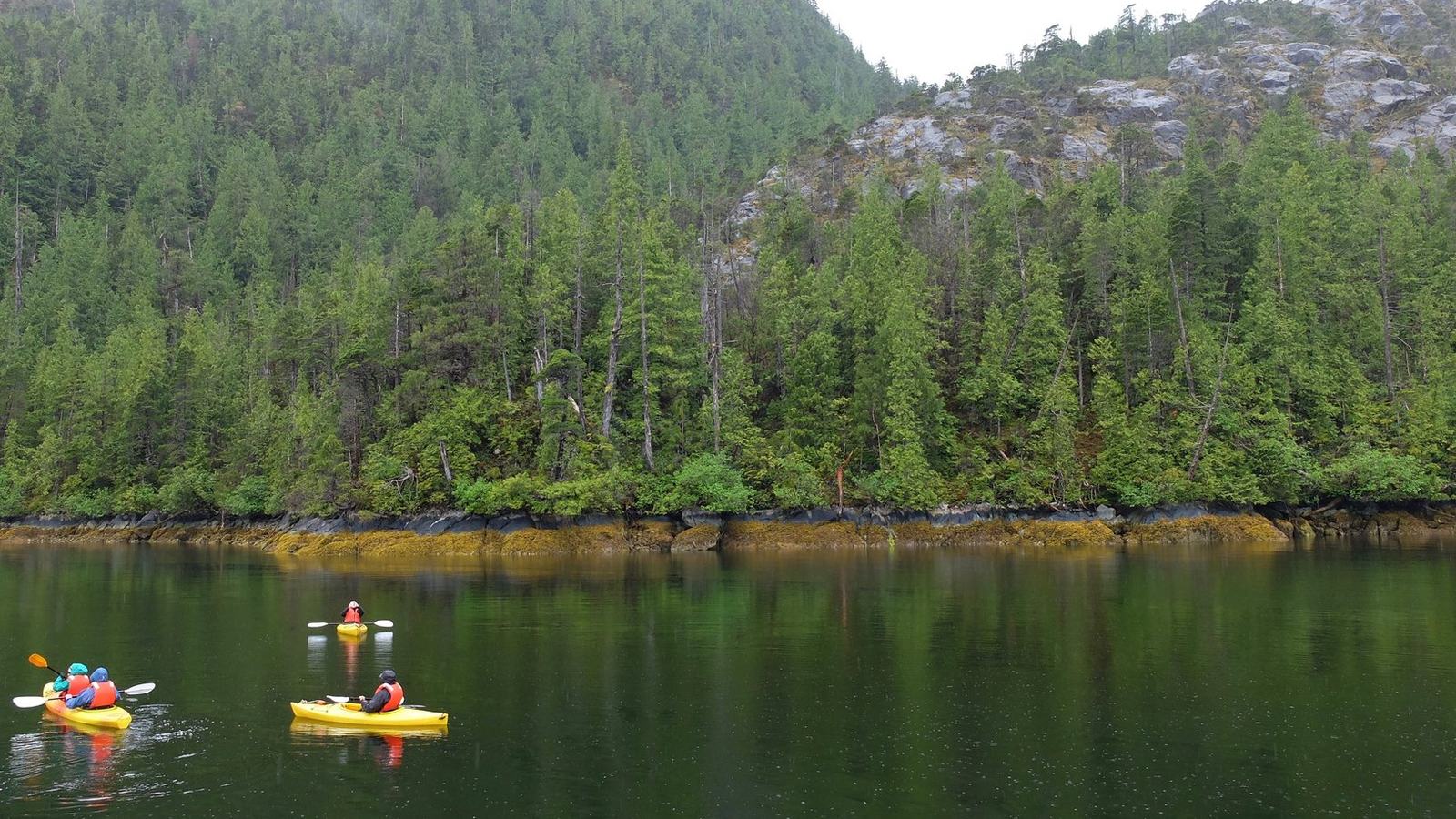
Original Gwaii Haanas kayaking feature covering Haida Gwaii’s protected islands, licensed operators, cold-water safety, camping and conservation.
An archipelago that demands attention
Gwaii Haanas, on the southern part of Haida Gwaii off Canada's Pacific coast, is an exceptional destination for experienced sea kayakers and carefully supported visitors. Parks Canada describes hundreds of islands and islets, marine wildlife and places of Haida cultural significance. The same official guidance is clear that travel here requires real preparation. There is no simple shoreline circuit that turns every cove into a safe beginner's outing. Sea conditions, weather, tide and distance determine what is possible. A kayak offers an intimate perspective on this landscape precisely because the traveller is moving through it without the protection or speed of a larger vessel.
Why the kayak is more than transport
Paddling changes the scale of the coast. A low seat brings floating kelp, small rock details and the movement of seabirds into view while the islands stretch away in overlapping layers. The slower pace encourages looking and listening, but it also limits how far a group can travel in a changeable sea. Parks Canada presents kayaking as a way to experience the region's natural and cultural landscape rather than simply as an equipment-based sport. That purpose should shape the itinerary. Select a manageable section, allow time for interpretation and remember that a sheltered-looking channel can become exposed when wind and tidal flow develop.
The meaning of Gwaii Haanas
The protected area is described formally as Gwaii Haanas National Park Reserve, National Marine Conservation Area Reserve, and Haida Heritage Site. Those words matter: this is not merely scenery but an environment with cultural relationships, heritage and conservation obligations. Visitors should understand the role of the Haida Nation and use official interpretive resources rather than inventing stories about cultural sites. Treat village locations, carvings and archaeological remains with respect and follow the current access and visitor protocols. Do not handle objects or assume that every location is open for independent landing. A well-planned visit provides space to listen, learn and let local knowledge inform the experience.
The geography of many islands
Parks Canada highlights a network of more than 800 islands and islets as part of the sea-kayaking appeal. That number communicates richness, not an itinerary to be completed. Individual passages differ in exposure, current, landing conditions and distance to shelter. On a chart, a route may appear protected by nearby land while still leaving a long crossing with limited rescue options. Study the coastline as a sequence of decisions: where to launch, what lies beyond the next point, where the group can stop and which route allows retreat. Good navigation requires current charts, local information and enough experience to interpret both.
Wildlife watched at a respectful distance
Gwaii Haanas offers the possibility of seeing seabirds, marine mammals and other wildlife, though sightings cannot be scheduled. Parks Canada's material discusses whales, dolphins, birdlife and the diversity of life associated with the islands. The ethical approach is to let animals control the encounter. Never chase or intercept a marine mammal for a photograph, and follow applicable viewing distances and restrictions. On land, manage food and scented items according to official guidance and maintain a safe distance from bears or other wildlife. Binoculars and patience are more useful than an attempt to turn a wild animal into a close-up attraction.
The role of an experienced guide
A licensed local operator may help with route selection, transport, equipment and interpretation. In a destination this remote, a knowledgeable guide can also make a decisive difference in understanding the weather and tides. Ask how routes are changed, how the group communicates and what procedures are used if a participant becomes exhausted or separated. Verify that the advertised expedition suits the party's experience, not just its enthusiasm. A guided trip should still include a clear safety briefing and realistic expectations about weather-related delays. Visitors gain the most when they value a guide's judgement more than a promise to reach a particular viewpoint.
Reaching the starting water
Access logistics deserve almost as much attention as paddling. Parks Canada explains that some visitors travel with licensed tour operators while others plan self-guided trips, and that transport for kayaks can be part of the arrangement. A water taxi or other transfer may take paddlers closer to their intended route, but it introduces timing, weather and loading requirements. Verify the exact meeting point, weight limits, transfer arrangements and backup plan if departure cannot proceed. Do not assume that every service advertised on Haida Gwaii travels into Gwaii Haanas or serves an isolated landing. Confirm the itinerary in writing and build flexibility into onward travel.
Cold water and exposure
The North Pacific environment calls for appropriate immersion protection and sound rescue skills. The water may be hazardous even when the air feels comfortable, and an unexpected capsize can rapidly impair strength and judgement. Select a kayak and clothing system for conditions rather than appearances, wear a correctly fitted flotation device and practise recovery techniques before the expedition. Carry appropriate communication and distress equipment and know what coverage it offers. Parks Canada's safety advice stresses that independent travellers need to be self-sufficient during emergencies. A calm early-morning view is no substitute for planning for wind, swell, cold water and reduced visibility later.
Tides, currents and crossing decisions
The gaps between islands may concentrate tidal flow, while an exposed passage can create more demanding waves than expected. Study official tidal information and current charts, and discuss local hazards before leaving shore. A short line across open water is not necessarily the safest route if it forces a tired group away from possible shelter. Establish a crossing plan, a time window and a point at which the group will turn back. Paddlers should be able to maintain a common pace and communicate effectively in wind. No itinerary should require pushing onward merely because transport has been booked at the far end.
Camping in a sensitive landscape
An overnight kayak journey creates opportunities for quiet evenings and early starts, but also responsibilities for waste, food and shoreline use. Follow Parks Canada's current camping and visitor rules, including any location-specific restrictions. Select landing areas responsibly and avoid damaging vegetation or disturbing wildlife. Pack waterproof shelter, warm clothing, water treatment or safe drinking water arrangements, and enough food for delays. Use a system that keeps scented items managed and prevents waste from entering the sea. A remote campsite should be left without visible trace of the visit. Conservation behaviour is not an optional finishing touch; it is fundamental to being permitted and welcome in such a place.
Carrying enough without overloading
Every additional item affects a sea kayak's handling and the time needed to load it safely. Divide kit between watertight compartments and distribute weight so the craft remains balanced. Keep essentials such as first aid, signalling equipment, drinking water and navigation aids accessible rather than burying everything beneath camping gear. Pack spare dry clothing separately from items most likely to become wet. Check actual hatch dimensions before bringing hard cases, and never compromise buoyancy or watertight seals to carry more. An expedition with a simple, disciplined packing system will generally be more comfortable than one where equipment must be unpacked at every short stop.
Interpreting the shoreline
At sea level the landscape may be read in small details: the colour of kelp beds, the transition from rock to forest, and the way a sheltered bay changes with the tide. These observations are possible without landing at every beach. Give wildlife and culturally important locations their space. If a guide introduces Haida place names or conservation history, treat the explanation as an invitation to learn rather than material to repeat without attribution. Photography should respect other visitors and any restrictions on sensitive places. A genuine sense of this destination comes from noticing that the islands are living and culturally meaningful, not empty backdrops for a paddling expedition.
Weather delays are part of the plan
A responsible itinerary assumes that the weather may prevent travel on some days. Keep spare food, consider extra time before onward flights or ferries and make sure the group knows what happens if pickup is postponed. Monitor forecasts and local advice throughout the trip, not just before it. Visibility can decline even when wind is moderate, and persistent rain can make keeping clothing and equipment dry difficult. Avoid plans built around a succession of long daily crossings with no spare time. The freedom to stay ashore when conditions are poor is one of the most important safety resources a small-craft group possesses.
Booking, permission and visitor protocols
Parks Canada provides separate guidance for reservations, visitor requirements, guided travel and sea-kayaking safety. Read the current material carefully; do not assume that rules from a previous trip still apply. Ask whether a licensed operator manages required visitor arrangements or whether the traveller must complete them independently. Confirm camping policies, any restricted sites and requirements relating to cultural locations before setting off. If a private expedition is contemplated, prepare a detailed voyage plan and leave it with a reliable person ashore. Written confirmation of permissions and transport arrangements reduces uncertainty but does not replace sound seamanship.
A realistic pattern for a supported trip
An achievable expedition begins with an equipment and safety review, followed by a weather-led transfer to a suitable starting point. The first paddle should allow the guide to assess the group rather than commit immediately to a demanding crossing. Later days can combine short passages, permitted shore visits and time to observe, with alternate plans for poor weather. Camp routines should start well before dark. On the final day, allow sufficient margin for collection and gear loading instead of paddling until the last possible moment. This is an illustration of sensible pacing, not a proposed commercial schedule or a promise that any particular site will be accessible.
What makes the visit memorable
The strongest impression of Gwaii Haanas may be a small moment: floating quietly while a bird moves between islands, listening to rain on the water or discovering how much attention a single sea crossing requires. A kayak makes those experiences possible, but only when the trip is built around knowledge, appropriate equipment and respect for the area. Parks Canada's visitor material is the foundation for planning. Add qualified local guidance where necessary and accept that conditions set the limits. The result can be a deeply rewarding journey through an archipelago whose natural and cultural character deserves much more than a hurried checklist.
Sources and photograph attribution
Official destination and boating guidance: Parks Canada — Gwaii Haanas Kayaking. Current access, rules, weather and reservations must be checked independently before travel.
Photograph: Christine Rondeau from Vancouver, Canada — Kayaking in Gwaii Haanas (27460788581).jpg (CC BY 2.0) via Wikimedia Commons. Original image resized as JPEG. Historical location-specific sea-kayaking photograph in Gwaii Haanas, Canada; not a current guided tour, marine forecast or wildlife sighting. Source: https://commons.wikimedia.org/wiki/File:Kayaking_in_Gwaii_Haanas_(27460788581).jpg. Licence: https://creativecommons.org/licenses/by/2.0. Original rights remain with the credited creator or as specified by the source and licence.
