
The Snipe Class International Racing Association has announced the results of its 2026 Board of Governors elections, confirming a new commodore, vice-commodore and secretary who will take office on 1 January 2027. According to the official notice issued by the association's executive director on 23 November, Martin Bermudez de la Puente of Spain was elected commodore, Paola Prada of Brazil vice-commodore and Taylor Scheuermann of the United States secretary. Their board terms are shown as covering 2027 and 2028. The announcement is a completed election result, not an invitation to vote or a proposed slate of candidates awaiting confirmation. For a worldwide two-person dinghy class, this is meaningful governance news because the international board helps coordinate the framework in which national fleets, racing calendars and class rules operate.
A ballot concluded on 21 November
The class states that voting ended on 21 November 2026. Three positions were due for election under Section 25 of the SCIRA Constitution, and the results were published two days later. This timeline matters because a report written before the vote would have described nominations, while the official communication now establishes who was elected. The source does not provide individual vote totals or a percentage turnout, so neither should be inferred. It would also be wrong to describe the voting as ongoing or to suggest the current officers left office immediately on publication day. The transition is expressly scheduled for the start of January, separating the date of the decision from the date on which the new team assumes its duties.
Martin Bermudez de la Puente becomes commodore
The elected commodore is Martin Bermudez de la Puente, representing Spain. In an international association, the commodore is a senior leadership figure, but the precise powers of the position derive from the class's constitution and board procedures rather than a generic job description. The official election statement identifies the successful candidate and two-year term; it does not set out a new manifesto or specific programme of changes attributed to him. Readers should therefore resist assigning future rule revisions, event selections or spending policies to the new commodore before such decisions are formally announced. The clear current fact is his election and the planned assumption of office on 1 January 2027.
Brazil's Paola Prada takes the vice-commodore role
Paola Prada of Brazil was elected vice-commodore for the same 2027–28 period. The presence of officers from different countries reflects the international nature of the Snipe fleet, whose racing community stretches beyond any single national championship. A vice-commodore may be expected to support board leadership under the association's rules, but the announcement does not provide an exhaustive account of the work she will undertake. Nor should an election result be treated as proof that a particular region has been promised additional funding or regattas. Those outcomes would require later official decisions. What can be reported is the appointment of a Brazilian representative to one of the three newly elected senior positions.
Taylor Scheuermann is elected secretary
Taylor Scheuermann of the United States is the incoming secretary. Administrative roles in an international class are important because clear records and communications support continuity between volunteers, national associations and competitors. However, job titles do not establish every responsibility without reference to the governing documents. The official result verifies the name, country, role and term. It does not give a plan to alter membership databases, scoring arrangements or reporting systems. Observers should judge the coming term by actual published decisions and communications rather than by assumptions about what a new secretary will introduce. The most immediate practical point is that sailors and class officials will need to recognise the revised leadership structure from the effective date.
The nominating committee included three countries
The association says a nominating committee was appointed on 30 July. It consisted of Luis Pessanha of Portugal as chair, Totto Hartmann of Norway and Alejandro Triggiano of Argentina. Their task was to advance nominations to the Board of Governors ahead of the ballot. That composition is a confirmed procedural detail, not a claim that every country in the class was represented directly on the committee. The published communication thanks the committee for its work without alleging controversy or irregularities. For clubs and sailors, the detail is relevant because it identifies an organised constitutional process rather than an informal selection made without any recorded nomination stage.
Other board positions continue on different terms
The newly elected officers are only part of the governing body. The official 2027 list includes treasurer Yannick Laumans of Belgium, whose term is shown as 2025–28, and two regional general secretaries. Alberto Prieto of Chile covers the Western Hemisphere and Asia for 2026–27, while Manuel Stichini Vilela of Portugal represents Europe for the same period. Technical Committee chairman Antonio Bari of Italy is listed for 2025–28. These dates show why the election of three posts does not mean every seat turns over at once. Staggered responsibilities may help preserve continuity, although the class's constitution determines the exact structure and authority of each office.
Some positions do not carry votes
The official board list also distinguishes a World Sailing representative role from voting seats, naming Antonio Cardona of Spain as the representative without a vote. It lists the legal counsel position as vacant and names executive director Cesar Travado of Spain. Those details are useful precisely because readers may otherwise assume every participant listed alongside the board has the same voting power. An international class needs clarity about who can decide policy, who advises and who administers the day-to-day work. The presence of a vacant legal counsel role should not be exaggerated into evidence of a dispute; the notice simply records the status of that position at the time of publication.
Class leadership affects ordinary dinghy sailors
Most local Snipe sailors do not attend every international board meeting. They may nevertheless be affected by decisions concerning class rules, major championship venues, membership policy or relationships with national associations. A consistent governance framework helps maintain a fair one-design environment from local clubs to international events. It is reasonable to explain why those responsibilities matter, but not to claim the newly elected officers have already changed the technical regulations or race calendar. The announcement establishes people and dates, not a new set of adopted policies. Members who want to influence future decisions should follow their association's official procedures and communicate through the appropriate national or international channels.
Regional representation has practical value
The confirmed leadership spans Spain, Brazil and the United States in the three newly elected roles, with the wider board including representatives from several more countries. Such geographic diversity may help bring varied racing experience to the table, from European coastal regattas to national fleets in the Americas. It does not guarantee that all regional concerns will be equally addressed or that every decision will command universal agreement. The useful governance test is whether the association publishes clear explanations and provides appropriate procedures for members to raise issues. A geographically diverse board can be an advantage when it listens carefully, but effectiveness should ultimately be assessed through transparent work rather than simply counting nationalities.
A one-design class needs stable rules
The Snipe has an established technical identity, and owners depend on consistency when deciding how to maintain, repair or purchase their boats. International leadership is therefore relevant to more than the politics of an association. Any proposed technical amendment needs to be communicated clearly, with effective dates and a process that respects the class's governing documents. This election notice does not introduce an equipment change or new measurement requirement. Sailors should not begin modifying boats because they expect a new board to favour a different design approach. The immediate practical advice remains to use current published class rules and to await formal communications before acting on a rumour about future decisions.
The transition is scheduled rather than immediate
The elected team will take office on 1 January 2027. That provides a clear boundary between the current administration and the incoming leadership. Routine class business, such as event organisation, communications and technical administration, continues during any transition, subject to the association's actual procedures. The official notice does not give a timetable for the first board meeting or announce a new strategic plan. Reporting can therefore establish the transition date without inventing an inaugural event or early decision. Members should check the class website for updates about contacts and responsibilities as the new term begins.
The source image shows the class, not the new officers
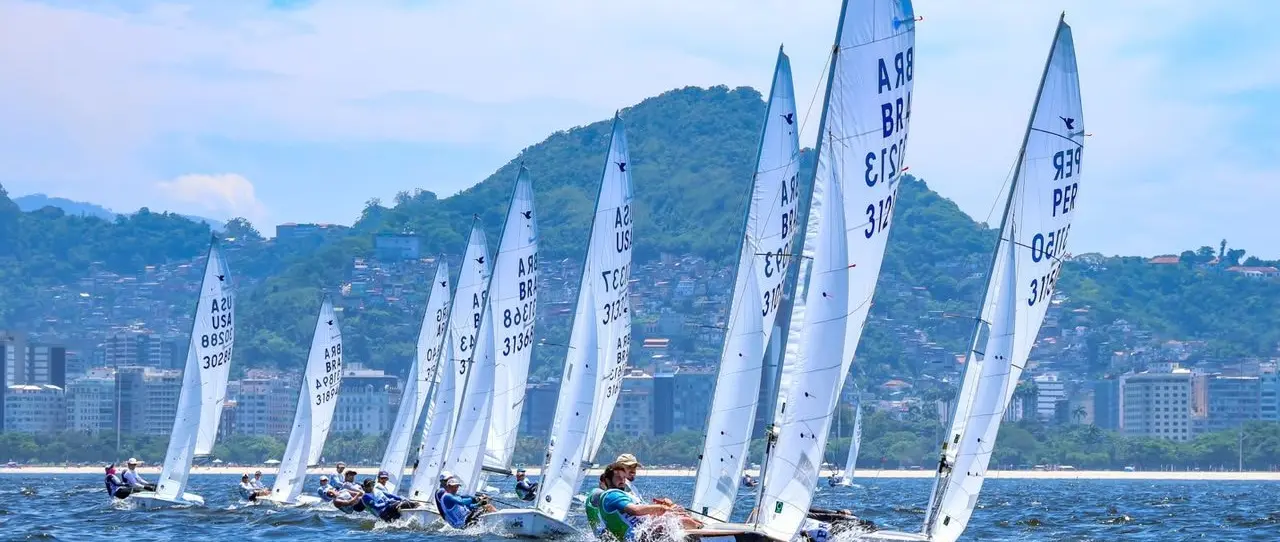
The accompanying lead photograph is an original Snipe racing photograph published in the association's 2026 regatta coverage. It provides authentic context for the type of boat and international competition that the new board will serve. It is not labelled as a portrait of Bermudez de la Puente, Prada and Scheuermann or a photograph taken during the election. That distinction is important because a sporting race image and an administrative decision are different kinds of evidence. The election results come from SCIRA's signed official communication, and the race photograph is credited as a contextual image rather than falsely presented as an image of the ballot.
What sailors should follow in 2027
The confirmed result is that Bermudez de la Puente, Prada and Scheuermann were elected to the three relevant 2027–28 posts, with the transition set for 1 January. The wider board includes continuing officers with different term dates, showing that this is a partial change of leadership rather than replacement of the whole governing body. Future areas of interest include technical regulation, international championships, volunteer support and the strength of national fleets, but the election report itself does not commit the incoming officers to a particular action. For Leisure Boat Guide readers, the development is an authoritative update to the governance of an enduring two-person small-boat racing class, supported by a clear constitutional process and official publication.
Explore related Leisure Boat Guide reporting
- Musto Skiff 2026 Class Survey Opens to Members and Prospective Sailors
- WASZP Gains World Sailing Class Status After 2026 Governance Reform
- Hansson-Mild Tops Final 2026 OK Dinghy Ranking Ahead of 677 Sailors
- Musto Skiff Class Confirms July 2027 Lake Garda Worlds and Youth Entry Discount
Primary reporting and image credit
Primary manufacturer and organiser source(s): https://snipe.org/official-communications/2026-board-of-governors-elections/. © Snipe Class International Racing Association / original regatta photographer not identified on first-party class gallery. Authentic 2026 Snipe racing photograph; not a portrait of the new elected officers. Image is used only for correctly attributed factual editorial coverage and never represented as open-licence stock photography.