
Yorke Peninsula Council confirms the end of free council boat ramp access on 30 November 2026. Prepare for summer trailer boating and coastal day trips.
South Australia's Yorke Peninsula gives trailer boat owners a choice of coastal settings rather than one single launching destination. The broad gulfs on either side of the peninsula, small coastal communities and varied shoreline environments make it possible to build a holiday around a series of short, carefully chosen boating days. A compact fishing boat, runabout or family dayboat can be particularly well suited to this kind of trip, provided the crew understands the limits of the boat and chooses appropriate conditions.
For the summer ahead, one change deserves attention before setting off. Yorke Peninsula Council announced on 9 November that the temporary period of free access to council boat ramps ends on 30 November 2026. Normal fees and permit requirements resume from 1 December. The free access initiative began on 1 December 2025 as part of government support for recreational boat users in response to the algal bloom, and was provided for twelve months. It should not be assumed to continue into the new summer.
A small but important change to the holiday budget
A boat ramp fee is rarely the largest component of a coastal holiday. Fuel, accommodation, food, towing costs and servicing may have much greater financial significance. Nevertheless, changes to ramp arrangements matter because they can affect the preparations needed before the first launch of the day. A family arriving with an expectation of free access may find that it needs a permit or payment arrangement that it has not organised.
The council's notice does not itself set out an exhaustive list of individual ramp prices and payment methods. Consult the council's current boating facility and permit information for the particular ramp before arriving. Do not infer a price from a different council area or from an older holiday account. If several launches are planned over the summer, check whether a longer-duration permit is appropriate and which facilities it actually covers.
Choosing the coast according to the conditions
A peninsula offers one useful advantage to owners of easily transported boats: alternative locations may be accessible by road when the first choice is unsuitable. That does not mean the opposite coast will always be sheltered or that changing locations will guarantee safe launching. A forecast for a broad region needs to be considered alongside the local orientation of the ramp, expected wind, swell and tidal conditions.
Decide where to launch only after reviewing current marine forecasts and relevant access notices. An offshore breeze may make the water near a beach appear deceptively smooth while creating difficult conditions farther out. Conversely, an onshore breeze may cause a sheltered-looking ramp to become awkward to use. Consider the expected conditions for the return, not merely the appearance of the water in the morning. The ability to tow a boat to another destination is valuable precisely because it allows a crew to abandon an unsuitable plan.
Understanding the differences between coastal facilities
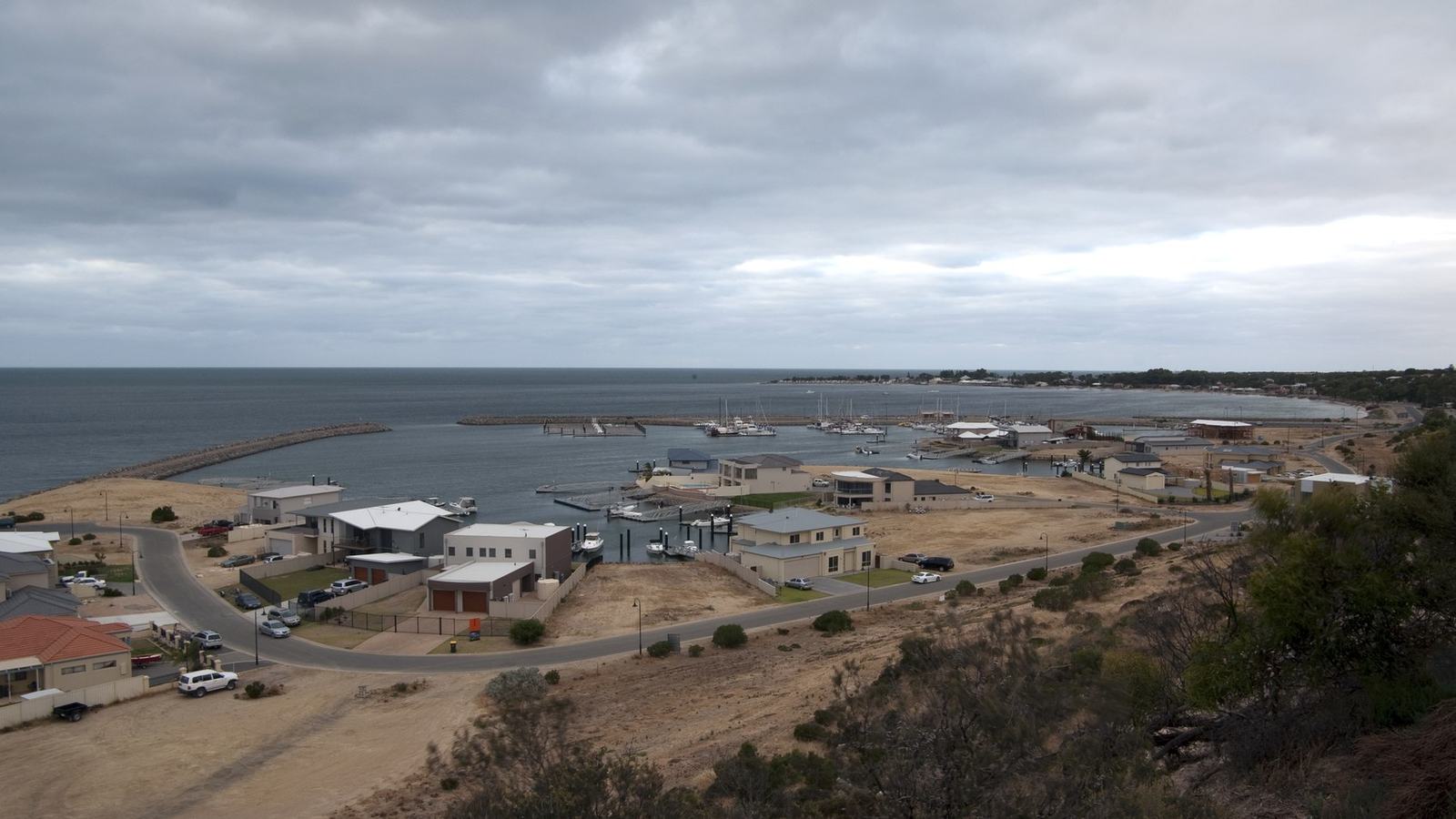
A harbour or marina visible in a photograph is not proof of the location, availability or ownership of a public boat ramp. Different facilities may have different operators, charges and access restrictions. The image accompanying this feature is a contextual view of the marina at Port Vincent; it is not presented as evidence of a particular council fee, launch entitlement or current operating condition.
Identify the actual access point in the council's published information and confirm whether its rules apply to the intended vessel and trailer. Look for practical details such as authorized parking, any limitations on use, and arrangements for the payment or display of permits. A busy public ramp also needs to be distinguished from a private launching facility that may be restricted to members or customers. Respect the signs at the site and do not use a restricted facility merely because it appears convenient.
Checking current algal bloom information
The origin of the temporary fee relief makes current water-quality advice particularly relevant. The end of a fee waiver is a change to an access arrangement, not proof that every location is unaffected by algal blooms or other environmental hazards. Conditions may differ around the coast and may change over time.
Consult the latest South Australian government health and environmental advice for the area in which you intend to launch, fish or swim. Pay attention to official seafood safety recommendations as well as information on direct water contact. Do not rely on an attractive photograph, the presence of other boats or an apparently normal surface to assess whether a particular activity is appropriate. Where current advice indicates a restriction or concern, choose an alternative location or activity in accordance with that guidance. Children and pets deserve particular consideration when planning shore-based recreation.
Preparing the trailer boat at home
A relaxed morning at the ramp starts with preparation before leaving the accommodation or home. Check the condition of the trailer, tyres, bearings, lights, coupling, winch and securing equipment using the relevant manufacturer guidance. A trailer that has been stored for a long period may need servicing before a holiday journey. Verify the vehicle's towing suitability and legal requirements for the actual loaded combination.
Prepare the boat's equipment and make sure the crew knows what should be carried for the type of outing and waters involved. Confirm current South Australian recreational boating requirements, including appropriate flotation and safety equipment, licensing and operating rules. Inspect safety equipment for condition and serviceability rather than relying on the fact that it was carried during the previous season. A summer day on a small boat is much easier to enjoy when basic equipment is ready before the crew reaches the ramp.
A considerate launch and recovery routine
Public ramps bring together people with different types of boat, levels of experience and expectations. A well-organized crew can reduce congestion by making final preparations away from the active ramp in a designated area. Arrange equipment, decide who will be responsible for each task and ensure children and other bystanders remain clear of moving vehicles and trailers.
Observe the site before reversing. Check for slippery surfaces, obstructions and other crews already handling their vessels. Use a launch method appropriate to the boat and trailer, and seek assistance from a competent person if the procedure is unfamiliar. At the end of the day, recover the boat without using the ramp as a place to sort every item of equipment or prepare for a lengthy road journey. Move to a suitable area for these tasks once it is safe to do so. Courtesy at the ramp benefits everybody, particularly during the busy holiday period.
Taking a modest coastal route
Small recreational craft can be excellent for exploring a limited stretch of coast when the conditions and local rules are suitable. That advantage can disappear when an ambitious itinerary takes the boat farther from a safe landing than the crew can manage. Do not select a route simply because a headland, island or fishing location looks close on a map. Distances over water, changes in weather and the boat's actual endurance need to be considered.
Make a plan that includes the intended area of operation, suitable alternatives and an expected return time. Leave relevant details with a responsible person ashore and carry appropriate means of communication and emergency equipment. Establish fuel requirements with a sensible reserve based on the actual boat and conditions. Avoid unfamiliar shallow areas or exposed approaches without appropriate navigation information. The best boating day may be a relatively short one that leaves ample time for a comfortable recovery.
Fishing as one part of the outing
For many small-boat owners the possibility of fishing is part of the appeal of a Yorke Peninsula holiday. A day of fishing need not depend on retaining a large catch. It can also offer an opportunity to introduce a family member to the practical skills of operating responsibly on the water. Before setting out, check the current South Australian fishing rules, including species restrictions, closures, size and bag limits, and relevant environmental or health advice.
Prepare equipment so hooks, lines and tools can be handled without creating unnecessary risk to passengers. Keep the boat's deck organized and consider the crew's mobility when choosing the layout. If fishing conditions are unsuitable, switch to another lawful activity rather than allowing the prospect of a catch to dictate unsafe navigation. Respect other vessels and follow restrictions applying to protected or sensitive waters.
Making room for a day ashore
A holiday built around a trailer boat does not require launching every morning. The peninsula's coastal communities also offer reasons to spend time on land. A day ashore can be useful when the forecast is poor, a crew member needs rest or the boat needs attention. It is often better to treat boating as one component of the holiday rather than a daily obligation created by the effort of towing the craft to the destination.
When choosing accommodation, consider practical arrangements for storing the boat and trailer. Ask whether the property has a suitable authorized parking space and whether its access can accommodate the combination. Plan cleaning and maintenance using appropriate facilities, rather than leaving equipment or waste in public areas. A convenient shore base can make it easier to choose boating days according to conditions instead of feeling compelled to launch immediately.
Preparing for the December transition
The important date for this summer is 1 December 2026, when the council says ordinary ramp fees and permit requirements resume. Owners who used the temporary free arrangements during the previous year should check their plans afresh. A saved payment instruction or old permit may no longer reflect the correct process. The council's current official notice and its facility information should be the starting points for decisions.
Arrange the required access, check environmental and weather information, and choose a route appropriate to the boat and crew. Keep enough flexibility to change the launch location or remain ashore. A well-prepared small craft can be an excellent way to enjoy the peninsula's coastal character, but it is the combination of sensible choices on land and careful handling on the water that makes a summer of trailer boating worthwhile.
Explore related Leisure Boat Guide lifestyle reporting
- Flaming Gorge by Trailer Boat: Red Canyon Water, Big Views and Launch Planning
- The Top 7 Ways to Upgrade Your Boat Trailer
- Fortescue Bay by Sea Kayak: Tasmania's Wild Cliffs and Quiet Coastal Water
- Lake Eildon by Small Boat: Launch Ramps, Inlets and an Australian Inland Escape
Primary reporting and image credit
Contextual hero photo by Bilby, resized adaptation. Original photo and attribution; CC BY 3.0 licence. Photograph is not evidence of new or open facilities or current conditions.

Primary authority and organiser source(s): https://yorke.sa.gov.au/news/notices/free-boat-ramp-access-ending-30-november-2026/. Marina at Port Vincent, photograph by Bilby, CC BY 3.0, via Wikimedia Commons. Resized contextual photograph; not a current conditions or access photograph. Image is used only for correctly attributed factual editorial coverage and never represented as open-licence stock photography.
Source
Yorke Peninsula Council