
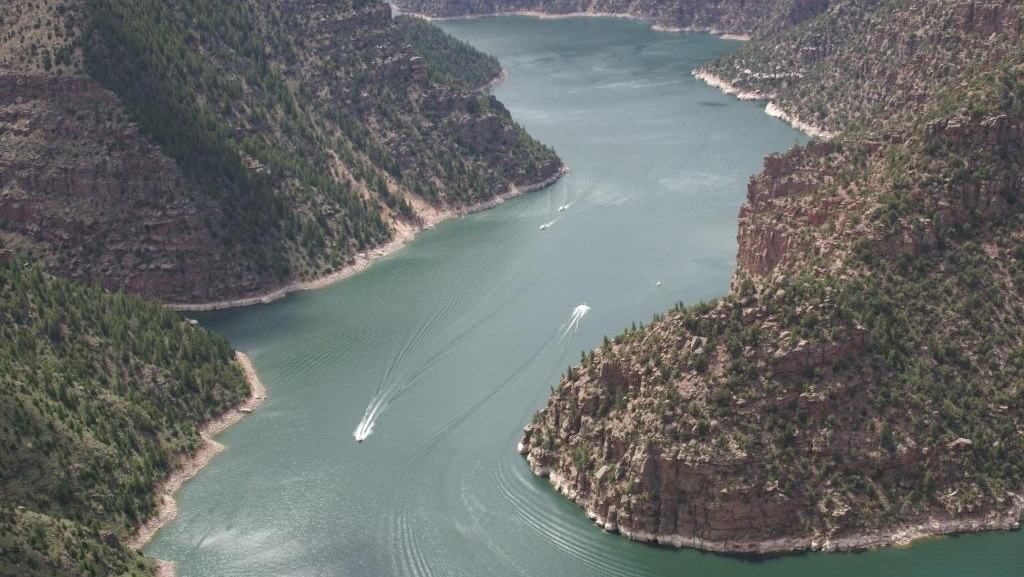
Flaming Gorge Reservoir crosses the Utah–Wyoming border, bringing striking red-rock scenery together with a large body of water used for fishing, cruising and a range of outdoor activities. The most dramatic view for a small-boat visitor may be the canyon country near the southern part of the reservoir, where steep walls change the scale of.
A desert reservoir built for a memorable day afloat
Flaming Gorge Reservoir crosses the Utah–Wyoming border, bringing striking red-rock scenery together with a large body of water used for fishing, cruising and a range of outdoor activities. The most dramatic view for a small-boat visitor may be the canyon country near the southern part of the reservoir, where steep walls change the scale of even an ordinary recreational motorboat. A useful day here begins with more than admiring a photograph: the launch point, return distance and weather must all be selected for the specific craft.
The Flaming Gorge National Recreation Area is managed within the Ashley National Forest context, with reservoir operations also influenced by the Bureau of Reclamation. That combination matters because boating access depends on both recreational facilities and a reservoir whose level can change. An owner bringing a trailer boat should decide on one manageable section rather than assume the whole lake can be explored without careful fuel and passage planning.
Picking an area rather than chasing every landmark
The reservoir extends for many miles, with very different terrain across its northern and southern reaches. Some shorelines are open and rolling, while others are defined by steep canyon walls. A first-time visitor may be tempted to plan a long route simply to reach a famous viewpoint, but a better approach is to choose an appropriate launch close to the scenery of interest and build the trip around a comfortable return. The landscape is impressive even when the boat covers relatively little distance.
Visitor information for Flaming Gorge identifies developed ramps, marinas and other facilities around the reservoir. The correct choice depends on the boat's draft, trailer, launching experience and whether fuel or other support will be needed. Ask for current access information before setting off, especially late in the season or during changing water levels. A picturesque spot on a map should not be assumed to have a maintained boat ramp or a safe place to leave a vehicle.
Water levels are a practical part of the route
The Bureau of Reclamation reports reservoir elevations and operating updates for Flaming Gorge, including changes associated with water management and inflows. These figures are important because a ramp that functioned in a previous season may offer different water depth or access at the time of a planned visit. Changing levels can also expose rocks, alter distances to shore features and make it harder to use a familiar landing point. The correct current update should be checked just before travelling.
Launch planning should include a look at the boat's draught and the trailer's needs. A ramp may be open yet unsuitable for a particular combination, particularly if the owner must immerse a long trailer or launch in windy conditions. Even when a marina is operating, its services may be seasonal. Contact the relevant operator for up-to-date details rather than relying on an article, which cannot know the reservoir's condition on the reader's eventual departure day.
A short cruise through Red Canyon
The Red Canyon area offers some of the most recognisable Flaming Gorge scenery. Federal Highway Administration photographs show motorboats beneath tall, layered rock walls, giving a sense of the scale and colour that attracts visitors. From a small boat, the narrow-looking bends can make the landscape feel intimate despite the considerable water surrounding the hull. Such views reward slower travel and an alert lookout rather than unnecessary speed.
The canyon environment is not a reason to ignore ordinary navigation. Reflected wake, variable wind and other boats can make handling different from what the owner experiences on a sheltered lake. Keep adequate distance from cliffs and other craft, and be mindful of visitors enjoying the area from quieter vessels. A good scenic run allows passengers to appreciate the shore without forcing the helmsman to divide attention between photography and boat control.
Fuel and realistic cruising distance
A trailer boat carrying an outboard may be capable of covering many miles quickly in favourable conditions, but range is not fixed simply by a horsepower rating. Fuel consumption depends on speed, load, sea state and how frequently the boat accelerates or manoeuvres. A trip into a remote-looking canyon deserves a conservative fuel reserve and a confirmed return plan. Owners should understand the difference between a distance measured on a map and the actual running hours needed to travel it safely.
Before departure, check the fuel supply, engine alarms, cooling-water arrangements and the condition of the propeller. Bring a means of communication appropriate to the area and do not depend entirely on mobile reception. If the day's plan involves a remote section, let someone ashore know the intended route and return time. A practical float plan is especially useful when the surrounding terrain makes it difficult to reach a road quickly.
Weather in a broad western reservoir
Flaming Gorge may offer spectacular calm-water conditions, but weather can change and wind can make exposed stretches uncomfortable or dangerous for small craft. Shoreline shelter can also be deceptive: a calm bay does not guarantee the next reach will be equally easy. A skipper should check the local forecast, watch for afternoon changes and avoid beginning a long return when light or weather is deteriorating.
Passengers should wear suitable flotation and be briefed on how to remain seated when the boat encounters chop. A craft that feels stable at rest may slam or roll when crossing wake at speed. Carry spare clothing and sufficient drinking water, recognising that exposed sunshine and wind can affect comfort differently. If conditions do not suit the boat or the people aboard, choosing a short route or staying ashore is a sensible decision.
Understanding the marinas and services
Facilities around Flaming Gorge include boat ramps and marinas, but the extent of fuel, food, repairs and slip availability varies by location. Some sites may suit a trailer boat for a day, while others are better positioned for longer stays or larger vessels. The point of visiting a developed facility is to make the journey easier, so confirm exactly what will be available at the intended date and time. A marina name on a map does not necessarily guarantee an open fuel dock in November.
For a small boat arriving by trailer, the launch experience can set the tone for the whole day. Have lines and fenders ready, prepare the vessel away from the ramp and check the securing arrangements before backing down. Use a spotter where visibility is limited. Move the boat clear promptly after launching so others can use the facility, then complete final passenger and navigation checks in a safe area.
Fishing without assuming local rules
Flaming Gorge is well known for angling, including cold-water fish species in parts of the reservoir. Yet visiting anglers should check the current Utah and Wyoming rules, relevant permits and any area-specific requirements before starting. The state boundary makes it unwise to assume that a licence or seasonal restriction applies in the same way everywhere. Fishing regulations may change and are more specific than the general boating information supplied by a recreation-area visitor guide.
A family fishing trip may be most enjoyable when the route remains short enough to allow plenty of time at a suitable spot. Ensure everyone understands safe casting positions and how hooks will be handled in a small cockpit. Store sharp equipment securely when travelling at speed. If using electronics to locate fish or identify depth changes, treat the display as one source of information rather than a replacement for an updated chart and visual lookout.
Leave space for a shore-based break
A well-planned boating day need not consist of continuous running. Many visitors appreciate the reservoir as part of a wider landscape of viewpoints, trails and picnic stops. A suitable trip might include a morning cruise, a return to the launch and then a drive to an approved scenic overlook. This approach avoids the temptation to make an unsafe landing on a remote shoreline simply to reach a rock formation seen from the water.
Shore access should be checked against the management rules for the intended area. Not every flat-looking bank is a maintained landing, and reservoir levels can change the safety of an approach. Do not run the bow onto rocks or fragile shore vegetation, and do not leave a boat unsecured where wake could cause damage. The scenery can be enjoyed from the water without insisting on touching every part of it.
Choosing a hull for the conditions
Different small craft will suit Flaming Gorge in different ways. An open aluminium fishing boat may be practical for a short, sheltered trip with appropriate weather, while a deeper-sided dayboat may offer more comfort for passengers in exposed reaches. The design's maximum load, freeboard and handling should guide the choice. An owner should not assume that because a boat is legal to launch, it is appropriate for every stretch of this reservoir or every weather condition.
Seating, shade, safe boarding and available storage can make a considerable difference to a family holiday. Bring only equipment that can be secured and remain within the hull's capacity rating. A heavy cooler placed high or a group of passengers gathered at the bow can affect handling. Preparing for the boat's actual loading condition is more useful than relying on a manufacturer speed figure achieved with minimal weight.
Protecting the reservoir between boating trips
Boats transported between waterways can carry invasive aquatic species, creating a risk for reservoirs and fisheries. Owners should follow applicable inspection, cleaning, draining and drying requirements before arriving and after leaving. The rules may differ depending on the boat's recent movements and where it will be used next, so consult the current state and federal guidance. A clean-looking hull is not necessarily evidence that every compartment has been properly drained.
Good environmental practice also includes managing fuel carefully, avoiding litter and respecting wildlife. A scenic reservoir is particularly vulnerable to cumulative impacts from large numbers of visitors. The aim is to enjoy the landscape in ways that do not spoil it for other boaters or nearby communities. Taking a little more time at the ramp and carrying waste ashore are small actions with worthwhile results.
A realistic Flaming Gorge itinerary
The strongest first visit is likely to start with one carefully selected launch, a conservative route and a clear time to return. Build in a margin for delays, changing weather and the ordinary pleasures of stopping to admire the view. Photographs from the Red Canyon area provide inspiration, but federal and local operating information should determine whether the planned boat, date and route make sense. Confirm fuel availability, the ramp's present condition and any local boating requirements before travelling.
Flaming Gorge rewards the visitor who treats it as a substantial reservoir rather than a decorative lake. Its great attraction is the meeting of water, rock and open western landscape. A small, well-prepared boat can experience that setting beautifully without an ambitious voyage or unnecessary risk. The right measure of success is returning with time, fuel and energy to spare—and with a genuine appetite to see another section on a later trip.
Official information: U.S. Bureau of Reclamation; U.S. Forest Service; Federal Highway Administration. Two boats on Flaming Gorge Reservoir below Red Canyon Overlook, Federal Highway Administration / Ashley National Forest, public domain.