
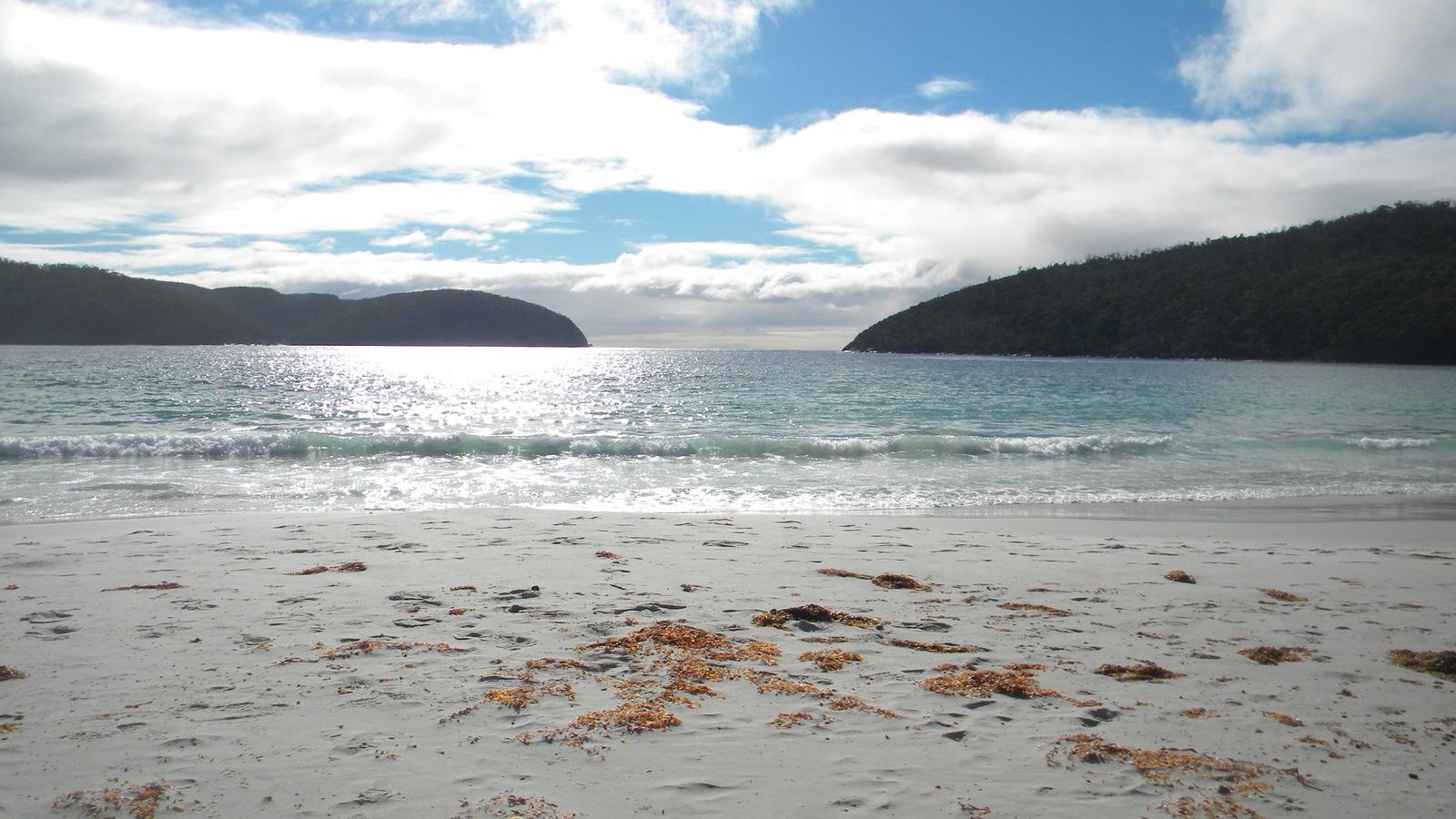
An original Fortescue Bay sea-kayaking feature covering the Tasman Peninsula, sheltered paddling decisions, sea conditions, shore access and conservation.
A different view of the Tasman Peninsula
Fortescue Bay offers an unusually vivid introduction to Tasmania's eastern coastal scenery. Here the attraction is not a busy waterfront with a prescribed sightseeing circuit, but a landscape in which forest reaches the sand and the Tasman Sea shapes every decision. From the water, the separation between the pale beach, wooded slopes and distant rock faces becomes immediately apparent. The Tasmanian Parks and Wildlife Service identifies Fortescue Bay as a starting point for coastal kayaking, including exploration of sheltered coves, sea life and imposing cliffs. That endorsement establishes the experience, not a guarantee of benign conditions. A worthwhile outing begins with an honest assessment of the paddlers, their equipment and the weather on the particular day.
Why small boats suit the bay
A kayak allows visitors to work at a pace that fits observation rather than a fixed tour timetable. The sound of a paddle, changes in water colour and birds moving along the shoreline become part of the trip. Low seating brings the sea surface into the foreground, while the forest and cliffs remain immense. This intimacy also increases exposure: a small craft cannot ignore wind, swell or cold water. A gentle-looking beach should therefore be treated as a launch opportunity only after checking the conditions offshore and the intended return. The sensible goal is a satisfying close-to-shore exploration, not accumulating distance simply because a coastline looks inviting.
Reading the geography before departure
Fortescue Bay sits within the broader Tasman Peninsula landscape, an area whose headlands and steep coastal features can make a short distance on a map misleading. The line of the shore may conceal corners where waves are reflected or the wind is funnelled. Study the bay in relation to prevailing wind, forecast swell, the direction of travel and a possible retreat. Mark more than one practical landing option, while remembering that a beach visible from the water is not necessarily safe to approach. A navigation plan should distinguish a protected exploratory circuit from an exposed passage along the cliffs. The latter calls for experience and a much wider safety margin.
The beach as an operating base
An uncomplicated launch can still fail through poor organisation. Before carrying the kayak into the shallows, fit buoyancy aids, secure all loose items and check that compartments are closed. Photographing the scenery can wait until the boat is afloat and settled. Make a deliberate decision about where to place footwear and dry bags, and where companions will regroup if someone changes their mind. Keep the launching area clear for other users. On return, approach the shore one craft at a time when possible and watch breaking waves rather than simply pointing toward the sand. A clean, controlled departure and recovery are more important than an ambitious itinerary.
What to watch along the coastline
The richest sightseeing is often close to the transition between land and sea. Rock textures, kelp and changes in the angle of sunlight may be more memorable than any single distant landmark. Pause at a sensible distance and observe without entering breaking water or pushing among rocks. Seabirds may be feeding, resting or protecting young; the correct response is to give them ample room rather than steering toward them for a photograph. The Tasman Peninsula's wild coast is a natural environment, not a marine exhibit. Wildlife cannot be scheduled, and paddlers should resist claims that a particular species or encounter can be guaranteed on any outing.
Cliffs are for looking, not approaching blindly
Cliff-backed water produces drama but reduces easy choices. A rock wall can leave no place to land if weather changes, and a smooth-looking patch may conceal surge or rebounding swell. If the attraction is the view of an imposing headland, there is no need to position a kayak directly beneath it. Keep a buffer from the rock, consider the effect of tide and reflected waves, and be prepared to turn away. For inexperienced paddlers, a guided short excursion within genuinely sheltered water is a sounder choice than attempting a famous exposed coastline. The most professional decision can be to remain within the bay or not launch at all.
Choosing a kayak and a companion
A stable touring kayak, correctly fitted to the paddler and the expected sea state, is more useful than an impressive-looking craft that a visitor cannot control. Ask an operator about equipment, buoyancy aids, spray protection, dry storage, emergency communication and the group's expected level. A tandem can help some parties share effort, but it does not remove navigation or rescue responsibilities. Practise steering and stopping close to the beach before moving away. Those without self-rescue or assisted-rescue skills should avoid interpreting a calm forecast as permission for an unsupported open-water trip. Select companions whose fitness and judgement fit the weakest participant.
Weather makes the itinerary
Tasmania's coastal weather can change the character of this experience rapidly. Wind strength alone is an incomplete measure: direction, gusts, swell, tide, sea temperature and visibility all matter. A light breeze blowing offshore may make the outbound journey easier while turning the homeward paddle into hard work. Swell can be present even under blue skies. Check authoritative marine forecasts, local warnings and operator advice immediately before departure, then continue observing conditions on the water. Establish a clear turn-back threshold before leaving. Reaching the planned turning point is never more important than retaining enough energy and daylight for a safe return.
Clothing for immersion rather than sunshine
A sunny day is not proof that the water is warm. Wear an appropriate personal flotation device, clothing chosen for the actual water temperature and footwear that remains secure when wet. Consider how cold-water immersion would affect dexterity and decision-making, not just comfort while seated in a dry cockpit. A spare insulating layer, carried in waterproof storage, is useful only if it stays dry. Sunglasses, sun protection and drinking water remain important even when the air feels cool. Avoid heavy loose clothing that would be difficult to manage after capsize. Ask local specialists whether conditions call for a wetsuit or more substantial immersion protection.
Navigation and communications in a small craft
A phone in a waterproof pouch is convenient, but coverage and battery power cannot be assumed around the coast. Where exposure warrants it, carry a suitable independent communication or distress device and know how it works. A chart or reliable offline mapping aid helps maintain geographical awareness, but visual observations should remain central. Record an intended route and return time with a responsible person ashore. Paddlers should know basic emergency signalling and have a practical plan for separating, capsizing or losing propulsion. None of this equipment substitutes for training; it reduces the consequences when a carefully considered trip does not proceed as expected.
Quiet exploration without damage
Responsible kayaking makes the visit better for the coast and for those who follow. Avoid trampling delicate vegetation while launching, keep clear of nesting birds and do not drag boats across sensitive shoreline habitats when another access method is available. Leave shells, plants and geological features in place. Carry food wrappers and every other piece of waste back. Wash and dry equipment as required to reduce movement of invasive organisms between waterways. The strongest photographic memory is often a quiet moment of observation, not a close approach to an animal or a landing where visitor pressure is already evident.
Combining a paddle with time ashore
Fortescue Bay need not be judged only by hours afloat. A more satisfying day may combine a carefully timed paddle with a shoreline walk, lunch and time to absorb the changing light over the bay. Walking offers perspectives that help explain the headlands seen from sea level, while the kayak reveals details the landward viewpoint cannot show. Use designated tracks and follow park access guidance. Allow enough time to put equipment away without rushing in darkness. If kayaking is postponed for safety reasons, the trip can still become a worthwhile coastal visit rather than a failed attempt at a particular activity.
Planning around access and park rules
Tasmania's Parks and Wildlife Service is the starting point for park entry information, local notices and current activity guidance. A description that names Fortescue Bay as a kayaking location should not be interpreted as an assurance that every beach, road, campsite or section of water is available in all conditions. Confirm access, any required park pass, parking arrangements and campsite rules from official information. If using a commercial provider, check where it actually launches and what is included in the booking. A guided experience, independent day paddle and overnight kayak journey require very different preparation, even when they appear in the same destination search.
What a guide can add
A competent local guide does more than lead a group past scenery. The value lies in judging launch windows, setting a realistic route, sharing local knowledge and responding when conditions change. Ask how group sizes are managed, what the minimum competence level is and what happens if the weather prevents the planned departure. Clarify whether the price includes paddling equipment, immersion clothing, transport and insurance. A responsible provider should be able to explain why a route is suitable for the group on that day. The best experience may be an unhurried sheltered paddle with opportunities for discussion and observation.
A realistic half-day on the water
Start by meeting early enough to review the marine forecast, select a conservative route and fit equipment carefully. Spend the first part of the paddle confirming that everyone can steer, stop and maintain a comfortable pace. Explore one side of the bay only while conditions remain appropriate, stopping to observe the shoreline from a respectful distance. Turn back with a generous margin for weather changes and tiredness. Land with patience, account for each member of the party and leave the shore tidy. This is an illustrative planning pattern, not a published route, duration or guarantee that the water will be suitable.
The attraction of doing less
Fortescue Bay rewards the visitor who measures success in attention rather than distance. A few sheltered minutes may offer reflections, colour and a perspective on the Tasman Peninsula that no roadside lookout quite reproduces. Equally, strong wind or difficult swell can make the correct choice obvious: admire the bay from land and return another day. This flexibility is central to boating as leisure rather than performance. Let the official park information define the setting, local forecasts define the conditions and the group's ability define the route. With those limits respected, a small kayak becomes a thoughtful way of meeting a formidable coast.
Sources and photograph attribution
Official destination and boating guidance: Tasmania Parks and Wildlife Service — Rafting and kayaking. Current access, rules, weather and reservations must be checked independently before travel.
Photograph: Bill — Fortescue Bay.JPG (CC BY-SA 4.0) via Wikimedia Commons. Original image resized as JPEG. Historical location-specific photograph of Fortescue Bay, Tasmania; not current sea conditions or a commercial kayaking departure. Source: https://commons.wikimedia.org/wiki/File:Fortescue_Bay.JPG. Licence: https://creativecommons.org/licenses/by-sa/4.0. Original rights remain with the credited creator or as specified by the source and licence.
