
A practical, historically researched guide to Biscayne National Park's boat-only Maritime Heritage Trail, including the Mandalay wreck, snorkeling options, mooring guidance and conservation etiquette.
Underwater history just beyond Miami's boating scene
A day by boat in Biscayne National Park can offer a kind of sightseeing rarely found on land. Beneath the water are the remains of vessels whose stories span the transition from nineteenth-century commercial sailing to twentieth-century leisure cruising. The park’s Maritime Heritage Trail brings several of those sites into a named interpretive route, with information produced by the National Park Service and mooring buoys installed to help boaters explore them without damaging the reefs.
This is not a walking trail, nor a claim that every visitor can safely snorkel every wreck. The National Park Service explains that access is by boat only and distinguishes shallow sites suited to snorkelling from deeper or more demanding sites better explored on scuba. That distinction should drive the planning: choose sites for the experience and abilities of the party, respect the conditions on the day and treat the fragile remains as protected history rather than as objects to collect.
Six shipwrecks and a historic lighthouse
The official trail identifies six shipwreck locations and includes Fowey Rocks Lighthouse as an additional point of interest. The lighthouse, first illuminated in 1878, has witnessed generations of navigation through the reefs and offers snorkelling around its base, but the structure itself is not open to the public. From the water it helps explain the challenges that earlier captains faced in identifying reef edges and making a safe approach towards Miami.
The Arratoon Apcar site tells a story from the nineteenth century, when maritime commerce was still being reshaped by steam technology and navigation aids. The Alicia, lost in 1905, provides another chapter in the history of ships, cargo and salvage around South Florida. Rather than treat the wrecks as anonymous structures, a visitor can use the park’s interpretive material to connect remains on the seabed with a named ship, a route and the circumstances of its loss.
Not all wrecks are appropriate for casual surface exploration. The National Park Service specifically identifies Erl King, Alicia and Lugano as better suited to scuba divers. Lugano sank in 1913 and rests near Long Reef, while Erl King illustrates a period when commercial maritime design was changing from timber sail to steel steam power. Certified divers should still seek up-to-date guidance and use an operator familiar with the site; the presence of a trail marker does not create a guarantee of simple conditions underwater.
Mandalay: a memorable wreck for snorkellers
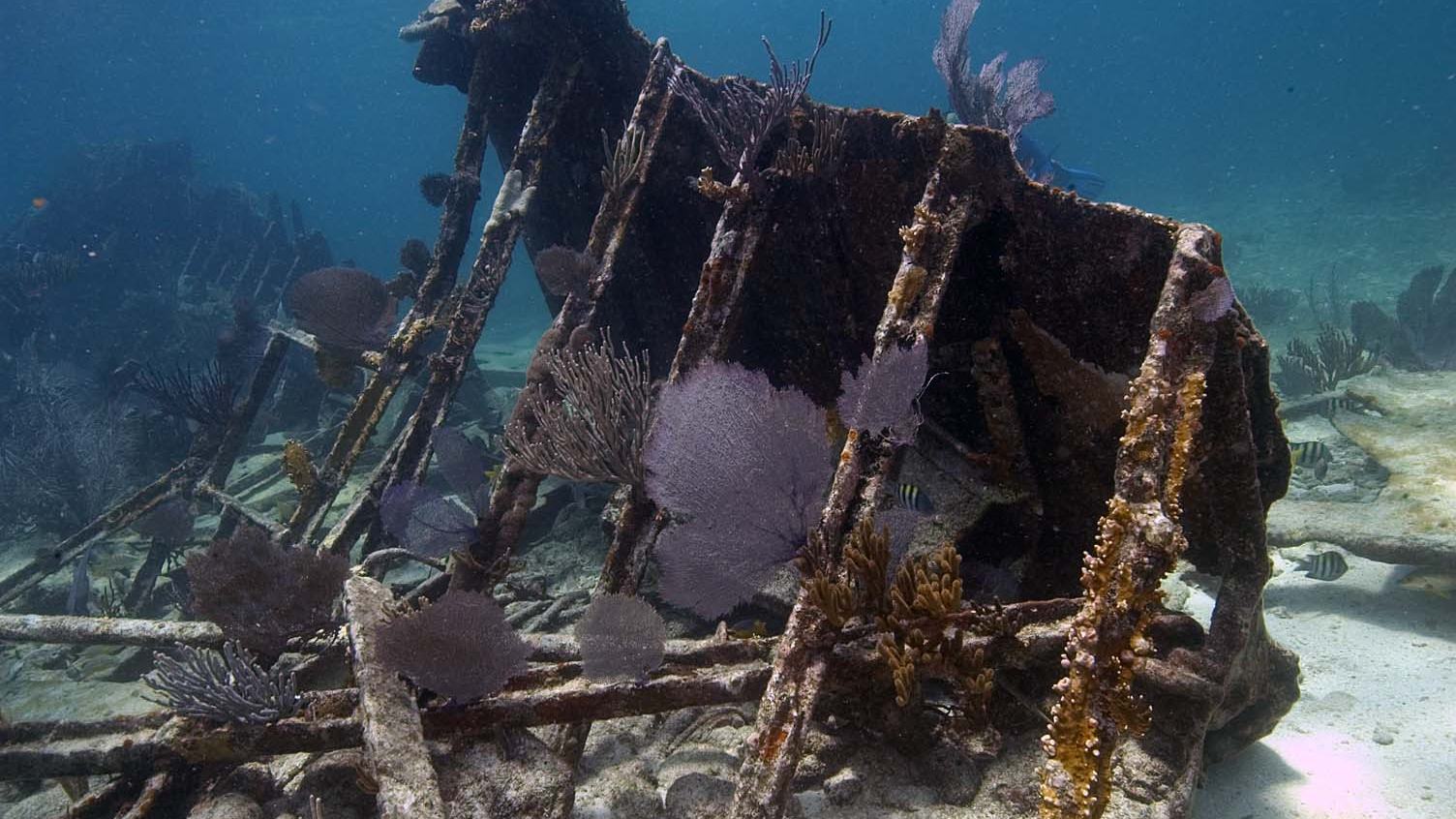
For many boating visitors, the Mandalay is a particularly evocative destination. The 1928 steel-hulled schooner later served in leisure cruising and sank on Long Reef on New Year’s Day 1966, according to the park’s account. The National Park Service highlights it as an accessible snorkelling opportunity, and the official image accompanying this article shows the remains of Mandalay in the park. It is a photograph of the actual wreck, not an illustration or a digitally generated shipwreck scene.
Its history resonates because Mandalay belonged to the era when a vessel could be refitted for comfortable pleasure voyages. The park describes teak and mahogany features from the schooner’s working life and a final voyage returning from the Bahamas towards Miami. The debris now visible is quite different from the original appearance of the craft, yet following the contours of its surviving structure can bring that story into focus more vividly than a museum label alone.
Snorkelling a historic wreck should be done with restraint. Coral, marine life and the material remains may be vulnerable to accidental kicks, touching or interference, and a strong current can quickly change the task of returning to a boat. Observe the site from an appropriate distance, avoid standing on wreckage and work within the supervision of a suitably experienced crew or authorised guide. For less confident swimmers, an interpretive boat excursion or the park’s virtual heritage material may be a more rewarding choice.
Boating rules that matter before departure
Biscayne is a major water-based national park, but its sheltered-looking shallows can be deceptive. In the park’s boating guidance, the National Park Service warns about changing depths, tide conditions and the risk of grounding, and directs mariners to current nautical charts rather than a sightseeing map. It also asks boaters to use mooring buoys where available, follow slow-speed zones and avoid anchoring on coral reefs. Personal watercraft such as jet skis and waverunners are prohibited.
The separate official mooring-buoy list includes positions and depths for Heritage Trail destinations such as Mandalay, Alicia, Arratoon Apcar, Lugano and Fowey Rocks. Those published numbers can help a qualified skipper plan a visit, but they are not a substitute for chartwork, local notices, weather forecasts or a sounder. Never assume an unoccupied buoy is available for any size of craft or that every mooring will suit the boat’s load, approach and draft. A professional captain must make the operational decision.
Wildlife is another reason to travel carefully. The park asks boaters to keep an alert lookout for protected animals including manatees, sea turtles and dolphins, to slow down where appropriate and to maintain distance. These principles are compatible with a good snorkelling experience: slower, more deliberate boat handling and less disturbance tend to make the day more enjoyable for people as well as more respectful of the marine environment.
Guided experiences and an achievable one-day plan
There is no need to own or hire a large boat to appreciate the trail. Biscayne National Park’s current guided-tours page directs visitors towards the Biscayne National Park Institute, which offers trips including snorkelling at heritage wrecks, reef adventures and other excursions. The park also lists other authorised commercial operators. Availability depends on weather, staffing and the chosen trip; no particular wreck should be represented as a guaranteed stop on every advertised outing.
A well-paced day might begin with the current park orientation materials, followed by one properly chosen on-water experience rather than an attempt to visit all the named sites. Certified scuba divers can discuss the more demanding wrecks with a specialist operator, while snorkellers may concentrate on suitable shallow sites, including Mandalay when conditions permit. Transport time, sea state, water visibility, boat traffic and a safe return window deserve as much attention as a wish list of names.
Those building a wider holiday around Biscayne can contrast the wrecks with a gentler day among its mangrove-fringed waterways. Our separate Biscayne paddling guide covers that quieter environment, while the Maritime Heritage Trail is fundamentally a boat-based encounter with submerged cultural remains. Combining the ideas over two days gives each activity the time and care it deserves, without blurring the safety requirements for diving and paddlecraft.
Preserve the wrecks for the next generation
Shipwrecks are compelling partly because they are real remnants of journeys, decisions and sometimes mistakes. Their value is archaeological as well as recreational, and damage cannot be undone by returning a souvenir to the water later. The park’s materials exist to help people understand what they are seeing, and its mooring infrastructure is part of protecting that record. Leave finds in place, follow the instructions of park staff and guides, and never anchor on a reef to shorten a swim.
Before setting out, consult the National Park Service’s official Maritime Heritage Trail guide, the current boating advice, the published mooring-buoy list and the authorised tour information. The links offer the authoritative starting points for planning, while a current local marine forecast and qualified crew determine whether a particular outing is safe. A visit that respects those boundaries is both an adventure and an act of maritime conservation.