
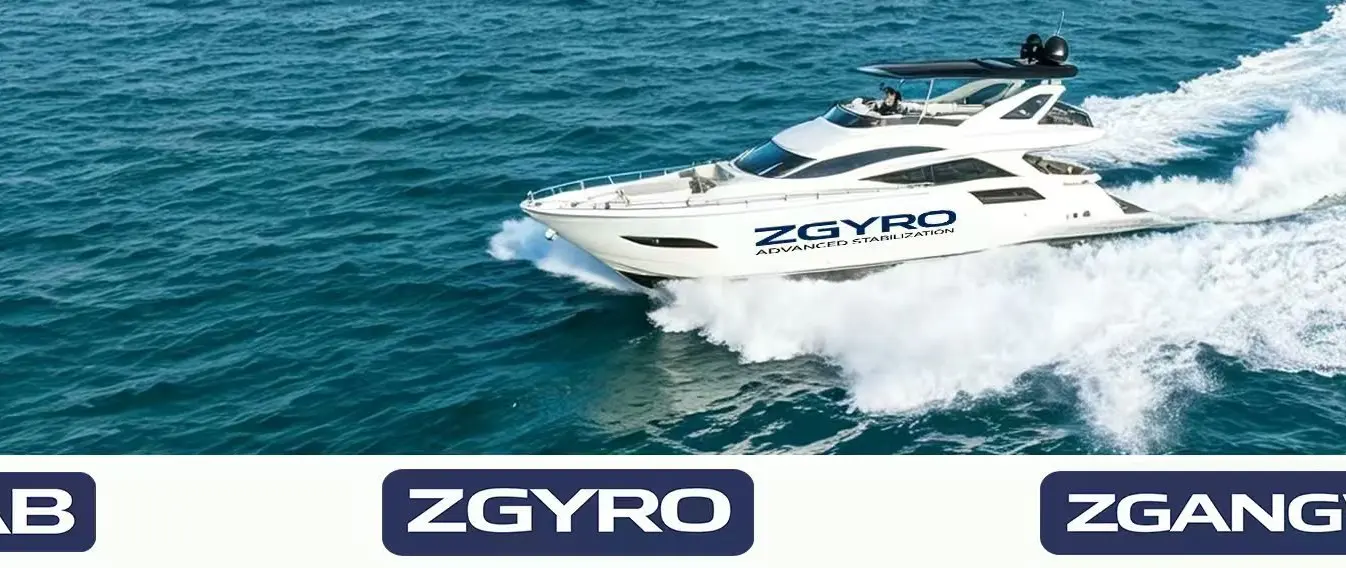
ZGYRO will bring its all-electric gyro stabilisation technology to the Southampton International Boat Show from 18 to 27 September 2026, marking the company as new to the show. The range is relevant to Leisure Boat Guide because the manufacturer offers six compact models specifically covering boats from 6.5 metres up to 12 metres before the product line moves into larger-yacht sizes.
Six models cover the core under-12m market
At the smallest end, the Z05 is specified for hulls up to 6.5 metres and 2.5 tonnes, with an 85kg unit measuring 470 x 480 x 420mm. The range then steps through the Z07 for boats up to 8 metres, Z1 for 9 metres, Z1.5 for 10 metres, Z2 for 11 metres and Z2.5 for boats up to 12 metres and 10 tonnes full-load displacement.
That sizing ladder is important for smaller craft because gyro stabilisers have traditionally imposed a significant weight and space penalty. ZGYRO's under-12m models range from 85kg to 245kg, allowing owners and builders to compare stabilisation benefits against payload, battery capacity and installation volume before specifying a system.
Electromechanical control replaces hydraulic precession
ZGYRO describes its system as fully electromechanical, using servo-motor and gearbox control rather than hydraulic precession hardware. The manufacturer also highlights adaptive motion control, three-level protection and energy regeneration, while the Southampton organiser describes the system as all-electric and oil-free.
The Z05 illustrates the small-boat installation approach with a 12V power input, 300–600W quoted operating demand and a 20-minute run-up to its rated speed. Larger models increase electrical demand and move to raw-water cooling, so the correct unit still needs to be selected around the boat's displacement, available electrical system and machinery-space ventilation.
Roll reduction claims need to be matched to the boat
ZGYRO says its active control can reduce roll by up to 96%, but that figure is a manufacturer claim rather than a guarantee for every hull or sea state. Real-world performance depends on displacement, hull form, installation position, operating conditions and whether the selected gyro has enough angular momentum for the boat.
For owners considering a retrofit, the most useful Southampton discussion will therefore be about sizing, structure, power supply and cooling rather than headline percentage claims alone. A correctly engineered installation can make a meaningful difference to comfort at anchor and underway, but the stabiliser has to be treated as part of the boat's overall weight and electrical design.