
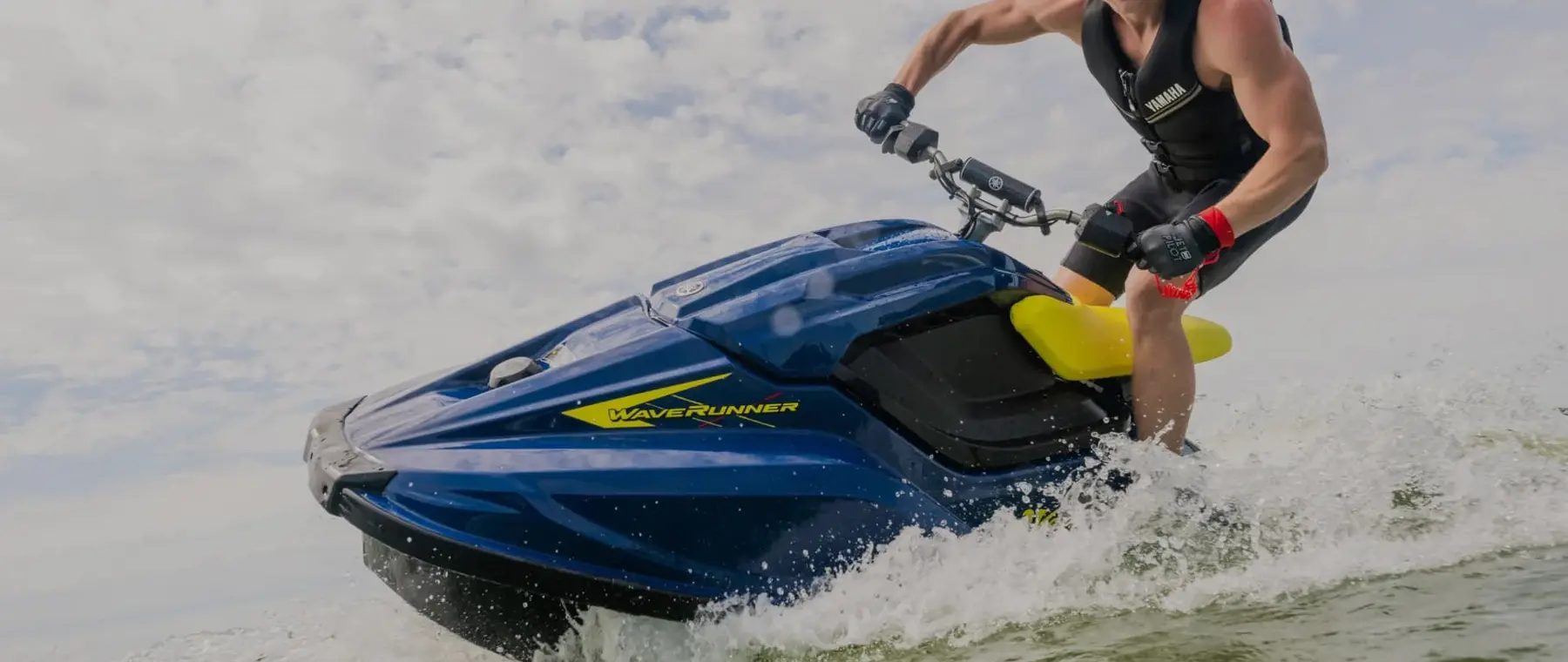
Yamaha WaterCraft has brought back the WaveBlaster name for a new single-rider personal watercraft due to reach US dealers in the first quarter of 2027. Unveiled on 23 August 2026, the modern machine takes the playful character associated with the original 1990s model and puts it on a newly engineered hull.
Rather than chasing the passenger capacity and storage that define many contemporary sit-down PWCs, Yamaha has designed the WaveBlaster around short, responsive rides. It joins the stand-up SuperJet in the company's new Sport class, where rider input and agility are central to the experience.
A hull designed to lean into the corner
The WaveBlaster uses inside-lean handling, allowing the hull to roll inward as the rider turns and shifts body weight. Yamaha specifies vacuum-assisted resin-transfer moulding for the composite hull, a 144mm jet pump and a ride plate developed for this application.
The craft does without sponsons and uses a central riding position with moulded foot supports. Those decisions put more emphasis on the operator's balance and steering technique than on a conventional flat-turning runabout layout.
Compact dimensions and 110 horsepower
Yamaha's 1,049cc three-cylinder TR-1 HO four-stroke engine produces a claimed 110hp, and the company quotes a dry weight of 425lb. The craft measures 99 inches long and 38.6 inches wide, making it a particularly compact addition to the current WaveRunner range.
Yamaha targets a top speed in the mid-50mph range rather than presenting a certified maximum for every loading and water condition. An L Mode can reduce engine output for less experienced riders or more controlled situations, although operators still need suitable training and to follow local PWC rules.
Availability and small-craft significance
The 2027 WaveBlaster is scheduled for availability through authorised US Yamaha WaveRunner dealers in the first quarter of 2027. Details for other markets and actual retail performance will require separate confirmation when regional specifications are published.
For Leisure Boat Guide, the return is notable because it adds a highly specialised single-person craft alongside the larger multi-seat models that dominate modern PWC sales. Yamaha is offering a different ownership proposition centred on steering feel, short sessions and compact storage rather than carrying a family aboard.