
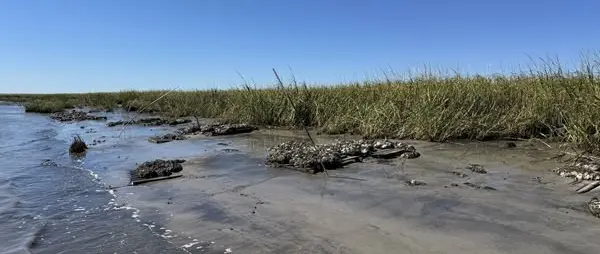
Restoration measured over 19 months
Yamaha Rightwaters and Georgia Southern University have released findings from a coastal conservation project examining how restored oyster reefs affect salt-marsh growth. Researchers followed sites along Georgia’s North Newport River for 19 months after reef deployment in September 2023.
The work compared aerial imagery from restored and untreated areas to measure changes in marsh area and shoreline position. Using control sites gave researchers a clearer view of whether reef restoration was contributing to the changes they observed.
Marsh growth outpaced control sites
The study found consistent marsh growth at all restored locations despite different exposure and environmental conditions. On the more exposed eastern shoreline, restored areas gained more than 50 square metres while nearby control areas recorded a net loss.
Along the southern shoreline, marsh expansion at restoration sites was about twice that recorded at control locations. Shoreline migration rates were also reported at two to three times the rate measured where reefs had not been restored.
Why oyster reefs matter to boaters
Oyster reefs can reduce wave energy while creating habitat and supporting water quality, so restoration can strengthen the same coastal environments used by recreational boaters and anglers. Healthier marsh edges can also improve resilience where erosion threatens shallow-water ecosystems.
The research gives conservation groups evidence they can use when planning future living-shoreline projects. It also demonstrates why boating-industry support for habitat work can produce benefits beyond a single restoration site.
Research feeds future conservation
The project was carried out with the Georgia Department of Natural Resources Coastal Resources Division and the findings were published in the journal Diversity. The partnership connects university research with practical coastal-management questions.
For the leisure-boating community, the study is a useful reminder that access to healthy waterways depends on long-term habitat stewardship. Oyster restoration is increasingly being treated as infrastructure for coastal resilience as well as a fisheries project.