
Yamaha's marine business grows despite weaker US demand
Yamaha Motor has reported a substantial rise in marine revenue and operating profit for the first nine months of 2026, even as demand for outboard motors in the United States remained soft. The Japanese group published its results on 6 November, covering January to September. Its Marine Products division generated 430.2 billion yen in revenue, up 7.8 percent from the same period a year earlier. Operating profit reached 69.0 billion yen, representing growth of 40.2 percent. Those are segment figures, not sales of small outboards alone, but the division is central to the world market for recreational boats.
The apparent contradiction between weaker US demand and better marine earnings is important. Yamaha says its North American outboard sales declined, while sales in Europe, Asia and Africa increased. Emerging markets in Asia and Latin America also showed stronger demand for outboards. The company additionally cited pricing changes and favourable exchange-rate effects. It would be misleading to translate the segment's higher revenue into a claim that American owners suddenly bought more engines. Growth came from a combination of markets, prices and business conditions.
The headline numbers need careful interpretation
Yamaha's 430.2-billion-yen marine revenue represented an increase of 31.0 billion yen against the comparable 2025 period. Its 69.0-billion-yen marine operating profit was higher by 19.8 billion yen. This means the reported profitability improvement was considerably stronger in percentage terms than sales growth. The company attributes the change to several factors: adjustment of prices, reduced selling and administrative expenses, and beneficial foreign exchange, balanced against higher costs arising from US tariffs and the situation in the Middle East.
For small-boat dealers, a profitable supplier is relevant because engine development, technical training and parts support depend on long-term investment. Nevertheless, a supplier's financial performance does not determine the running cost of an individual Yamaha-powered boat. A model purchased in a particular country will have its own retail price, tax treatment, service requirements and warranty. The best reading of the results is that Yamaha's marine operation improved financially on a nine-month basis despite uneven demand in important markets.
Outboard markets are moving in different directions
Yamaha specifically reports that US outboard demand declined, while demand improved in developing markets across parts of Asia, Latin America and other regions. Europe, Asia and Africa contributed to higher Yamaha outboard sales than in the equivalent 2025 period. That geographic spread matters for an engine manufacturer because the same broad product family may serve very different types of boating. A freshwater fishing craft in North America, a small coastal launch in Europe and a working boat in an emerging market can all use outboard propulsion, while buying patterns differ substantially.
An owner should not assume regional growth means dealers everywhere are receiving more inventory. Local models, emission and electrical specifications, exchange rates and distribution agreements can affect what is actually sold in each market. The new corporate figures do not provide a country-by-country list of unit sales. They show a direction of travel rather than the exact number of 20hp, 100hp or 250hp engines delivered to any one territory. Detailed market claims require additional evidence.
Personal watercraft provide a contrasting signal
The Marine Products segment also includes personal watercraft, a market that Yamaha says weakened in the United States. The company reported lower unit sales of its personal watercraft compared with the prior year, despite the positive marine segment result. This is an important caution against treating all recreational watercraft as one uniform market. A personal watercraft and a family fishing boat might be purchased by different customers and operate in different ownership circumstances, even when both appear in a manufacturer's marine accounts.
Lower PWC sales do not necessarily reveal the number of people using existing machines on lakes and coasts. Financial results measure manufacturer activity during a defined period, while participation also depends on rental operations, the used market and machines already in service. The announcement does not establish whether lower PWC unit sales will continue into 2027. Dealers and owners should watch subsequent figures rather than infer a permanent change from one reporting period.
The figures are part of a much larger group
Yamaha Motor's consolidated January–September revenue increased 16.0 percent to 2,215.2 billion yen, while operating profit more than doubled to 235.2 billion yen. Motorcycles, robotics, financial services and other businesses contributed to those numbers. Marine Products therefore represents an important, but not exclusive, part of the company's performance. It would be incorrect to cite the full 2,215.2-billion-yen group figure as money earned from boats or engines.
The distinction matters when comparing Yamaha with a manufacturer focused almost entirely on recreational marine products. Group-wide revenue can be affected by developments in markets unrelated to leisure boating, including motorcycles or industrial automation. A clearer measure of the boating business is the separately reported 430.2-billion-yen marine segment. Even that segment is broader than engines for vessels under twelve metres, so it should be described at the correct level of aggregation.
Price increases helped, but costs also rose
Yamaha says price revisions supported marine revenue. It also identifies US tariffs and higher procurement costs connected to the situation in the Middle East as pressures on its operating performance. The rise in profit was helped by cost pass-through, lower selling and general administrative expenses and foreign exchange. None of these explanations means a particular outboard became cheaper for a consumer. Pricing at the dealership is influenced by local distribution, currency, model year and any applicable retail offers.
For buyers of a small motorboat, the practical lesson is to compare total delivered prices and support packages. A boat advertised with a familiar engine brand may include different rigging, displays, controls or warranty arrangements from another quote. Changes in manufacturer profitability or international currencies do not automatically translate into equal changes on individual invoices. Dealers should be able to explain the actual product specification and the current local terms.
What the results mean for service and supply
Boat owners depend on engine suppliers long after the original purchase. Parts, technical training and diagnostic support help keep small craft operating safely and efficiently. Yamaha's financial release does not announce any new local service centres or changes to specific marine warranties. However, the scale of the business and its regional performance are relevant to understanding the wider supplier network that supports installed outboards.
A boater preparing for a long holiday or remote trip should still verify parts and service availability along the intended route. A manufacturer's global sales growth cannot guarantee that a particular dealer stocks an individual component. Preventive maintenance, correct engine identification and following the official service schedule remain important. For boatbuilders, stable supplier relationships can support planning, but no specific production or delivery promise should be inferred from these financial results.
Small-boat performance is not explained by revenue
The report says nothing about how a specific Yamaha outboard performs on a given hull, and the marine division's financial success is not a sea trial. A six-metre aluminium boat, a lightweight RIB and a heavier cabin cruiser have different requirements even if each can be fitted with a Yamaha engine. Suitable horsepower, propeller choice, control integration and fuel consumption have to be considered against the complete boat and its intended operating range.
Prospective buyers should consult actual manufacturer technical data and appropriate sea-trial observations rather than extrapolate from the company's market results. Where a dealer compares two engine options, the assumptions about boat load, operating speed and conditions should be stated. A corporate sales announcement can explain whether the supplier is gaining business, but not whether an individual engine is the correct choice for a particular owner.
Forecasts and dividends concern shareholders
Yamaha did not change its full-year consolidated financial forecast in the 6 November announcement. It continued to project annual revenue of 2,900.0 billion yen, operating income of 260.0 billion yen and net income of 170.0 billion yen. The company did, however, raise its planned year-end dividend by ten yen to 35 yen per share, making a forecast total annual dividend of 60 yen. These are corporate financial decisions rather than new customer price offers.
A company can maintain a year-end forecast while experiencing different demand trends across regions or products. Yamaha specifically noted uncertainties around exchange rates, tariffs and costs. Owners should not treat a dividend increase as evidence of lower engine prices or more generous dealer incentives. Investors and industry analysts may draw different conclusions from those numbers than someone deciding whether to repower a boat. Both perspectives benefit from separating verified results from speculation.
The small-boat industry's takeaway
The confirmed development is a 7.8-percent rise in Yamaha's marine revenue and a 40.2-percent increase in marine operating profit for January–September 2026. The manufacturer says outboard demand softened in the US but strengthened elsewhere, while personal watercraft sales declined. That combination describes a market that is geographically and commercially uneven rather than universally strong. Leisure Boat Guide's interest is the outlook for propulsion suppliers and the equipment available to owners of smaller recreational craft.
For a dealer, the next questions concern local demand and stock availability. For a boat owner, the enduring priorities are suitability, total cost, servicing and reliability. None of those questions can be settled from financial statements alone. The nine-month results offer a credible snapshot of Yamaha's marine operation as the industry moves towards the end of 2026; further company releases will establish how the full year develops.
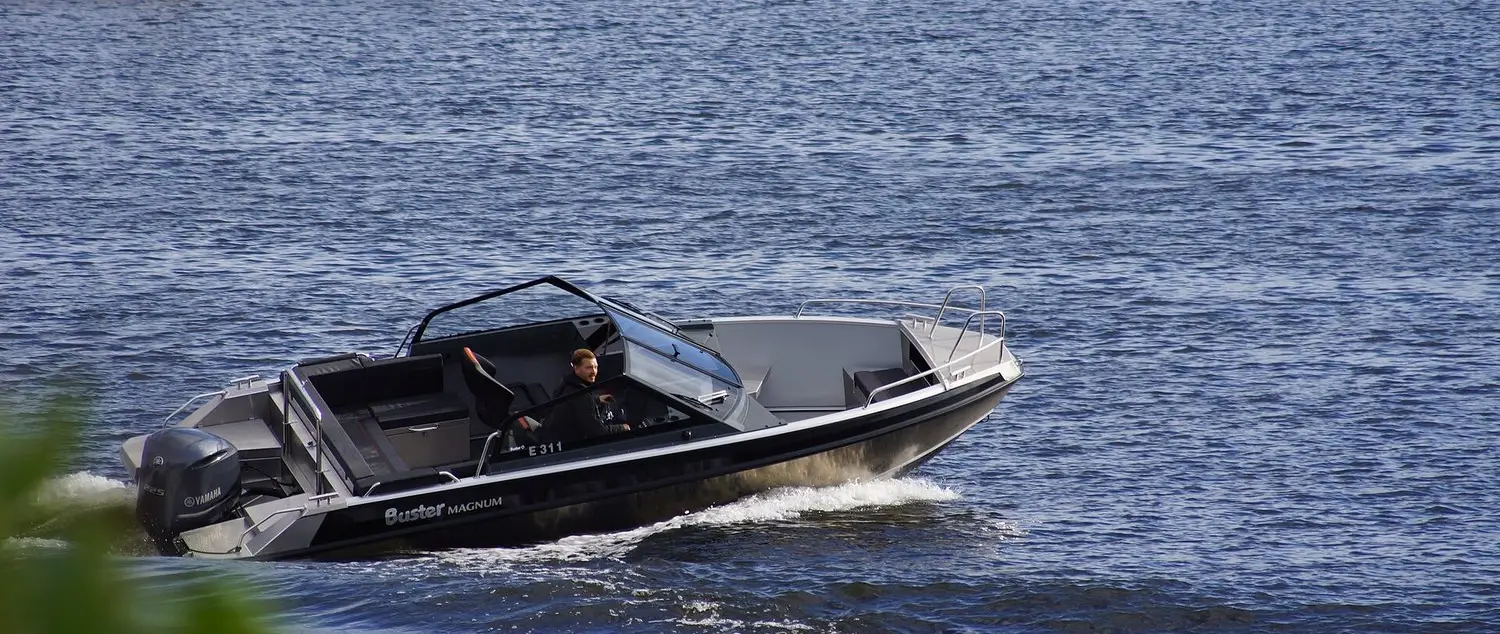
Sources: Yamaha Motor official nine-month financial results, 6 November 2026 and Yamaha Motor investor information. Photograph: Buster Magnum powered by a Yamaha F225, by Mikasarkijarvi, Wikimedia Commons, CC0; illustrative historical image, not a photograph of Yamaha's current sales activity.
