
Recreation without the size of a cruiser
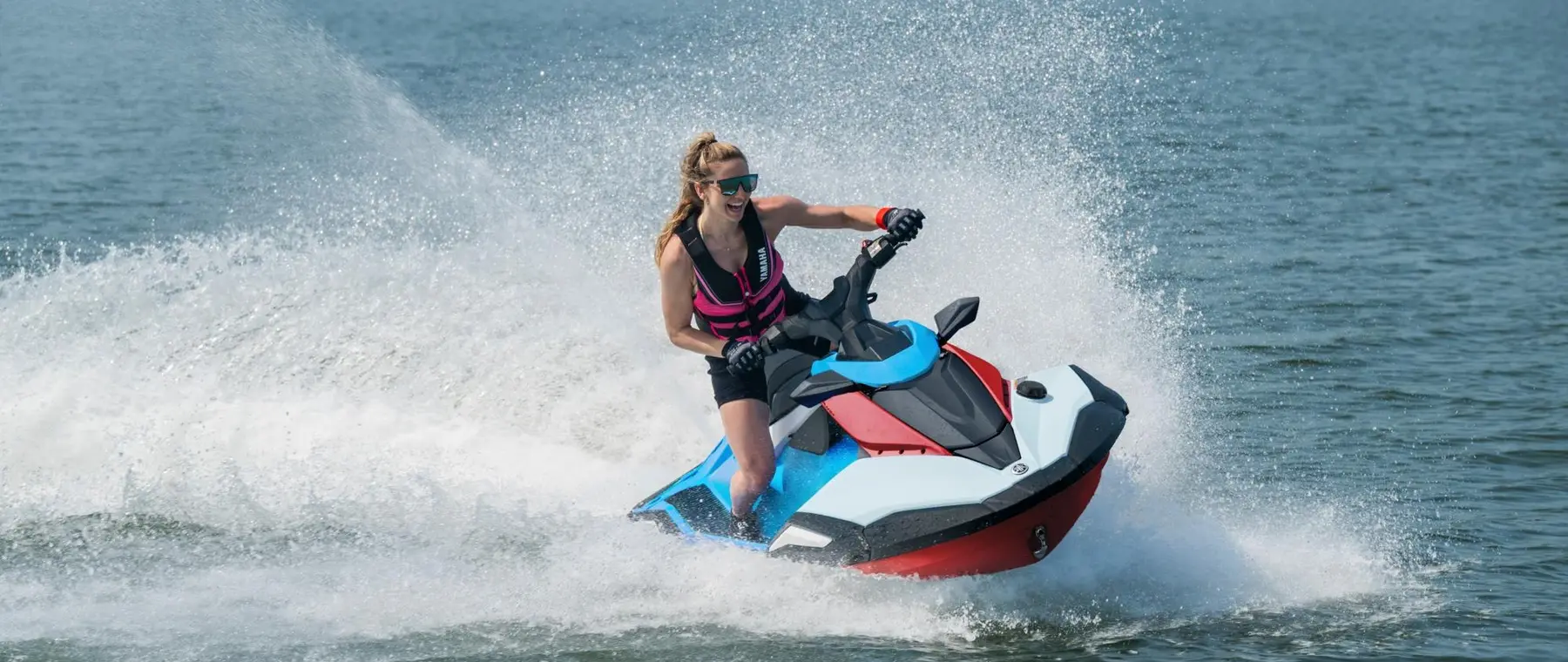
Yamaha’s JetBlaster DLX occupies a different place in the 2027 WaveRunner range from the substantial FX touring models. It is a compact, playful personal watercraft intended to deliver an involving ride without a large hull or the elaborate equipment of a premium cruiser. The manufacturer describes a lively design with a direct feel at the handlebars, making it appealing to those whose typical outings are short, local and largely recreational.
The DLX should not be confused with the JetBlaster PRO. Both sit in Yamaha’s smaller recreation family, but the PRO adds more overtly freestyle-focused equipment and an HO version of the TR-1 engine. The DLX uses the standard three-cylinder, four-stroke TR-1 marine unit. Buyers should look closely at the different control, seat and deck configurations rather than assuming the two names identify a simple colour change.
The 2027 European specification gives a displacement of 1,049 cc, a 144 mm high-pressure jet pump and a 50-litre fuel tank. These figures establish the mechanical outline, although they do not amount to a tested top-speed or range claim. A rider carrying extra gear, dealing with chop or making repeated accelerations will use fuel differently from someone travelling steadily in calm conditions.
RiDE and ergonomics shape the experience
The JetBlaster DLX is fitted with Yamaha’s RiDE control system for forward, neutral and reverse manoeuvring. It is an important convenience feature in a compact craft that will often be used near launch ramps, pontoons and other recreational traffic. Smooth low-speed operation still depends on observation, stopping distance and allowing for wind. A lever does not turn a jet-driven vessel into a car with conventional brakes.
Yamaha also emphasises the deliberately lively appearance and rider-focused handlebar arrangement. Styling will matter to some owners, but comfort at the bars, reach to the controls and the ability to reboard after swimming are more useful things to assess during a practical inspection. A rider should be able to operate the stop lanyard and understand the controls without stretching or taking their eyes away from the water for long periods.
The compact format helps define the likely use. It may suit a holiday base or an owner who wants to enjoy short rides and spend time exploring a sheltered bay where local rules allow. It is less suitable for transporting a family’s equipment across an exposed stretch of water, and prospective customers should be realistic about passenger comfort, storage volume and the limits imposed by conditions.
What buyers should compare
A useful comparison is with the 2027 VX DeLuxe, which has a larger fuel tank and a more substantial three-person family layout. The VX could make better sense for longer recreational outings and shared use, while the JetBlaster DLX may appeal to customers who favour compactness and an energetic handling character. Neither is universally better, and the right choice starts with the type of water and frequency of use.
Ownership costs include more than the machine itself. A prospective purchaser should budget for a suitable trailer, storage, insurance, protective equipment and scheduled maintenance. Local rules may impose licensing, speed restrictions or limits on access to beaches and conservation areas. Those practical questions should be addressed before buying a vehicle whose enjoyment depends on legal and convenient launch facilities.
Yamaha’s 2027 JetBlaster DLX keeps a relatively simple engine specification at the centre of an engaging recreation model while retaining the convenience of RiDE. The important decision is whether that purposeful combination matches the way the owner wants to use a PWC. For someone who values easy outings and a direct riding feel, it deserves attention alongside the more heavily equipped PRO and VX options.
Models, equipment and availability vary by market. Readers should confirm their local configuration, safety requirements and delivery dates with an authorised Yamaha dealer. The specification reference is Yamaha Motor’s official model page. Photograph courtesy of Yamaha Motor Europe.