
Yamaha Motor has described a manufacturing change affecting the powerhead cowlings used on some of its outboard engines, developing a new paintable composite material intended to shorten the time required to form each component. In an official release dated 16 July 2026, Yamaha Motor and Yamaha Marine said they worked with Japan Composite to produce High-Cycle Sheet Moulding Compound, or SMC, which reduces the moulding cycle time by 20 per cent compared with conventional material under the company's stated test conditions. The technology has been used in Yamaha outboard production since 2025. For small-boat owners, the story is about how everyday propulsion equipment is made, rather than a new engine specification or an improvement in fuel economy measured on the water.
The component that is changing
An outboard motor's powerhead cowling is the protective outer cover surrounding the upper engine assembly. It gives the motor its familiar appearance and helps shield components from weather and spray. On smaller recreational boats, the cowling is also a part that owners see and handle during inspection and routine servicing. Yamaha's 2026 announcement concerns the material and production method used to manufacture that cover. It does not say that the engine block, propeller, gearbox or fuel system has been redesigned as part of the same change. Nor does it establish a new maximum horsepower rating or improved boat performance. Keeping those boundaries clear matters because a manufacturing improvement in one component should not be presented as a whole-engine technology breakthrough.
Understanding sheet moulding compound
Sheet moulding compound is a composite material that can be formed in a heated mould to produce components with consistent shapes. The material usually includes resin and reinforcement, and its properties depend on the exact formulation and processing conditions. Yamaha's High-Cycle SMC was developed to be paintable while enabling a shorter moulding cycle. In manufacturing terms, the cycle includes steps from placing material in a mould through the removal of the finished piece. A shorter cycle can potentially allow more components to be made with the same equipment over a given period, subject to other production constraints. That does not mean a factory's entire output will automatically rise by the same percentage; staffing, equipment availability, painting, assembly and quality checks also affect capacity.
The claimed twenty per cent improvement
The official figure is a 20 per cent reduction in moulding cycle time relative to the materials used for comparison. Yamaha attributes the comparison to its own research conducted in March 2026. The company also projects a corresponding 20 per cent reduction in carbon dioxide emissions associated with the moulding energy. These are related but distinct claims. A reduction in cycle duration describes a manufacturing process, while the projected emissions change depends on energy use and its associated carbon intensity. Neither number should be translated into a claim that a boat using the affected outboard emits 20 per cent less carbon dioxide while operating. That would involve a completely different measurement of engine fuel, power and usage. The evidence supplied concerns the cowling manufacturing stage.
Why thermal energy is important
Yamaha explains that conventional thermosetting sheet moulding processes often need substantial thermal energy. The development team's objective was to reduce the time and energy required while retaining appropriate forming and finish characteristics. When heat is produced through electricity or the combustion of fuel, energy use contributes to a manufacturer's environmental footprint. Lowering energy demand in a production step can therefore have value even if the finished product looks unchanged to a customer. The release does not provide a detailed public lifecycle assessment of every input or a complete factory-level energy balance. The responsible description is that the company expects a lower energy requirement during moulding and has quantified its projection for that process, not that the material has been proven environmentally superior in every possible application.
Three companies involved in development
The published project credits Yamaha Motor, its group company Yamaha Marine and Japan Composite. The companies worked together on material formulation and the practical requirements of the manufacturing process. Cooperation between an engine brand, its production organisation and a specialist materials supplier is common in technically demanding industries. A promising resin formulation may perform well in a laboratory but require changes before it can be used reliably in high-volume manufacturing. The Yamaha release describes repeated verification and optimisation to reach the chosen process. It does not disclose a full chemical recipe or provide a complete independently audited performance dataset. The stated achievement is a commercially adopted material and the company's measured reduction in cycle time.
Already in production, not merely a concept
A significant detail is that the material has reportedly been used for outboard powerhead cowlings since 2025. That places the July 2026 statement in a different category from a speculative prototype announcement. The manufacturers describe technology already being applied in production, although the source does not provide a complete model-by-model list of the engines fitted with every version of the cowling. It would therefore be incorrect to assert that all Yamaha outboards use the new compound. It is also inappropriate to tell an owner to replace an existing cowling with a newer part on the assumption of compatibility. Parts interchangeability must be checked against the specific engine model and Yamaha's official parts documentation, taking account of serial numbers and applicable service guidance.
What this means for the buyer of a small outboard
Most recreational boat buyers choose an outboard based on suitability, reliability, service availability, performance, weight, controls and cost. The production material of the cover may be of secondary interest. Nevertheless, how the engine is manufactured can influence supply arrangements and the producer's overall environmental objectives. If a shorter cycle reduces manufacturing demands, the company may benefit operationally, although no specific retail price reduction is promised in the press statement. A customer should not assume that lower factory energy use will produce a cheaper engine or longer warranty. Nor does a new cowling formulation establish that previous materials were unsafe or unsuitable. The announcement is an incremental manufacturing development with distinct, attributed performance claims.
Environmental targets and their boundaries
Yamaha's release places High-Cycle SMC within the group's wider environmental programme. It refers to ambitions for carbon neutrality across its supply chain by 2050 and an accelerated target for manufacturing sites, including group companies, by 2035. Those dates are company goals, not evidence that the targets have already been achieved. They also cover broader activities than the outboard cowling line. In emissions accounting, manufacturers distinguish direct emissions from their operations, indirect emissions from purchased energy and other supply-chain effects. A reduction claimed for one moulding stage does not provide a direct measurement of the entire engine's lifecycle. Owners interested in environmental impact should separate the factory process from emissions during fuel production and operation.
Product quality still has to be maintained
A faster production cycle is useful only if the finished component meets the required standards. An outboard cowling must be suited to vibration, weather exposure, salt spray, impacts during normal handling and the temperatures encountered in service. Paint adhesion and surface finish are also important when a component is visible on the boat. The official release describes the new material as paintable and says the project involved technical optimisation. It does not supply public independent ageing or impact-test results, so this article does not claim superior durability to earlier products. Consumers should use manufacturer instructions for cleaning, removing and installing covers, and should report unusual cracking or fit problems to an authorised service provider rather than trying to infer causes from the material name.
A manufacturing story with global relevance
Small outboards are used on a wide variety of boats, including tenders, fishing skiffs, workboats and small sailing craft. The demand for replacement parts and consistent manufacturing quality makes production efficiency an important subject even though the work happens far from the waterfront. A development in composite moulding can also be of interest to boatbuilders using similar processes for other components. That does not establish that Yamaha's formulation can be applied directly to hulls, decks or structural parts. Each use would require its own technical evaluation. The relevance here is a real example of industrial materials engineering being applied to a component common in recreational boating, supported by a manufacturer's named research and production history.
Reading the published figures correctly
Yamaha reports a 20 per cent reduction in moulding cycle time and projects a 20 per cent reduction in associated carbon dioxide emissions. Those figures are expressed relative to conventional materials under its specified comparison, not as percentages of total outboard manufacturing or lifetime motor emissions. The release's July 2026 date should also be kept clear: the technology was already used from 2025 and its development was publicised in July, not first introduced at this November's METSTRADE exhibition. The figures are manufacturer statements rather than results of a separately described independent trial. Clear attribution is essential so that a useful manufacturing improvement is not inflated into a claim about every environmental or operating characteristic of the engine.
The photograph and future evidence
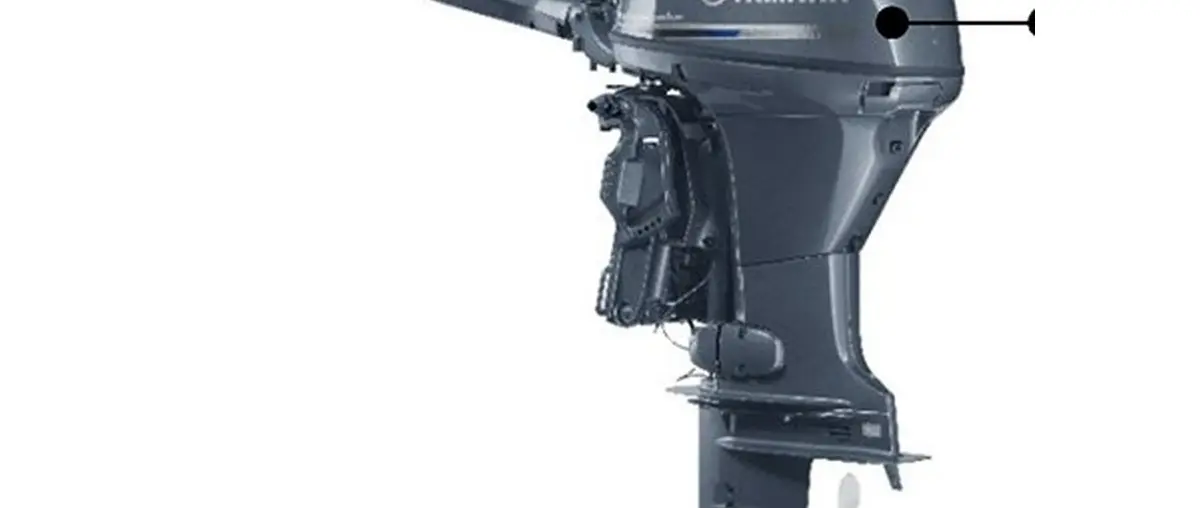
The accompanying product image is a cropped official Yamaha Motor press photograph of an outboard, taken from the company's published High-Cycle SMC announcement. The crop retains the real engine photograph while omitting its explanatory callout; the original Yamaha image and the press page are recorded in the source attribution. No AI-generated imagery is used. The next useful evidence would be additional model-specific information and more detailed manufacturing or lifecycle data if Yamaha publishes it. For now, the verified development is a paintable composite already applied to Yamaha outboard cowlings, with a manufacturer-reported shorter moulding cycle and reduced energy requirement. It is a technical production story whose value lies in the precise improvement described, not in a new boating performance claim.
Sources and image attribution
Primary reported announcement: https://global.yamaha-motor.com/news/2026/0716/highcycle.html.
Official photographic provenance: https://global.yamaha-motor.com/news/2026/0716/highcycle.html. Image supplied by the originating organisation, credited in the photograph title; original copyright remains with the rights holder. Official image file. The photographs are documentary or clearly labelled archival illustrations, not evidence of events that have yet to happen.
