
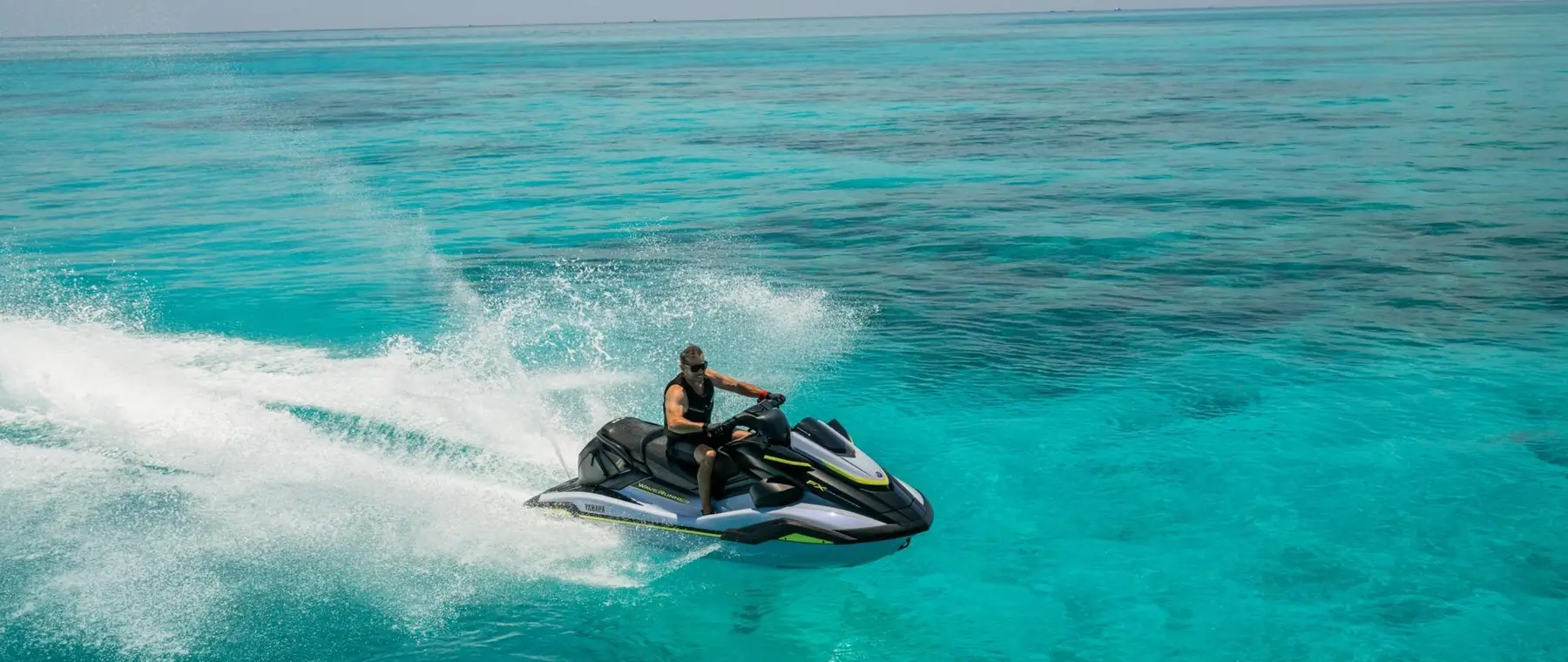
A full-size craft with a performance engine
Yamaha has retained a distinctly performance-oriented model in its 2027 FX WaveRunner line-up. The FX SVHO uses the company’s Super Vortex High Output engine to deliver strong acceleration from a full-size platform. It appeals to people who want a substantial hull and sophisticated controls, but who prefer a more sporting emphasis than the Cruiser seating and comfort brief of the FX Cruiser SVHO. The names are similar; their intended use is not identical.
Official European specifications describe a supercharged four-cylinder, four-stroke 1,812cc engine driving a 160mm high-pressure jet pump, with a 70-litre fuel tank and premium unleaded gasoline. Yamaha has not made those figures equivalent to a guaranteed speed or operating range. Personal-watercraft acceleration and fuel burn change with temperature, load, water surface and rider technique. A test ride in appropriate conditions is more informative than converting displacement into an assumed speed figure.
The FX SVHO shares an essential family identity with other FX models, while also sitting apart from the smaller GP performance range. Buyers should consider the advantages of a large-hull layout, including onboard space and the ability to carry routine supplies, against its storage and towing demands. A smaller sporting craft may feel different through turns, and there is no universal best option. The right choice depends on local waters and how the machine will be handled.
Power calls for restraint near other people
Supercharged response can make open-water riding exciting, but it creates little benefit near a congested launch or swimming area. Operators need familiarity with the engine cut-off system, low-speed modes and how a jet-driven craft slows when approaching a pontoon. Yamaha’s rider-control technology assists handling, yet the operator must continuously consider stopping distance, currents and other traffic. A clear plan for manoeuvring is particularly important when taking a passenger.
The large FX deck and available storage provide space for the equipment needed on an ordinary recreational trip. That can include flotation gear, emergency communications and dry clothing, but loose objects must be secured and electronics properly protected. Seating capacity should be verified for the specific delivered version, and load limits must never be treated as simply a matter of fitting people physically onto the seat. Weather and water conditions can quickly reduce comfort.
Where watersports are contemplated, local law may require an observer and suitable seating, as well as restrictions on the tow line and launch areas. A powerful engine does not make towing automatically safe. Riders should obtain instruction and check all equipment before a new activity. Many incidents occur at low speed or close to shore, where distractions and poor awareness matter more than advertised performance figures.
The difference from an FX Cruiser SVHO
The FX SVHO and FX Cruiser SVHO share a supercharged engine family, but the latter makes more of an explicit touring-comfort proposition. The buyer’s decision should therefore include the seat shape, passenger support, chosen display and accessory package, not just horsepower. Dealers can demonstrate how the specific versions differ in steering position, reboarding arrangements, practical storage access and optional equipment. A seemingly minor ergonomic distinction can matter during repeated use.
For ownership, establish where suitable fuel is available, what the engine service schedule involves and how much the fully equipped craft and trailer will weigh. A heavy modern PWC may require more launch-ramp space than owners anticipate. Saltwater care, winter storage and proper battery maintenance also influence reliability. A planned journey should include sensible reserve fuel, a weather check and communication with someone on shore, regardless of how confidently the machine accelerates.
The 2027 FX SVHO adds a strong sporting option to Yamaha’s full-size line-up and deserves to be judged in that specific context. It may fit a rider who frequently seeks lively open-water handling but wants the size and utility of the FX series. The purchase should still be based on intended waters, training, passengers and cost of ownership. Choosing performance responsibly is as much about judgement and preparation as it is about choosing a powerful engine.
Model specifications and equipment may differ between markets and configurations. Confirm availability, local rules, towing arrangements and the final specification with an authorised dealer. Technical details are drawn from the manufacturer’s official model description. Hero photograph courtesy of Yamaha Motor Europe.