
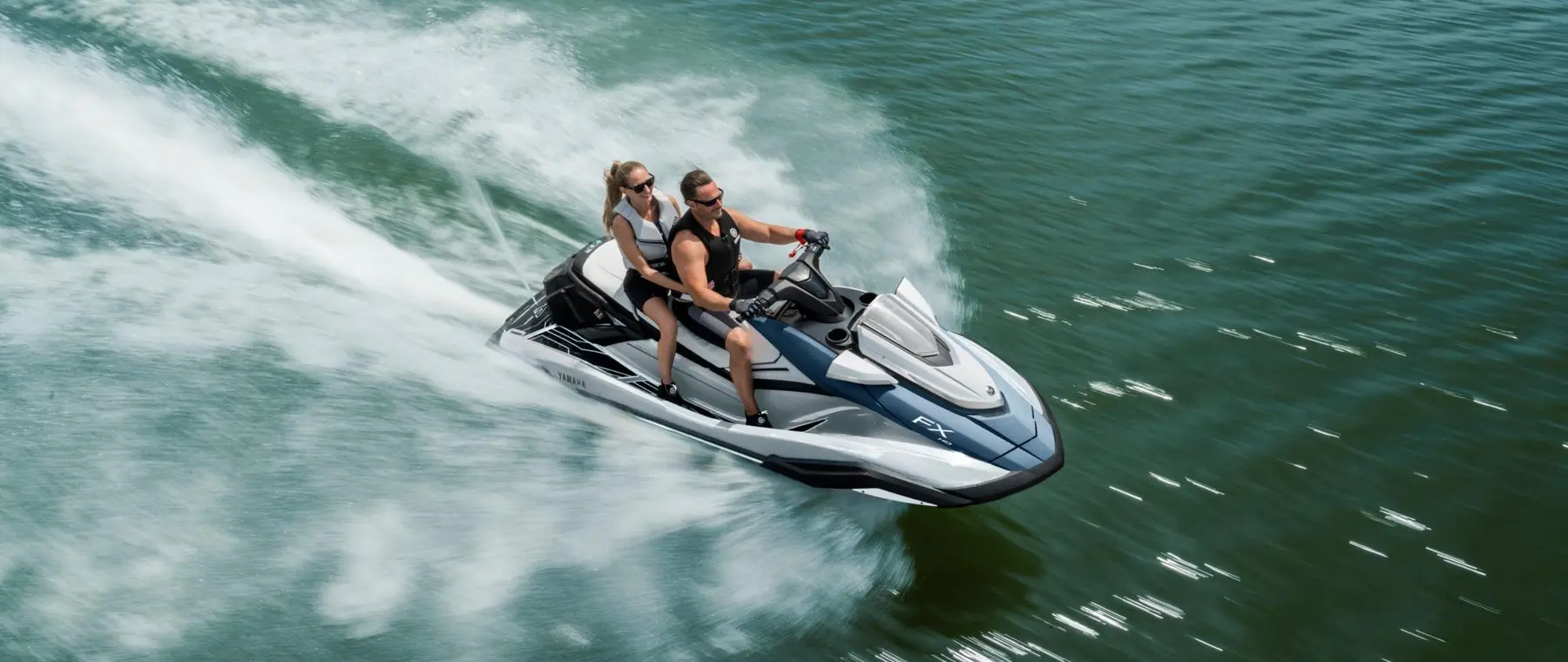
An FX platform without forced induction
Yamaha’s 2027 FX HO is a reminder that the largest horsepower figure does not automatically define the most useful personal watercraft. Its naturally aspirated High Output marine engine occupies a different place in the FX range from the supercharged SVHO machines. The model is intended to accommodate trips with companions, gear and changes of destination while retaining the roomy feel associated with Yamaha’s premium recreational hull platform.
The manufacturer lists a four-cylinder, four-stroke 1,898cc engine, a 155mm high-pressure jet pump and a 70-litre fuel tank, using regular unleaded gasoline. Those specifications identify the mechanical choice, not a laboratory comparison of running costs. Real efficiency varies with waves, load, trim and throttle use. Nonetheless, an owner considering a naturally aspirated engine may value a more straightforward propulsion arrangement over the extra urgency available from a supercharger.
At first glance the FX HO and FX Cruiser HO appear closely related, but equipment and seating choices deserve detailed scrutiny. Yamaha separates its FX variants to match different kinds of recreational riding, so the apparently similar names should not discourage a full side-by-side inspection. A buyer who usually rides alone may have different priorities from a couple planning long inland-water days. Helm ergonomics, storage layout and delivered options matter.
Everyday utility is the real test
The 2027 FX HO is aimed at riders who want the freedom to depart for a short outing and continue exploring when weather and fuel allow. Carrying practical equipment makes that possible, but owners must understand the limitations of each compartment and secure their gear against spray. A waterproof communications device, spare layer, drinking water and appropriate emergency kit should be part of every sensible plan rather than an afterthought.
Yamaha equips the FX family with electronic rider controls and display technology designed to simplify operation. Prospective owners should confirm the exact functions and screens on their market’s version, particularly low-speed steering, security settings and any navigation capability. A display can aid situational awareness, but it cannot replace looking astern before changing course, checking for swimmers or anticipating the effect of wind on a near-stationary craft.
A personal watercraft remains a small and exposed vessel even when its hull looks substantial on a showroom stand. Passenger comfort and stability depend on how it is loaded and ridden, while watersports use must follow the relevant local observation and seating laws. Consider the whole routine from garage to launch: towing weight, trailer maintenance, ramp gradient, corrosion protection and space to wash the hull after saltwater use.
Where this version fits
A comparison with the supercharged FX SVHO is especially useful because both may attract riders who like the size and design of Yamaha’s large recreational platforms. The FX HO offers a 1.9-litre naturally aspirated engine rather than an 1.8-litre boosted unit, a difference with implications for fuel requirements and riding character. No buyer should assume a specific performance gap without independent testing in similar conditions and with comparable loads.
Owners should ask the dealership about the service programme, warranty, available spare parts and the engine’s recommended fuel in their market. They should also check local PWC restrictions and whether the chosen cruising grounds expose the craft to uncomfortable chop. Planning a sensible route means allowing for changing weather and keeping a generous fuel margin. A powerful recreational jet craft is not immune to distance, tide or a sudden headwind.
The 2027 FX HO is therefore most compelling as an all-rounder for someone who values useful space and responsive performance without choosing Yamaha’s most aggressive powertrain. It is a choice about how the machine will be used over a season, not about winning a specification-sheet contest. An informed owner will compare the hull, controls, passenger arrangements and total running costs before deciding whether the HO fits their actual boating life.
Model specifications and equipment may differ between markets and configurations. Confirm availability, local rules, towing arrangements and the final specification with an authorised dealer. Technical details are drawn from the manufacturer’s official model description. Hero photograph courtesy of Yamaha Motor Europe.