
A larger platform changes the usual WaveRunner proposition
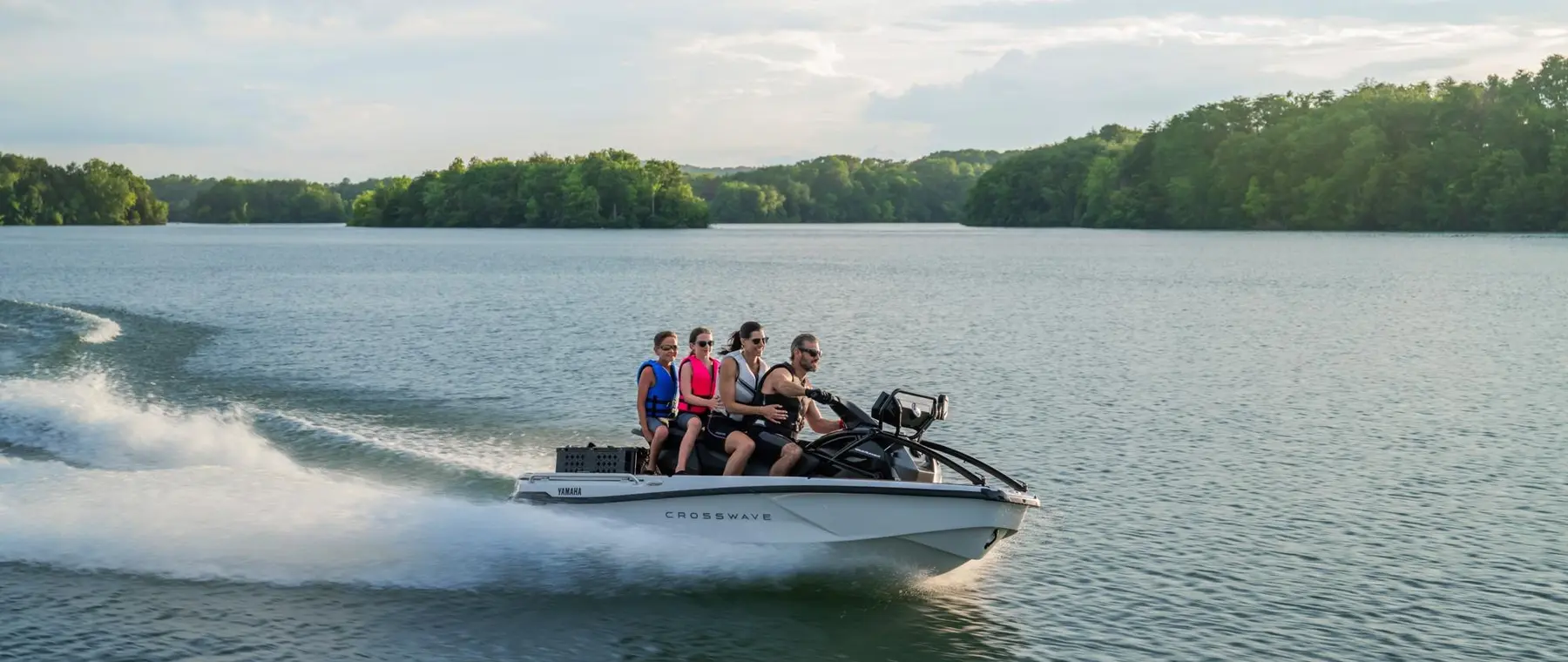
The 2027 Yamaha CrossWave takes the personal-watercraft concept in a distinctly different direction. Instead of focusing entirely on quick turns and short recreational rides, it places a walkaround deck, substantial storage and accommodation for four at the centre of the layout. The result is a craft that sits closer to the boundary between a conventional WaveRunner and a small activity boat.
Yamaha describes the CrossWave as a new way to combine fishing, exploration and social days on the water. That positioning is reflected in a deliberately broad deck, spaces for equipment and a helm designed to support longer outings. The model is not merely a different colour scheme within an established performance range; its whole physical arrangement answers a different set of uses.
A potential buyer should nevertheless retain realistic expectations about the craft’s operating environment. Four seats do not turn a personal watercraft into a large offshore cruiser, and payload, weather limitations and local licensing rules still matter. The design is most useful when the owner understands how its size and deck arrangement compare with the smaller machines that Yamaha also sells.
A 1.9-litre engine and a substantially bigger hull
The manufacturer specifies a 1,898cc High Output marine engine for the CrossWave. Published US-market figures give it a length of twelve feet nine inches and a dry weight of around 1,410 pounds, significantly larger than many sporting personal watercraft. Those figures indicate how far the design has moved from the light and nimble end of the WaveRunner family.
A large fuel capacity is another important distinction. Yamaha lists a 26.4-US-gallon tank for its CrossWave specification, intended to provide flexibility for extended outings. That figure is capacity, not a guarantee of range: speed, sea state, crew load, wind and accessories all alter consumption. Owners should calculate a comfortable reserve and avoid treating a catalogue number as a planned operating distance.
The propulsion is still a Yamaha jet-drive system, with the control and operating considerations associated with personal watercraft. Anyone stepping up from a lighter two-seat model should test how the extra length and weight affect launching, docking and trailer handling. A craft designed for multiple activities also requires a practical plan for transport and storage when it is not on the water.
Two screens and equipment mounting options
The CrossWave uses a wide horizontal helm rather than a narrow central display. Yamaha identifies a seven-inch Connext touchscreen and a seven-inch Simrad NSX marine electronics display, giving the rider access to craft information alongside navigation-oriented capability. The precise functions available may vary with configuration and region, so purchasers should verify the display package on the boat they are ordering.
The model also introduces integrated T-track mounting points, enabling equipment to be positioned for fishing or other activities. That could be valuable for an owner whose ideal day changes between carrying tackle, visiting a quiet bay and spending time with family. The strength of a mounting system depends as much on compatible hardware and responsible installation as on the number of accessories in a catalogue.
Yamaha also highlights a clean-out port intended to help clear debris from the jet pump without requiring the rider to enter the water. That is a practical feature, especially for use near vegetation or floating material. It does not eliminate the need for safe shutdown procedures, inspection and good judgement around obstructions; owners should follow the operation manual rather than attempt maintenance with the engine running.
Four-person seating is designed to be reconfigured
The seating arrangement allows up to four people, with removable rear seats intended to release additional working deck space. This is an important difference from machines whose seats are primarily fixed around the needs of the rider and occasional passenger. The CrossWave makes its extra space a central feature rather than something that can only be accessed through an aftermarket platform.
The ability to clear deck area suits a range of activities, but it also places more responsibility on correct loading. Passenger positions, permitted load and secure storage must be followed exactly, particularly when fishing equipment or coolers are carried. A craft that is tidy and balanced at the ramp is likely to be easier to use safely than one whose deck is crowded with improvised accessories.
A dedicated anchor locker, reboarding step and multiple storage areas reinforce the day-boat aspect of the design. These are amenities that matter during a real outing, when people want to stop, swim, take refreshments or handle equipment without constantly moving bags. Prospective owners should inspect the boarding route and seating transitions rather than rely solely on promotional photographs.
An unusual option in the 2027 personal-watercraft market
The CrossWave asks a slightly different purchasing question: does the owner want the concentrated feel of a compact PWC or a jet-driven platform capable of supporting more kinds of outing? Its large deck, seating and electronics will be attractive to some families and fishing users, while others may favour a smaller machine that is simpler to move and more playful through tight turns.
No single capacity figure decides that choice. Buyers should examine the local specification, full operating weight, trailer requirements, dealer support, options and expected annual use. The larger purchase also deserves a closer look at insurance and practical launch facilities, since not every PWC ramp or garage is equally comfortable with a comparatively wide and heavy machine.
Yamaha’s 2027 announcement is therefore significant for product positioning as well as engineering. By offering a four-seat, walkaround WaveRunner, the manufacturer is addressing customers who want the convenient jet-drive format but have previously needed a second boat for activities requiring more deck space. The real test will be how comfortably owners can use that versatility in their own waters.
Model specifications, configuration and availability are subject to market and dealer confirmation. See Yamaha Motor’s official model page for the latest information. Photograph courtesy of Yamaha Motor Europe, official 2027 CrossWave action photograph.