
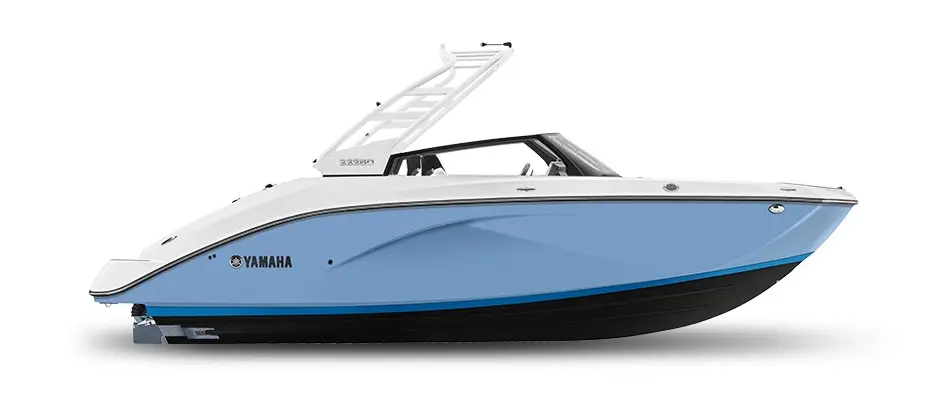
A different propulsion experience
The Yamaha 222SD uses twin jet-drive propulsion rather than conventional exposed propellers, defining both its handling and its recreational character. Yamaha identifies a pair of 1.9-litre high-output marine engines in the specification. The result is a boat intended to make short trips, tow sports and frequent stops around swimming areas part of its normal routine.
At 22 feet overall and 8ft 6in in beam, the 222SD is compact enough to appeal to owners who keep a boat on a trailer. Yamaha lists dry weight at 3,779lb and a capacity of ten people, with maximum loading limits that remain important even when the seats look generous. Equipment and passenger weight need to be managed carefully in any small recreational craft.
Jet propulsion offers operational differences that deserve explanation rather than blanket claims of superiority. The absence of an external propeller can change how owners think about shallow-water hazards and nearby swimmers, but intake openings and powerful water jets still demand strict safety discipline. Operators need specific training on the vessel's controls and stopping behaviour.
DRiVE control at low speed
Yamaha's DRiVE technology is a notable feature because it concentrates on manoeuvring at the slow speeds that often make new owners nervous. The system allows fine control of forward and reverse movements during docking and other close-quarter operations. Like any assistance system, it should be practised in open water before it is relied upon in a tight marina.
An electronic throttle system brings engine synchronisation and push-button start functions to the helm, according to Yamaha's model information. These features reduce some repetitive tasks but cannot interpret the risks of wind, current or nearby traffic. The skipper remains responsible for maintaining a safe lookout and controlling the boat.
The 12.3-inch Connext touchscreen serves as a central point for boat information and selected entertainment or navigation functions. Its usefulness depends on how clearly the interface can be read in bright sunlight and how readily essential functions can still be accessed. A dealer demonstration should include the systems the owner will actually use every outing.
A social layout for the whole day
The cockpit and bow are designed for groups that alternate between sitting, swimming and watersports. A removable cooler, changing seating arrangements and substantial storage are among the details aimed at real family outings. The best test is to walk through a typical day, considering where wet towels, skis, fenders and food will go.
Yamaha's distinctive stern platform includes swim-up seating and access points designed around the jet drives. The arrangement can make the water's edge feel like an extension of the cockpit during a calm anchorage. Safe engine shutdown and proper supervision remain essential whenever people are swimming near the boat.
The listed fuel tank capacity is 75 US gallons, providing a starting point for trip planning rather than a universal range guarantee. Tow sports, repeated accelerations and loaded running can produce very different consumption patterns. Owners should establish their own fuel reserve policy through recorded use.
Who benefits from the technology
The 222SD is particularly suited to families who use their boat as a daytime recreational platform and value predictable close-quarters control. Its passenger rating and seating flexibility may be more important to such owners than cabin accommodation. Buyers seeking extended overnight cruising will need to recognise the limits of the open bowrider concept.
A trailerable boat also brings practical questions involving overall road height, ramp suitability and towing weight. Yamaha publishes trailer dimensions separately, including a different height with the tower folded. Those details should be checked against the actual configuration and the legal capacity of the tow vehicle.
For a first-time owner, the 222SD's appeal is strongest when the dealer provides a thorough on-water handover. Technology can make manoeuvring less intimidating, but competence still comes from repeated practice. The model illustrates how control systems and leisure-focused deck design are becoming as important as sheer engine output in the family-boat market.