
What an electric day cruiser changes
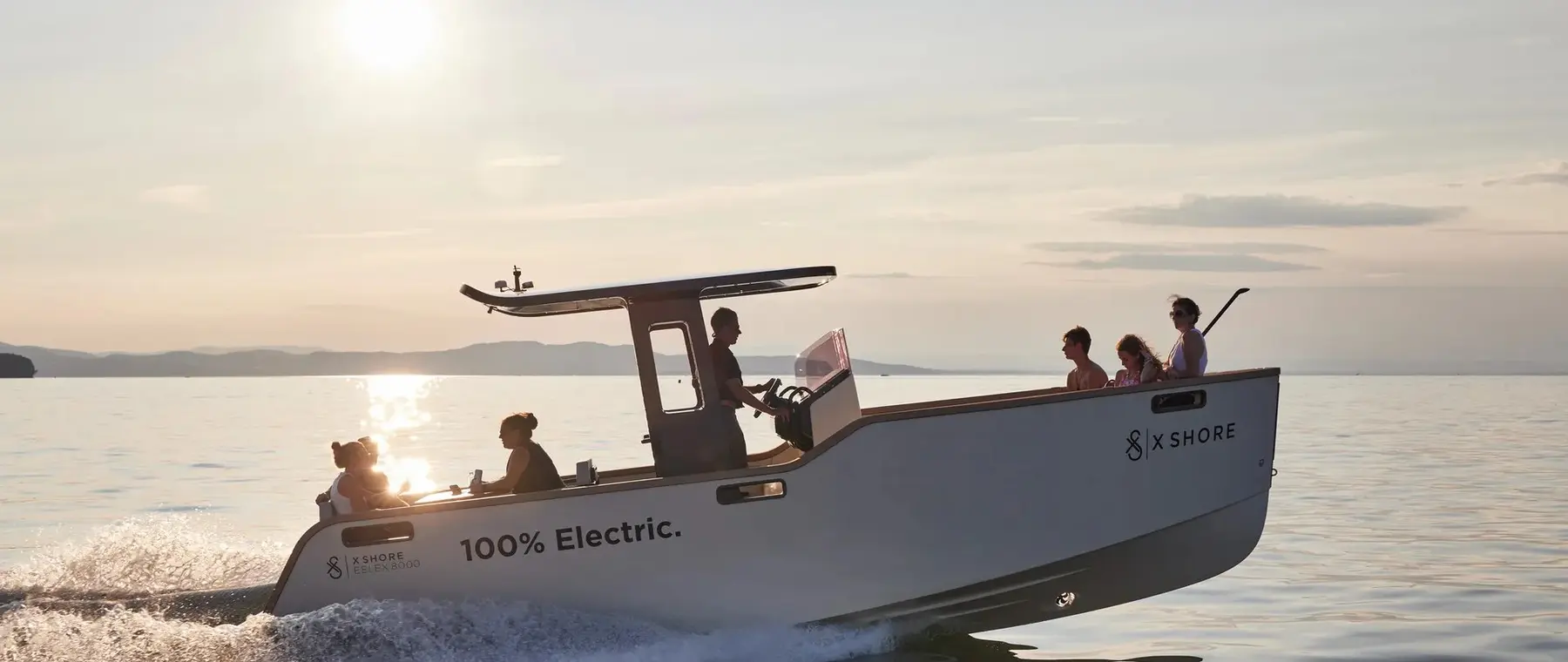
Swedish company X Shore is using its Eelex 8000 to illustrate a different way of enjoying a recreational motorboat. The eight-metre electric day cruiser is built for social trips, swimming and movement along the coast without the familiar engine noise and exhaust of a petrol or diesel outboard. Electric propulsion changes the experience at low speed particularly noticeably, but it also changes the planning questions that an owner must answer before each trip.
The manufacturer presents quiet operation and the immediate response of an electric motor as major attractions. These are real characteristics of the propulsion type, yet they do not mean an electric boat has unlimited endurance or can operate without infrastructure. An Eelex 8000 buyer needs to understand home or marina charging access, electrical tariffs and route distance just as carefully as a conventional owner considers fuel docks and tankage.
Range claims deserve careful reading
X Shore's official Eelex 8000 information describes a potential range of up to 100 nautical miles. The crucial words are 'up to': actual range depends heavily on speed, battery condition, sea state, wind, hull loading and hotel electrical demand. A gentle low-speed trip in favourable conditions is not equivalent to a fast passage with several people and full equipment aboard. The published figure should therefore be seen as a manufacturer-stated capability under suitable conditions, not a guarantee.
A prospective owner should ask for a range-versus-speed chart, the battery capacity available in the proposed configuration and the recommended operating reserve. Electric range can become particularly sensitive at higher speeds, and the skipper must keep a margin for detours or a delayed return. It is better to plan around the ordinary use case and local charging possibilities than to buy on the basis of a best-case distance that might rarely be available.
Immediate torque and the speed question
The builder advertises a top speed of 30 knots and highlights immediate electric torque as part of the handling character. A prompt response to the throttle can make low-speed manoeuvres feel different from those of some combustion-driven craft. It does not remove the need to learn how the hull moves under wind and current or to account for the mass and position of the battery installation. A familiarisation session should include reversing, stopping and docking as well as acceleration.
Maximum speed and maximum range are separate operating points. Buyers should not assume the Eelex 8000 can travel 100 nautical miles at 30 knots. For a practical sea trial, request consumption or energy-use measurements at the speeds normally used along the intended route, and assess how comfortably the boat handles the conditions typical of that area. A quiet boat still needs a skipper who understands the relationship between performance and endurance.
A social layout for a day afloat
X Shore markets the Eelex 8000 as a flexible social platform rather than a compact cruiser whose main priority is multi-night accommodation. The official imagery shows open deck areas that put passengers in direct contact with the water and provide space for conversation and relaxation. This makes sense for sheltered coastal excursions, lake use or short journeys between marinas. The value of the configuration lies in the ability to spend the day together while moving easily between seating and swimming areas.
The exact furniture, fittings and storage layout will depend on configuration, so visitors should compare the builder's current equipment list with the example boat shown in promotional photographs. Comfortable seating is only part of the requirement: passengers need handholds, safe boarding routes and secure places for bags or water toys. An eight-metre hull cannot offer every amenity of a larger cabin boat, but a well-organised dayboat can make short trips enjoyable without unnecessary complexity.
Charging is the real operational test
Electric boats need a reliable charging routine, which makes the marina or home berth an important part of the ownership decision. Prospective customers should ask X Shore about the exact connectors, acceptable power supplies, charging duration and any restrictions associated with the chosen battery. A charger advertised at a particular power may not deliver that output at every marina, and local electrical infrastructure sometimes requires permission or upgrading.
Charging plans also need to account for how frequently the boat is used. A short evening trip followed by an overnight recharge is a very different scenario from repeated high-speed outings on consecutive days. A thoughtful energy budget should include reserve capacity, available shore power and maintenance requirements. The most persuasive demonstration of electric leisure boating is a practical routine that an owner can repeat without anxiety about the next charging opportunity.
Materials, environmental language and total cost
The manufacturer places sustainability and Swedish design at the centre of the Eelex 8000's identity, referring to carefully chosen materials and colourways inspired by nature. Electric propulsion avoids exhaust emissions at the point of operation, but a whole-life environmental comparison also involves electricity generation, battery production, charging equipment and eventual recycling. Those broader impacts should not be reduced to an absolute claim that any boat leaves no environmental trace.
X Shore provides an online operating-cost calculator, but it relies on selectable assumptions about hours, fuel prices, power cost and servicing. Owners should supply their own local figures and compare realistic annual costs rather than assume the website's illustrative savings are universal. The Eelex 8000 makes a strong conceptual case for quiet, responsive days on the water. Whether it makes financial and operational sense depends on the routes, charging arrangements and actual use planned by the buyer.
Explore our X Shore AB company profile and consult the official manufacturer specifications for current equipment and availability.