
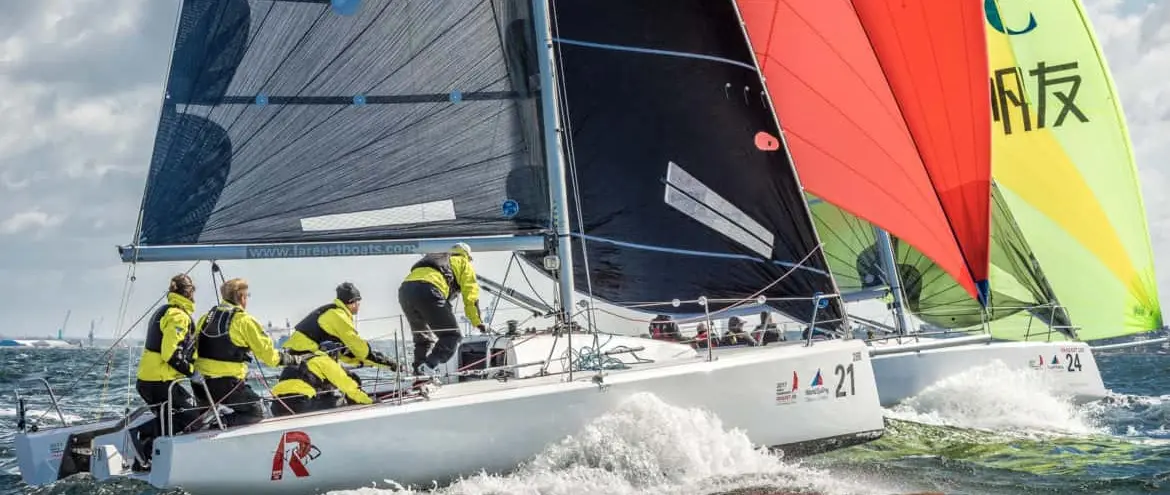
World Sailing opens an equipment access programme
World Sailing has confirmed the application and selection arrangements for an Equipment Development Programme established with marine manufacturer FarEast. Announced on 5 November 2026, the initiative is intended to help eligible emerging sailing nations obtain boats and related equipment for development projects, grassroots training and appropriate international activities. It marks the next operational stage of a partnership in which equipment is offered as support for organised sailing rather than as a retail promotion.
The federation's release is specific about the people who can apply and about the obligations that follow selection. Applications are directed to eligible Member National Authorities, known as MNAs, rather than individual sailors, clubs or recreational boat owners acting alone. Successful authorities will need to organise local programmes and meet costs beyond the equipment supplied. Understanding that framework is essential to judging how the initiative could improve access to sailing over several years.
Who qualifies as an emerging nation
World Sailing defines the targeted countries by its established development categories. The programme is aimed at MNAs classified as resourced but not developed, and those described as not resourced and not developed. These are administrative eligibility groups used by the governing body, not an informal judgement that every sailing club in a country lacks boats or expertise. Eligible authorities will receive information about how to apply through the federation.
The classification narrows the first audience for what might otherwise sound like a general equipment donation scheme. A country or regional organisation outside the specified categories should not presume that it can request equipment simply because its sailors would benefit. Equally, the release does not announce a public application portal for individual crews. The first step for interested sailing organisations is to engage their recognised national authority and understand whether it is included in the programme.
Three regional application windows
The rollout begins with Africa and Oceania in November 2026, followed by Central America and the Caribbean in January 2027 and Asia and South America in March 2027. World Sailing will send a Programme Information Pack and Application Form directly to eligible MNAs in the first regions. The schedule is therefore staggered rather than a single world-wide deadline at which every country submits the same forms.
The dates for the later rounds are explicitly indicative. World Sailing says each phase will proceed after the preceding application and selection process, with equipment availability and operational or logistical conditions taken into account. It would be inaccurate to present January or March as final award dates or guarantees that boats will arrive in those months. They are planning points for the next stages of information distribution and applications.
Selection goes beyond a request for boats
Eligible MNAs will be assessed against their intended development programmes and their ability to deliver them. World Sailing lists coaching capacity, physical facilities, financial readiness, logistics and the prospect of sustaining activity over three years among the considerations. The criteria suggest that successful applications will require a credible operating plan rather than a general statement that more sailing equipment is needed.
For a national authority, this can mean bringing together sailing schools, coaches, clubs, ports and storage providers before a formal application is submitted. The release does not prescribe identical projects for every nation, and the final programme documents will set out requirements in detail. The central objective is nevertheless clear: equipment should support repeated teaching, training and participation over time, not become an isolated gift without a structured use.
FarEast equipment is value-in-kind support
World Sailing describes the equipment to be provided as value-in-kind sponsorship from FarEast, the manufacturer participating as a World Sailing Development Partner. In straightforward terms, the contribution is equipment rather than a cash grant that recipient authorities can spend on any purpose. The announcement does not give a universal price or a total number of boats that will be allocated across the regions.
The absence of a published quantity is important when interpreting the scale of the programme. The number and type of boats available to an individual nation will depend on selection outcomes and the details set out in the information packs. Describing the scheme as an unlimited supply of free sailing craft would create expectations that the source does not support. It is a targeted development contribution with defined responsibilities.
Transport and import bills remain local
A notable condition is that recipient MNAs will bear expenses incurred after the equipment is collected from the FarEast factory. World Sailing identifies shipping, customs duties, applicable taxes and other delivery-related costs among their responsibilities. The sponsorship therefore reduces the cost of obtaining the equipment itself while leaving potentially substantial transport and clearance expenses to the receiving authority.
For some emerging sailing nations, moving boats across borders may be as challenging as finding training equipment in the first place. Freight quotes, customs procedures, inland delivery and handling at the destination will need planning before a project becomes viable. The governing body's emphasis on logistics and financial readiness in selection reflects that practical problem. Applicants should not assume that the cost of moving boats from the factory has been absorbed by the sponsor.
Storage and maintenance are part of the plan
The programme also places responsibility for ongoing storage and equipment maintenance with the recipient MNA. This means a successful national authority must be able to protect and service the boats after delivery, rather than concentrating all resources on the initial arrival. World Sailing will also expect the delivery of the proposed sailing development activities and participation in monitoring and reporting.
Long-term value depends on more than a new fleet of training craft. Suitable storage, routine inspection, replacement of worn consumables and predictable access to qualified coaching all affect whether boats remain useful. The source does not prescribe a common annual maintenance budget, so no credible estimate can be supplied for every participating country. Local conditions and the type of equipment ultimately allocated will determine those costs.
The three-year sustainability test
World Sailing has identified the ability to sustain the proposed development programme over a three-year period as one of the assessment points. That horizon invites applicants to think beyond an introductory event or short series of sailing lessons. Authorities will need to show how boats can be used repeatedly, who will supervise activity and what resources will support the programme when the initial excitement surrounding the donation subsides.
Such planning can matter particularly where new participation depends on volunteer instructors, club partnerships or access to sheltered water. A programme with a clear schedule and maintenance arrangements has a different prospect of persistence from one with no long-term operating capacity. The governing body's release does not promise a three-year stream of future equipment; it asks applicants to demonstrate that the project they propose can continue to function over that period.
Monitoring results rather than counting hulls
Participation in World Sailing's monitoring and reporting process is another stated obligation. This provides the opportunity for the federation to examine whether equipment is being put to its intended use, rather than assessing the success of the scheme purely by the number of boats delivered. The public announcement does not provide a universal scoring formula or specific annual participation targets.
For observers of grassroots sailing, that distinction is significant. A fleet can sit unused if coaching, access or upkeep are missing, while a smaller set of boats might support regular training when local organisation is strong. The final application guidance may ask national bodies to document their plans and resources more precisely. Until those documents are issued, it would be speculative to claim a fixed number of new sailors or future competitors will emerge from the scheme.
What sailing clubs should watch next
The immediate next step is the distribution of programme packs to eligible MNAs in Africa and Oceania. The later regional phases are planned for January and March 2027, subject to the completion of earlier rounds and practical availability. World Sailing has not presented the scheme as a standard public grant for individual boat owners, and interested clubs should work through their national authority for confirmed eligibility and instructions.
The partnership offers a potentially useful route for improving access to sail training in countries where obtaining suitable equipment can be difficult. Its eventual impact will be measurable through sustained programmes rather than announcements alone. For now, the confirmed facts are the regional timetable, the criteria for selecting national authorities and the clear division between equipment sponsorship and the costs of moving, storing and maintaining it.
Source: World Sailing official programme announcement, 5 November 2026.