
World-class foiling competition on Olympic waters
Weymouth and Portland were selected to host the Musto iQFOiL World Championship from 7 to 12 September 2026, marking a significant return of high-level Olympic windsurfing to British waters. The RYA's pre-event announcement anticipated up to 250 athletes from forty countries competing at the venue used for the London 2012 Olympic sailing events.
The event mattered beyond the athletes because it brought a highly visual, technically demanding discipline into a familiar British sailing location. Modern foil windsurfing can look very different from traditional recreational windsurfing, and an international championship provides an opportunity for newcomers to understand what the sport involves.
Defending champions attracted particular attention
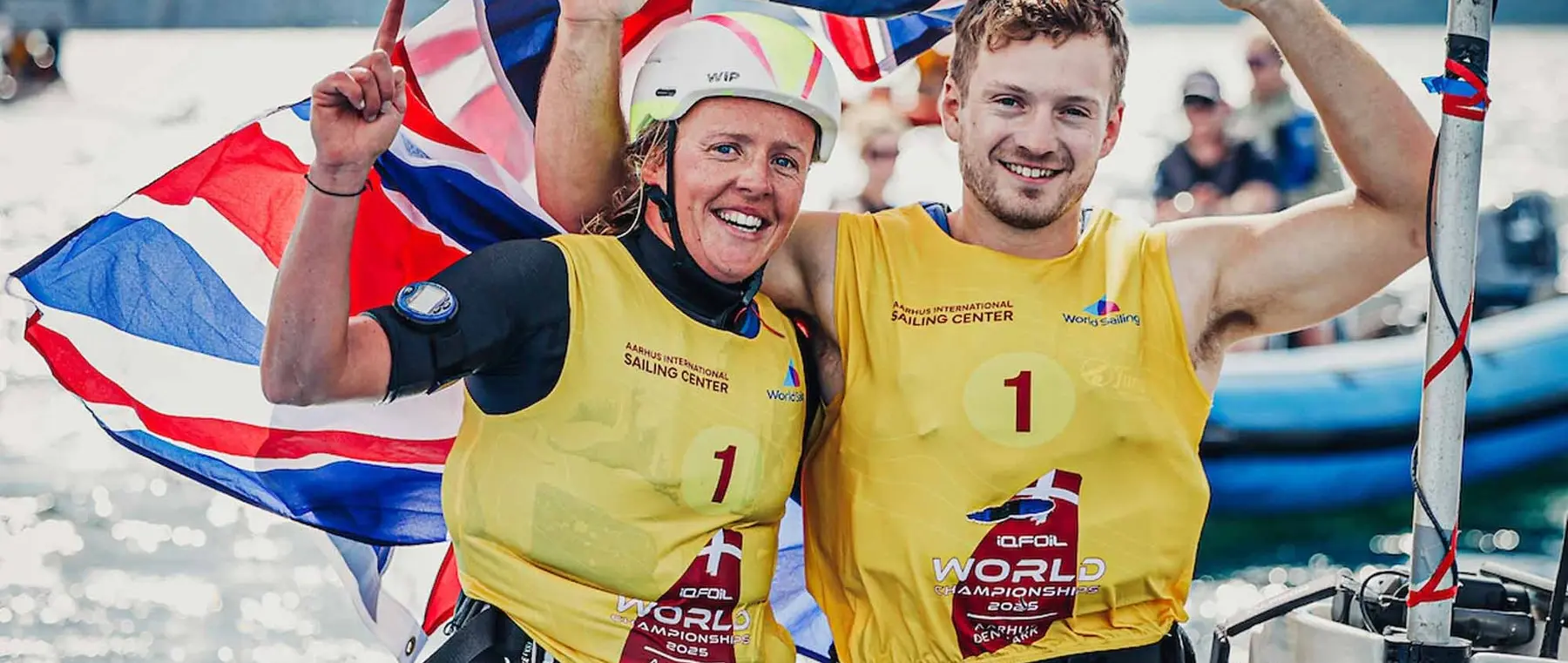
Britain arrived with two defending world champions: Emma Wilson and Andy Brown had won the women's and men's titles at the 2025 championship in Aarhus. Wilson also holds two Olympic bronze medals. Their appearance on home waters was a central element of the RYA's pre-event account, alongside teammates Sam Sills, Finn Hawkins, Islay Watson and Abi Smith.
A defending title brings high expectations but no certainty about a later result. Foil racing is sensitive to shifts in wind, course management and tactical decisions, particularly where competitors converge at speed. It is important to distinguish a pre-event competitor preview from a verified account of who ultimately won.
A demanding multi-day championship format
The opening series was scheduled for 7 to 11 September, establishing which competitors progressed to the decisive medal series on Saturday 12 September. Organisers planned to bring the final racing closer to spectators near Weymouth Pavilion, linking on-water competition with shore-based activities.
The iQFOiL class demands a combination of board handling, pumping skill, endurance and strategic judgement. For recreational windsurfers, observing a championship can provide inspiration, but Olympic equipment and conditions should not be confused with ordinary beginner sailing. Suitable tuition and more forgiving gear remain the appropriate starting point.
What the event means for local small-boat sport
Hosting an international championship can benefit local clubs, equipment specialists and young sailors by raising the profile of the discipline. Weymouth and Portland have an established training infrastructure, and repeated major events can help preserve skills and facilities valuable to a wider sailing community.
The RYA's early-September release confirms the venue, schedule and expected field. It does not alone establish final results or attendance, so those details need separate evidence. The contribution of the event is clear even without such assumptions: an Olympic sailing venue helped put advanced windsurfing in front of British spectators and aspiring participants. Visitors who watched the competition from shore could also gain a sense of the organisational work needed to deliver a major event, from course setting and safety cover to judging and weather assessment.