A 6.5-inch speaker designed for exposed boat spaces
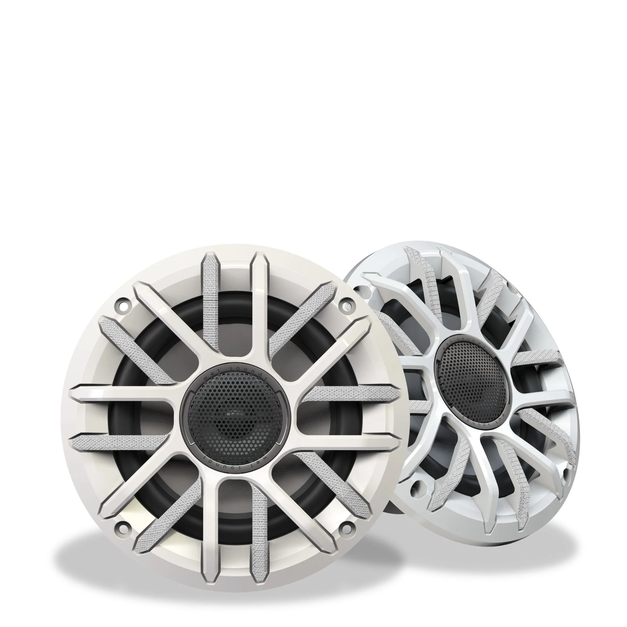
US audio specialist Wet Sounds is showing its SCOUT SCT 6 coaxial marine speaker in the 2026 METSTRADE product catalogue, highlighting a 6.5-inch speaker intended for boats and powersports installations exposed to weather and vibration. The official entry, first released on 1 September 2026, describes a polypropylene cone, a Santoprene rubber surround, a Conex spider and a one-inch PEI dome tweeter. It also identifies IP65 protection and a claimed frequency range of 50 hertz to 20 kilohertz, with a choice of white or dark titanium textured grilles. These details make the product a relevant option for owners of recreational craft below twelve metres, where a cockpit speaker may face spray, sunlight and considerable movement. The public listing does not provide a full electrical performance specification or independent acoustic measurements, so the article considers what the stated features mean for buying and installing a small-boat audio system rather than claiming a guaranteed improvement in sound on every vessel.
Understanding the manufacturer's original description
The Wet Sounds product entry gives a clear account of its intended audience and materials, but important purchase details still require confirmation. It does not establish a universal amplifier recommendation, impedance, continuous power rating or mounting cut-out dimension in its short catalogue summary. Those figures are fundamental when a speaker is being installed in a boat that already has a stereo or amplifier. Owners should obtain the model-specific data sheet and ensure that the available power and electrical connections are suitable. A marine loudspeaker is one component in an audio system that includes wiring, control equipment, source devices and the boat itself. The finished result depends on that complete system. A larger-looking grille or a familiar manufacturer name is not evidence that a particular speaker will be compatible with existing equipment. Sensible procurement begins with ratings, dimensions and practical installation plans.
Why small-boat speakers are exposed to harsher conditions
An open fishing boat or runabout may leave much of its audio equipment exposed to sun, rain, splashes and washdown water. Even on a boat with a covered helm, a speaker mounted in the cockpit can receive salt spray or be struck accidentally by equipment. UV light and repeated temperature changes can also affect materials over the longer term. A speaker designed for indoor domestic use may not tolerate that environment, especially if its frame, cone or surround uses unsuitable materials. Wet Sounds presents the SCT 6 as a marine-oriented design that addresses these concerns through its enclosure rating and component selection. This does not mean it can be submerged or cleaned with any chemical. Owners should read the instructions and select a location that reduces unnecessary exposure. The most durable installation is one that protects the equipment as much as the boat's layout reasonably permits.
What IP65 indicates
The catalogue describes an IP65 rating for the SCT 6. This is a meaningful reference to protection against dust and water jets under specified test conditions, but it does not indicate approval for indefinite immersion in seawater. A speaker may tolerate ordinary spray without being suitable for a low installation where it could sit underwater if a cockpit flooded. The mounting arrangement can also affect the level of protection achieved. A cable joint or hole behind the unit may be less resistant to moisture than the speaker's visible face if it is not sealed properly. Owners should ask whether the complete installed assembly carries the same environmental protection in the chosen configuration. Cleaning should follow the supplier's directions rather than using a high-pressure nozzle directly against the speaker. An ingress rating is a design reference, not permission to ignore location and maintenance.
The role of the polypropylene cone
A speaker cone moves air to produce sound, and its material influences both performance and how it behaves in the environment. The SCT 6 uses an injection-moulded polypropylene cone, according to the manufacturer. This type of construction is commonly selected where controlled manufacturing and resistance to moisture are important, although the actual acoustic behaviour depends on the entire driver design. The cone cannot be evaluated meaningfully in isolation from the surround, suspension and enclosure in which it operates. A small boat may amplify or absorb some frequencies because of the panels behind the speaker and the shape of the cockpit. Owners should therefore avoid equating a material description with a guarantee of superior sound. The useful question is whether the complete system delivers clear, comfortable listening at a volume that does not interfere with the operation of the boat.
Why the surround and spider matter
Wet Sounds identifies a Santoprene rubber surround and a Conex spider as parts of the speaker's mechanical structure. These components help control movement of the cone as it responds to the electrical signal. They must remain stable through repeated operation and exposure to environmental conditions. A manufacturer may select particular materials to support durability, but the short product page does not publish independent service-life tests comparing the SCT 6 with other marine speakers. Owners should not infer a fixed lifespan simply from the name of a polymer or fabric. In a frequently used recreational boat, careful mounting and avoiding mechanical damage may do as much for reliability as material choice. The speaker should not be used as a handle or stepped on while moving through the cockpit. Its job is to reproduce audio, not to withstand arbitrary physical loads.
A separate tweeter for higher frequencies
The SCOUT SCT 6 is described as a coaxial speaker with a one-inch PEI dome tweeter. In this arrangement, the higher-frequency driver is located within the larger speaker assembly, helping package two frequency ranges in a compact unit. That can be useful on boats where fitting space is limited and an elaborate multi-speaker installation is not appropriate. The supplier quotes a 50-hertz to 20-kilohertz frequency response, but the catalogue does not provide the test conditions, tolerance or measured response curve. A frequency range alone cannot tell an owner how balanced the sound will appear from the helm or rear seats. Listening impressions are also affected by nearby surfaces, mounting angle and the listener's position. The speaker should be chosen for a suitable complete system rather than an isolated marketing number.
Choosing a location on a boat under twelve metres
Many small boats have relatively thin cockpit side panels, removable liners or storage compartments behind the proposed speaker position. Before cutting an opening, the installer should inspect both sides of the structure and confirm adequate clearance for the magnet and terminals. The speaker should not obstruct wiring, drainage channels or access to safety equipment. It also needs protection from accidental impact by fishing rods, feet or loose gear. A location that looks attractive from the cockpit may expose the rear of the unit to an area where water regularly collects. The correct installation method should include backing support where appropriate and sealing in accordance with the manufacturer’s guidance. Owners should make sure the speaker can be removed for service without dismantling major sections of the boat. A clean installation contributes to both appearance and long-term reliability.
Sound balance in an open cockpit
A small open boat provides a difficult listening environment. Wind, engine noise, waves and moving air can make it hard to hear audio clearly, while sound escapes from the cockpit instead of being contained by walls. Turning up the volume can seem like an easy solution, but it may make conversation harder and prevent people from noticing important sounds around the boat. The skipper should retain control over audio levels, particularly during close-quarters manoeuvring, travel in busy channels or activities requiring clear communication. A well-positioned speaker can be more useful than a louder but badly aimed unit. Buyers should consider how the installation performs at moderate volume while underway and while the boat is stationary. The best recreational audio system supports enjoyment without becoming another source of distraction.
Matching speakers to amplifiers
An existing stereo may not be able to drive a new pair of speakers effectively, and an amplifier can introduce additional electrical demand. The short Wet Sounds catalogue does not identify every supported configuration, so installation should follow the full product manual. The installer must check speaker impedance, power handling, cable size and the protection of all electrical connections. Two speakers connected incorrectly can change the load seen by an amplifier and cause damage or unreliable performance. A boat owner should not assume that a marine-labelled amplifier and marine-labelled speaker are automatically compatible. The quality of the connection and the integrity of the electrical supply matter. Planning the audio system together can avoid wasted purchases and help ensure that the finished installation is safe and serviceable.
White or dark titanium grilles
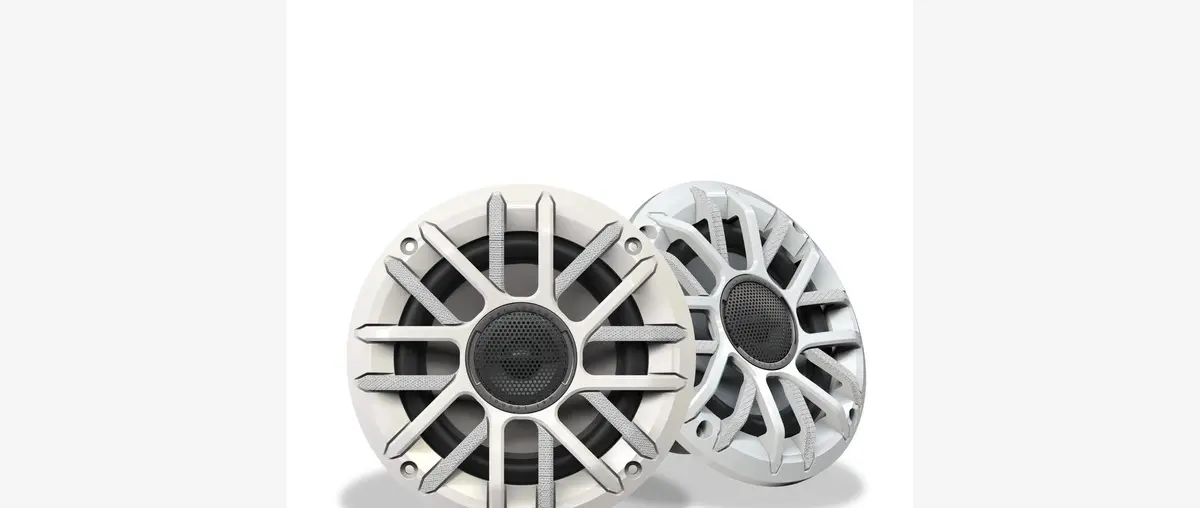
The SCT 6 is offered with textured grille choices described as white and dark titanium. This gives builders and owners some ability to coordinate the speaker with cockpit trim without changing the basic concept. On a small boat, visible fittings can have a noticeable influence on the interior or deck appearance because there are fewer surfaces and less space to hide equipment. Colour should not take priority over the mounting conditions, however. A grille exposed to fishing gear or regular foot traffic may need greater protection than a unit placed high on a side panel. Owners should also check how the finish should be cleaned and whether replacements can be purchased separately. Consistent appearance over time is often determined by maintenance and the availability of spares, not only by the initial choice of colour.
Electrical consumption and battery reserve
Entertainment equipment uses electricity that might otherwise be available for navigation lights, communication devices or starting the engine. A small recreational boat with one battery bank must consider the combined demand of the stereo, amplifier and other equipment. The SCOUT SCT 6 is a passive speaker component rather than a self-contained battery-powered system, so its consumption depends on the amplifier and operating conditions. A reasonable energy budget should include periods when the boat is at anchor or tied to a pontoon with the engine off. Owners should maintain a suitable reserve and avoid running a high-powered audio system until the battery cannot start the propulsion engine. Simple battery monitoring may help, but good habits and realistic use remain important. Music can be part of a pleasant afternoon without compromising the ability to return safely.
When replacement may be better than a full refit
For an older boat with tired or damaged cockpit speakers, replacing the existing units may be easier than designing a completely new sound system. However, the opening size, mounting depth and wiring must match the selected model. An owner should measure the existing cut-out and inspect the condition of the panel before ordering. If the previous speaker was leaking or the panel has become damaged, simply fitting a new unit may not resolve the underlying problem. A marine technician can advise whether sealing, reinforcement or relocation is needed. The SCT 6's stated materials and IP rating are relevant to this decision, but the final result depends on installation quality. A straightforward replacement can improve daily usability when it corrects existing faults without creating new openings or unnecessary complexity.
Practical care throughout the boating season
Marine audio components should be inspected during routine cleaning and before major trips. Salt residue can accumulate on grilles, while vibration may loosen mounting screws or electrical terminals over time. Cleaning products must be compatible with the manufacturer's materials and finishes. The owner should not direct sharp tools into the grille or attempt to service internal driver components without appropriate guidance. If a speaker begins to distort, the cause may be the speaker itself, a wiring problem or the amplifier. Diagnosing the issue before replacement can save time and expense. A well-labelled wiring arrangement also helps if an owner sells the boat or a technician needs to carry out repairs in another marina. Good documentation is a small investment in long-term convenience.
The place of SCOUT SCT 6 in the 2026 catalogue
The official METSTRADE listing establishes a 6.5-inch marine coaxial speaker with IP65 protection, a polypropylene cone, Santoprene surround, Conex spider and PEI tweeter, offered with two grille finishes. It is dated September 2026 rather than being a first launch on 23 November. For owners of boats under twelve metres, these characteristics make the SCT 6 a reasonable candidate when replacing cockpit speakers or specifying a new dayboat audio system. The final choice still requires electrical ratings, accurate dimensions and confirmation that the installation suits its environment. The strongest advantage of purpose-built marine audio is that it can make ordinary trips more enjoyable without demanding constant attention. That benefit is realised only when the system is mounted, powered and operated with the same care given to other equipment aboard.
Original industry sources and image credits
Reporting based on Wet Sounds, Inc. first-party SCOUT SCT 6 6.5-inch marine coaxial loudspeaker listing, released 1 September 2026 in METSTRADE catalogue.
Lead image: Wet Sounds SCOUT SCT 6 Brings IP65 Marine Audio to Open Recreation Boats — original manufacturer product photograph. © Wet Sounds, Inc.. Original supplier image.