
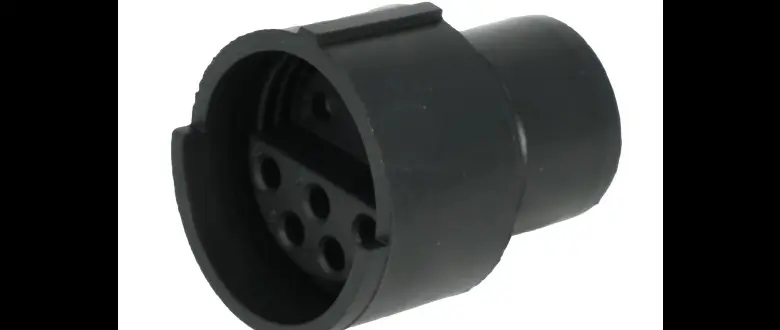
Connectors must survive demanding conditions
Electrical connections on small boats can be exposed to spray, salt, moisture and vibration over long periods. Wesgarde has highlighted its Sure-Seal connector family as an option designed to protect power and signal circuits in harsh operating environments.
The October 15 announcement describes Standard Sure-Seal, Mini Sure-Seal and Power Sure-Seal configurations. Different connector sizes and electrical capabilities provide choices for equipment makers and installers.
Sealing protects electrical reliability
Wesgarde states that the products meet IP67 and DIN 400 50 sealing requirements. Its published testing information includes immersion in a five-percent saltwater solution at a depth of approximately three feet for at least twenty-four hours.
Those claims refer to specific test conditions and should not be interpreted as permanent permission to submerge equipment. Correct assembly, mating and cable strain relief are important for the whole installation.
Vibration and temperature are part of the design
The manufacturer lists an operating temperature range from minus 40 to 105 degrees Celsius. It also describes resistance to exposure from common industrial liquids, ultraviolet light, ozone and other challenging conditions.
Such specifications are relevant to equipment installed near a boat's engine or within compartments where temperature and movement vary. An installer must still establish that the connector is suitable for the actual voltage, current and equipment connection.
Maintenance still matters on small boats
Corroded terminals and loose connections can cause unreliable instruments, lighting failures and difficult-to-diagnose intermittent faults. An appropriately designed sealed connector can reduce exposure, but it does not eliminate the need for inspection.
Boat owners should avoid joining incompatible connectors or making improvised repairs in wet locations. Qualified marine electrical technicians can check terminal crimping, circuit protection and water-entry routes.
Choose components for the whole system
A connector is only one link in a marine electrical circuit. Cable selection, fusing, routing and the placement of electrical equipment all influence long-term reliability.
Wesgarde's announcement introduces useful performance details, but it does not establish that every Sure-Seal model fits every boat. Installation should follow the product documentation and applicable marine electrical standards.
A small connector can stop essential equipment
Modern boats depend on many electrical joints that are exposed to movement and damp conditions. A poorly protected connection may create an intermittent fault in lighting, instruments, pumps or engine-related circuits. Such problems are frustrating because a device can operate normally when inspected in a dry workshop and fail again at sea.
The importance of reliable connectors often becomes obvious only after a breakdown. Owners can reduce avoidable failures by ensuring that wiring is supported, cable runs are protected from abrasion and fittings are appropriate for their location. Improvised connections and household-grade materials are not automatically suitable for marine service.
Ingress protection ratings need context
An IP rating describes resistance under defined testing conditions, including dust and water exposure. It does not mean that a connector will remain completely waterproof after years of movement, repeated disconnection or physical damage. The quality of installation and the condition of the seals remain important to practical reliability.
A connector may lose protection if its mating halves are not fully secured or if the cable diameter does not suit the sealing arrangement. Marine technicians should follow the manufacturer’s instructions for the exact part number. Owners should be cautious about interpreting a headline specification without understanding the conditions under which it applies.
Saltwater creates corrosion risks
Salt deposits can encourage corrosion and interfere with electrical contacts, particularly when a joint allows moisture to remain trapped. Connections located near engines or in bilges may face additional temperature changes and vibration. Suitable materials and sealing can help, but no component is entirely free from maintenance considerations.
A proper inspection should look for discoloration, damaged insulation, loose wiring or evidence of water entry. Technicians may need to test voltage under load because a connection can appear sound while providing inadequate power to equipment. Replacing only a visibly damaged plug without addressing the source of moisture may invite repeated failure.
Correct termination is essential
Connectors depend on terminals that are properly attached to the cable. The manufacturer may specify particular stripping dimensions, crimping tools and inspection procedures. An unsuitable crimp can loosen or develop resistance, regardless of how impressive the external seal appears.
Boat owners should avoid forcing incompatible components together or substituting terminals that merely look similar. Different connector families are designed for specific arrangements and current limits. Qualified marine electrical installers can help identify the correct components and check that circuit protection matches the installation.
Serviceability deserves consideration
A carefully designed wiring system should remain understandable when a future technician opens the compartment. Clear labels, accessible routing and sensible documentation are useful, especially where multiple instruments share power and data connections. A hidden junction that cannot be inspected may increase the cost of later troubleshooting.
Owners planning a refit can ask how a new connection will be reached if it needs replacement. Waterproofing should not come at the expense of creating inaccessible parts that require destructive work to service. The best arrangement balances protection, electrical reliability and practical access.
Choose based on the application
Wesgarde's Sure-Seal options are aimed at demanding environments, but the individual product must match the circuit's electrical and physical requirements. A small signal connection has different needs from a higher-current power supply. Temperature ratings, cable sizes and environmental conditions should all be confirmed.
The announcement provides useful information about the connector family without establishing universal compatibility. Owners should view it as another option for properly engineered systems rather than a replacement for professional design. Reliable onboard electricity is achieved through the whole installation, not one branded component.
The presence of water near a connector may indicate a broader installation issue such as a poorly drained compartment or an incorrect cable entry. Replacing a plug without resolving that condition can leave other electrical components at risk. A technician should investigate how moisture reaches the location and whether rerouting or better protection would help.
Marine electrical records can include cable sizes, breaker ratings and connector references, allowing later repairs to be performed safely. A boat with neatly documented circuits may be easier to maintain than one in which seemingly identical wires disappear behind inaccessible panels. This becomes particularly important when the vessel is sold.