
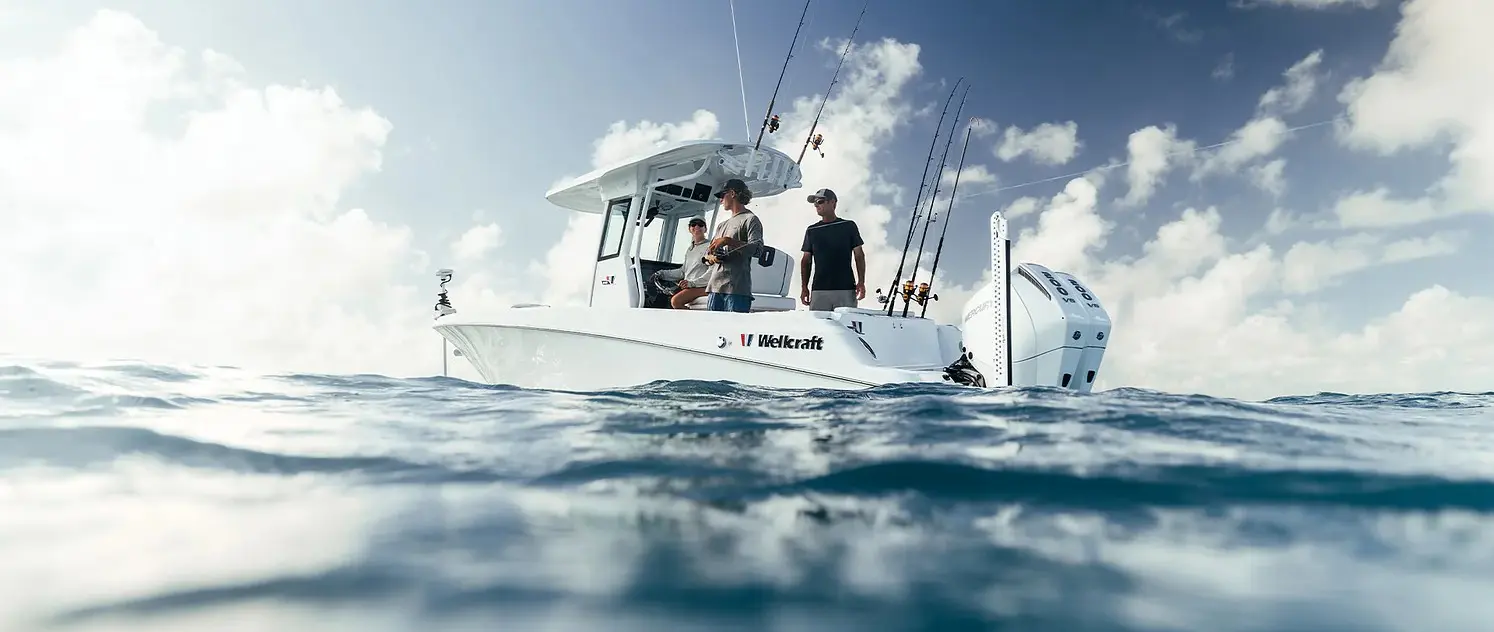
A working deck with room to move
The refreshed Wellcraft 243 Fisherman is 7.42 metres overall with a beam of 2.54 metres, according to the builder's current model page. Its offshore-oriented deep-V hull and comparatively high freeboard are aimed at the kind of coastal conditions where protected movement is particularly valuable. That is a different design priority from a bowrider devoted almost entirely to upholstered seating.
Wellcraft highlights a broader walkaround route that gives anglers access around the full console. The layout is intended to reduce the need for passengers to squeeze past one another while working lines or preparing to land a fish. Non-skid surfaces and strategically positioned handholds matter as much as raw deck area when the boat is moving.
The transom and deck include fishing-specific elements such as rod storage, baitwell arrangements and insulated compartments. These features help keep hooks, bait and gear away from the seating areas used by other family members. Buyers should examine how well each locker drains and whether the equipment is reachable while wearing normal wet-weather clothing.
Family accommodation without losing the mission
The builder also gives attention to forward seating, a folding transom bench and practical boarding points. This allows the boat to serve as a leisure platform when no one is actively fishing, rather than forcing all passengers into a dedicated angling layout. The balance is important for households in which only some members share the skipper's enthusiasm for offshore fishing.
A portable toilet option within the console and additional small storage areas can improve longer days aboard. Even on a dayboat, the ability to shelter or secure belongings helps make outings less tiring. Families considering the model should ask how these spaces are ventilated and how they function when the boat carries its full passenger complement.
Optional hardtop and windscreen features provide another layer of comfort, particularly where sun exposure or spray is common. Wellcraft describes a powered ventilation window as an available enhancement. The most useful arrangement depends on local climate, as permanently enclosed spaces can feel hot during calm summer weather.
Power and range need an exact specification
Current technical information identifies a maximum installed power of 400hp and a light displacement figure of approximately 2,223kg. Performance will change with the particular engine, propeller, fuel load and equipment package chosen. An offshore fishing boat should always be tested at the sort of speeds and loads an owner expects to use regularly.
One detail deserves careful checking: the builder's descriptive material refers to a larger fuel-capacity figure than the technical table displayed on the same model page. That inconsistency is a reason to obtain a current, boat-specific specification in writing before using any published capacity to calculate range. Offshore passage planning should never rely on an unresolved brochure figure.
An owner should build an operating plan around actual fuel-burn measurements, weather conditions and a generous reserve. The larger the planned fishing area, the more important reliable communication, navigation and emergency equipment become. The design provides a platform for those activities, but the boat's safety ultimately depends on preparation and use.
The buying decision
The revised 243 Fisherman makes most sense for someone who wants a capable fishing cockpit without excluding family outings. Its walkaround arrangement is particularly attractive to owners who regularly work the boat from several positions. A sea trial should explore stability at rest as well as motion underway.
Potential buyers should assess boarding with real fishing gear, access to bilge and batteries, and the ability to keep the helm clear of loose tackle. Trailer height and weight also matter for owners who do not keep the boat in a marina. These everyday questions often influence satisfaction more than minor differences in brochure equipment.
Wellcraft's direction is clear: retain offshore fishing as the primary mission while making a 7.42-metre centre console more comfortable for mixed crews. The strongest value lies in that practical compromise. The final configuration should be selected after verifying the exact tank size, power package and local safety requirements for the intended operating area.