
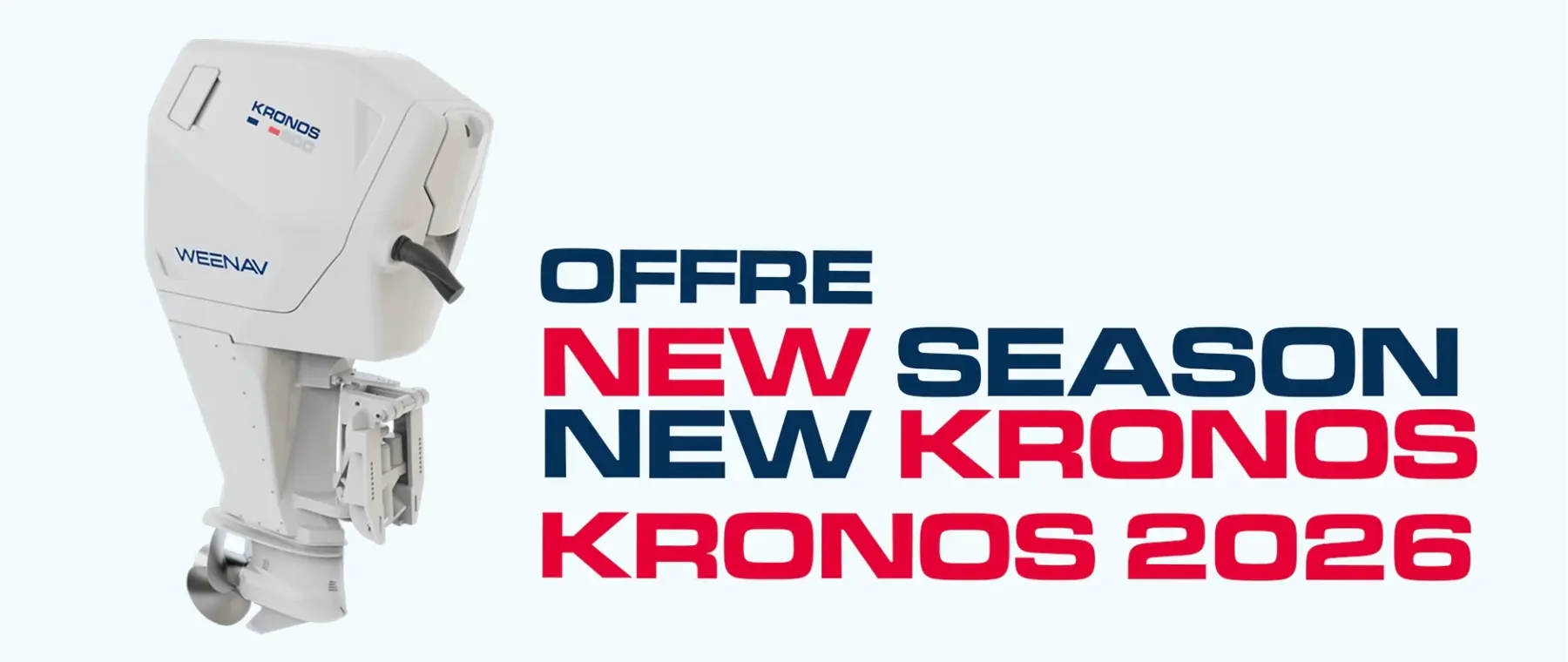
Electric propulsion is no longer confined to low-speed dinghies in manufacturers' development programmes. French company Weenav is promoting the KRONOS 300 with a stated 300 horsepower continuous output and 408 horsepower peak.
Those are supplier claims for the motor, not verified speed figures for an actual boat. Batteries, cooling, total mass and hull matching remain decisive for any under-12-metre application.
Continuous versus peak output
A high short-duration rating is not the same as power available for an extended run. Weenav's use of a continuous figure is relevant because boat duty cycles can involve sustained loads.
The selected installation must be evaluated against operating conditions and the manufacturer's temperature and power limits. A motor rating alone cannot provide range.
A family of electric drives
The KRONOS programme spans outputs below the flagship 300, offering builders different potential configurations. That creates a broader conversation about matching propulsion to vessel size.
A compact hull may be better served by a smaller model if weight and battery capacity are constrained. The electrical system should be developed with the builder.
From exhibition to production
The company is presenting its high-power approach during the 2026 boat-show season. LBG reports the official figures as claims pending boat-specific sea-trial evidence.
The official product image identifies the KRONOS motor rather than an unrelated speedboat. A builder should confirm the full installation.