
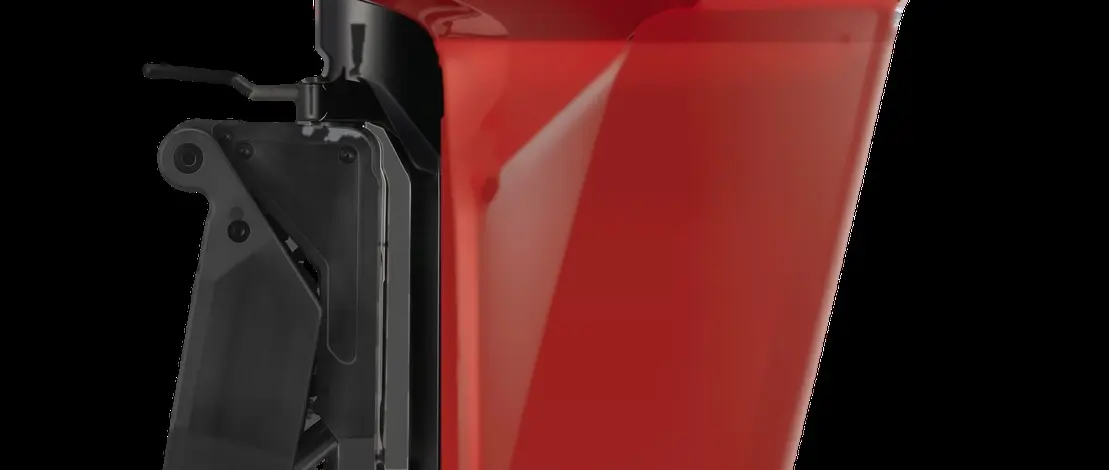
French electric-propulsion specialist Weenav used METSTRADE 2026 to present its forthcoming KRONOS Light outboard, with continuous output choices of 110, 150 and 200 horsepower and first deliveries targeted from May 2027. Reservations are open, according to the manufacturer, but the engine should still be considered a future product rather than an established delivery or performance record. The new range addresses an important question for owners of smaller leisure motorboats: can higher-powered electric propulsion be specified without moving to the most powerful and heavy-duty units? The answer will depend as much on hull selection, battery storage and the use of the boat as on any headline horsepower rating.
What Weenav introduced at METSTRADE
Weenav's 12 November announcement described the KRONOS Light as a lighter-format development of the company's existing KRONOS architecture. The company exhibited during METSTRADE at RAI Amsterdam from 17 to 19 November, addressing builders, dealers, installers and potential boat owners. The three planned continuous ratings sit below the company's larger KRONOS 250 and 300 units, creating a different entry point for higher-powered electric outboards. The relevant distinction is continuous output: an electric motor's brief peak figure is not equivalent to sustained power across an extended passage. Owners should request complete duty-cycle specifications before treating the figures as directly comparable with a conventional outboard's advertising.
Continuous power and peak output are not interchangeable
For the 200-horsepower KRONOS Light, Weenav gives a peak figure of 250 horsepower. That additional short-term output may be helpful for acceleration or transient demand, but the announcement does not provide a duration or test regime for the peak. Nor does it publish the consumption curve that would show how much energy is drawn at various boat speeds. It would therefore be misleading to convert either advertised figure directly into predicted range. A prospective customer should ask for shaft power, electrical draw, cooling requirements and documented test data for the intended hull. The most useful comparison is between complete propulsion installations operating the same real-world mission.
Weight matters on a smaller hull
The manufacturer's announcement refers to a maximum weight of 239 kilograms for the Light range. That is a substantial component in the weight budget of many small motorboats, even before batteries, cabling and charging hardware are counted. An owner should distinguish engine weight from the mass of the entire electric-propulsion installation. Moving significant weight aft, or locating multiple battery modules inside a hull, can affect trim and the available payload. Boats originally engineered for petrol outboards may require a naval architect or qualified boatbuilder to assess transom loading and the position of heavy equipment. Weenav's maximum motor weight alone cannot establish which existing boats are suitable candidates.
What the battery modules tell us
Weenav describes a modular energy arrangement in which each battery unit stores 5.43 kilowatt-hours, weighs 49.5 kilograms and occupies around 35 litres. Modularity gives a designer choices, but the multiplication works both ways: adding energy for longer passages also adds mass and takes up space. Five modules, for example, would provide a nominal 27.15 kWh and have a combined module mass of 247.5 kilograms, excluding racks, protection and cabling. That is an arithmetic illustration, not a package recommendation or an indication of usable energy. Actual capacity limits, approved battery quantity and installation geometry must come from the supplier's final system specification.
Range begins with the hull rather than the brochure
Electric range cannot be judged by motor rating alone. A lightweight displacement craft travelling slowly may need far less power than a planing sports boat trying to hold a high cruising speed. Wind, tide, water conditions, passenger load and fouling further change the energy required to complete a journey. An installer should model the chosen hull at expected operating speeds and allow for both outbound and return legs, reserve capacity and battery ageing. Owners should ask how the energy estimate has been generated and whether it represents measured data or a simulation. The KRONOS Light announcement does not substantiate a standard nautical-mile range for all potential installations.
The charging system is part of propulsion
Battery-electric boating replaces visits to a fuel pump with an energy-supply and charging plan. That can work well where a craft returns to a reliable home berth, but less well if cruising depends on unverified electricity access at other marinas. Charging power, compatible shore connections, local electrical capacity and safe cable routing need to be designed together with the engine. Owners should also establish whether charging can be controlled remotely, what happens during interruptions and how the system protects its batteries. None of this is resolved by knowing the motor's horsepower. A practical cruising plan must account for time at the dock and for situations in which a planned charging point is unavailable.
The DORIS controls and Garmin display
Weenav says its engines share the DORIS control environment, including single or double arrangements, starting, trim and idle-safety functions. The company also describes a Garmin display between nine and sixteen inches with an interface developed by Weenav, alongside an application for charge and position monitoring. This suggests attention to how propulsion information is presented to the skipper. Nevertheless, equipment compatibility and the precise display package will need confirmation for each installation. A touchscreen or connected application should assist navigation and energy management without distracting the driver from the water, and all essential operating and safety functions must remain understandable without depending on a mobile connection.
Reservations are not the same as deliveries
The company says KRONOS Light reservations are open and indicates May 2027 as the expected start of deliveries. Both details are commercially important but should be reported accurately: an expected date is a forecast, not a guaranteed handover schedule. Buyers should establish what a reservation commits them to, whether the chosen power version has passed the required validation, and what production, payment and cancellation milestones apply. Asking for a written description of the equipment included in a quoted package is particularly sensible for a new engine line. A prototype shown or discussed at an exhibition should never be mistaken for evidence that every version is already in routine service.
Fitting the engine to a new build
On a new boat, builders have the advantage of positioning batteries and support systems during the hull and deck design process. They can review structural loads, routing, ventilation needs, accessible isolators and service access before mouldings and cabinetry are finalised. The trade-off is that design decisions become tied to an evolving propulsion product. Builders should request controlled drawings and electrical specifications, confirm regulatory compliance for the target market and agree exactly how the completed installation will be tested. The best result comes from treating the motor, battery, control system, charging and hull as a single engineered package rather than selecting the propulsion unit after the layout is fixed.
Repowering an existing outboard boat
Converting an established petrol-outboard craft is more complicated than exchanging one engine for another. The original fuel system may no longer be needed, but the space, mass and structural demands of battery packs are new. Existing electrical circuits and controls may need complete redesign. Retaining acceptable freeboard, trim, manoeuvring and emergency access should be part of the assessment. There is also a commercial question: a refit may cost more than the market value added to the boat, even when electric operation is desirable. Owners should obtain a complete survey-backed quotation and compare it with the practical alternative of retaining or modernising their current propulsion.
Dealer training and first installation
Weenav says its authorised dealer-installer model includes on-site training, company support during a first installation, project documentation and warranty assistance. That matters because a propulsion system may involve high-energy electrical components and specialised diagnostics beyond a conventional engine service. A local service network can make the difference between a pleasant ownership experience and long delays when support is needed. Customers should ask which dealer is actually trained on the forthcoming Light model, how spare parts will be supplied, and whether software updates require specialist equipment. A manufacturer's broad support promise needs to become a specific arrangement for the boat and its operating region.
Noise and local emissions need precise language
Electric motors can offer quieter low-speed operation and avoid exhaust at the point of use, advantages that may appeal to boaters on sheltered waters or around marinas. That does not establish that the entire installation is silent or has zero environmental impact. Propeller noise and water flow remain, battery manufacture has its own footprint and electricity generation varies by location. Owners should compare the whole operating pattern, including charging source and expected lifetime, rather than rely on simplified claims. For many small-boat users the most immediate benefit may be easier, quieter operation close to a home berth, provided the weight and range are appropriate.
What remains to be verified
Weenav's published KRONOS Light details define intended power choices, a maximum motor weight and an anticipated delivery period. They do not yet supply everything needed for a complete boat-specific buying decision: independently tested range, final package pricing, approved battery configurations, certification documents, service intervals, charging performance and warranty conditions all require confirmation. Demonstrations on representative hulls would also help owners assess acceleration, manoeuvring and the controls' behaviour under load. Prospective customers should ask whether the unit they see is a production specification or a development sample and whether future revisions might alter the dimensions or equipment included.
A promising category, with practical boundaries
The Light range illustrates the continuing attempt to bring electric propulsion into boating segments that need more than small auxiliary motors. Its success will be measured less by an attractive horsepower table than by complete, supported installations that perform ordinary trips without unacceptable compromises to payload, range or cost. For leisure boats under twelve metres, the decision will remain highly individual: an occasional dayboat with dependable overnight charging has different needs from a craft used for long coastal passages. KRONOS Light offers a specific proposition to investigate, but careful design and transparent operational data must come before confident promises about the experience afloat.
Official source: https://www.weenav.com/en/blog/events-8/metstrade-2026-weenav-presents-the-kronos-light-the-kronos-and-the-arion-in-amsterdam-89