
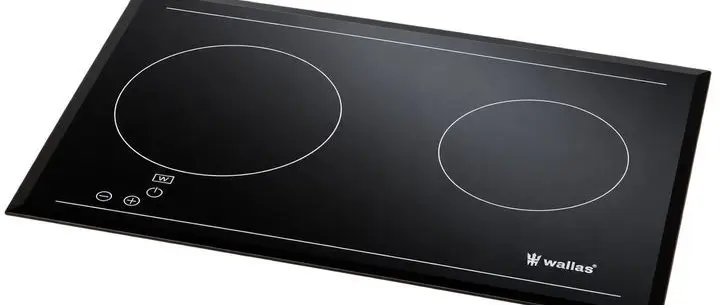
A new choice for compact boat kitchens
Finnish marine equipment maker Wallas is presenting its 1800i and 3600i induction cooktops at METSTRADE in Amsterdam, which takes place from 17 to 19 November 2026. The products are intended to give owners of boats and other compact mobile spaces an electric cooking option that can be adjusted to available shore power or inverter capacity. The 1800i is a single-zone hob; the 3600i offers two zones. The company also plans to show its 3800 Dual Power model, combining diesel and induction cooking in a single appliance.
This announcement matters to owners of smaller cabin cruisers, trailerable boats and cruising sailboats because galley equipment competes for limited space and electrical capacity. Removing a gas cylinder may appeal to some owners, but an induction cooker is only useful if the vessel's electrical installation can supply it safely. The news is about a product range entering the marine market, not independent evidence that a particular battery-powered boat can cook all meals without external charging.
The single-zone 1800i
Wallas lists the 1800i at up to 1,800 watts on a 230-volt supply, with a lower rated maximum of 1,200 watts on 110 volts. This distinction is important for small boats that might travel between countries or use different shore-power connections. A published wattage is a maximum equipment rating, not a statement that the cooker will draw that power continuously for every dish. Nevertheless, it establishes the size of the load that a designer or installer must consider when selecting cables, breakers and an inverter.
A single cooking zone can be practical on a small cruising boat, where many meals involve one pot or pan and where countertop area is scarce. It can also create constraints if several dishes need simultaneous preparation. Owners should compare the physical installation dimensions, ventilation requirements and surface protection against the way they actually use the galley. Buying the more powerful appliance makes little sense if the boat cannot accommodate it safely.
The two-zone 3600i
The 3600i provides two cooking zones and a manufacturer-stated 3,600-watt maximum on 230 volts or 2,400 watts on 110 volts. These figures represent substantially higher potential demand than a single small galley light or refrigeration unit. On a boat connected to shore power, supply capacity and the state of the electrical installation determine what can be operated together. While under way or at anchor, the inverter, battery and charging system become the central constraints.
A two-zone hob may make life aboard more convenient for a family cruise, but owners need to assess whether they can cook while air conditioning, a water heater or battery charger is also running. A shore-power breaker does not distinguish between important and optional equipment when the total load is excessive. Proper load planning and a compatible power-limiting setting are therefore part of the purchase decision rather than an afterthought.
Continuous low-power control
Wallas highlights a continuous low-output capability intended to avoid slow, repeated on-off cycling at low settings. This may be especially attractive to owners preparing delicate foods or trying to simmer a meal without large swings in heat. The company's announcement also describes adjustable input limits, intended to match smaller shore-power supplies or inverter systems. These are manufacturer features that should be demonstrated using suitable cookware and an electrical supply similar to the boat's actual installation.
No manufacturer specification can eliminate all cooking risks. A vessel moves in waves, surfaces become wet and pans may shift unexpectedly. Owners should use equipment according to its marine installation instructions, with suitable restraint and ventilation where required. A hob that can operate gently at low power still produces hot cookware and must be managed carefully during sudden changes in course or sea conditions.
Gas-free cooking changes the safety conversation
Some owners prefer induction because it does not require an LPG bottle in the galley and can avoid a naked flame. This can simplify certain aspects of equipment management, but it shifts attention to different safety concerns, including wiring, electrical isolation, moisture ingress and the condition of the inverter or shore-power system. 'Gas-free' should not be interpreted as 'risk-free'. Boats remain demanding environments where vibration, salt and condensation can affect electrical equipment.
An installer should verify the appliance's protection requirements, clearances, supply voltage and access to an appropriate isolation switch. Owners should confirm that the existing electrical infrastructure was designed for a cooking load rather than assuming it can be added to a spare outlet. The vessel's insurer, relevant standards and the manufacturer's instructions may also influence the proposed work. Professionally integrating the cooker matters more than simply removing the old gas appliance.
Battery and inverter calculations
A single-zone hob used near its maximum rating can place a substantial demand on a boat's inverter and batteries. Actual energy consumption depends on the cooking programme, power setting and duration, so it cannot be estimated responsibly from the peak wattage alone. Owners should calculate expected watt-hours for typical meals and compare them against usable battery capacity, charging opportunities and other essential loads. A boat with an extensive lithium system may behave very differently from one with a modest lead-acid domestic bank.
Inverter compatibility includes more than matching a headline continuous wattage. Startup behaviour, waveform quality, protective shutdowns, cable losses and cooling all deserve attention. On some boats, a generator may be needed for extended cooking; on others, shore power or solar-supported storage may provide enough energy for the intended use. The correct answer requires measurement and equipment specifications rather than the assumption that all induction appliances are interchangeable.
Power limits at unfamiliar marinas
One practical feature in Wallas's description is adjustable maximum input, which may help when using a marina pedestal with limited shore-power capacity. Small-boat owners frequently encounter facilities with different sockets, circuit ratings and reliability. Setting a cooker's power demand appropriately could reduce the risk of tripping a supply. That does not remove the need to respect the marina's rules or inspect shore-power cables and connectors before use.
A travel-ready installation should include a clear way for the user to understand the current limit and any other loads connected to the same circuit. Owners should know what happens if the shore connection is lost during cooking and whether the system switches automatically to inverter power. An unexpected transfer could overload the battery system if it is not properly managed. A familiarisation session should cover such scenarios before the first extended cruise.
Fit, installation and cookware
The choice between the 1800i and 3600i is partly about physical space. A small cabin cruiser might have only one existing burner, a narrow worktop and limited room below for electrical cabling. Replacing a stove therefore requires careful measurements, appropriate cut-out dimensions and consideration of where the pan handles will extend. A vessel's heel and motion also affect the practicality of a fixed hob, particularly aboard sailing boats.
Induction requires compatible cookware, and owners should consult Wallas's specific instructions rather than assume every pan in the existing galley will work. An induction-suitable base does not automatically make a loose saucepan safe in rough water. The cooker should be positioned away from areas where crew will brush past hot surfaces, and the surrounding materials must tolerate the heat associated with normal use. Installation is a small design project, not merely a countertop accessory purchase.
The 3800 Dual Power alternative
Alongside the new induction-only units, Wallas is showing the 3800 Dual Power cooker. It combines an induction mode with a diesel-fired cooking system on a single ceramic surface. The manufacturer describes it as an option for crews that want electric cooking where sufficient power is available but the ability to use diesel when electrical capacity is limited. The operating principles and installation arrangements differ from the induction-only cooktops, so it should not be described as just another wattage variant.
For some cruising boats, having two distinct energy sources may offer useful flexibility. For others it could add unnecessary system complexity, particularly if diesel fuel supply and exhaust routing would require extensive changes. Owners should compare actual installations, maintenance requirements, available space and typical cruising habits. It is important to obtain the current product documents because figures for one Wallas cooker must not be copied casually to another.
METSTRADE and product verification
Wallas has announced the 1800i, 3600i and 3800 Dual Power as part of its METSTRADE 2026 programme, with the products discussed in the Finnish Marine Industries Federation's 13 November preview. Visitors can compare the layouts and ask about power limiting, installation dimensions and electrical supply compatibility. An exhibition display does not substitute for a completed marine installation or independent long-term durability data, and buyers should verify current price and availability with an authorised distributor.
Owners with a particular boat in mind can bring photos of the galley, supply-voltage details, battery capacity, inverter rating and existing cooker arrangement. A competent dealer should then be able to explain which model can be integrated sensibly and what further electrical work may be required. A boat's electrical system has to remain capable of supporting navigation and safety equipment while food is being prepared.
What small-boat owners should take away
The arrival of compact induction options reflects a wider move towards electrically powered domestic equipment aboard recreational craft. Wallas's 1800i and 3600i provide different cooking-zone choices and published ratings for the two main supply voltages discussed by the manufacturer. The adjustable limits and low-output control are potentially useful, but the real benefit depends on how carefully the cooker is matched to the vessel.
A well-planned galley is not judged only by the speed with which it boils water. It needs to function safely during ordinary family trips, with clear controls and electrical loads that do not undermine the boat's essential systems. The Wallas announcement opens another avenue for that planning. Its value will be established by properly engineered installations, understandable maintenance requirements and the experience of owners using the appliances over full cruising seasons.
Official source: wallas.fi. Official Wallas 3800 Dual Power product photograph distributed in Finnboat's 13 November 2026 METSTRADE media release; illustrative alongside the new 1800i and 3600i, not a photograph of those models.