
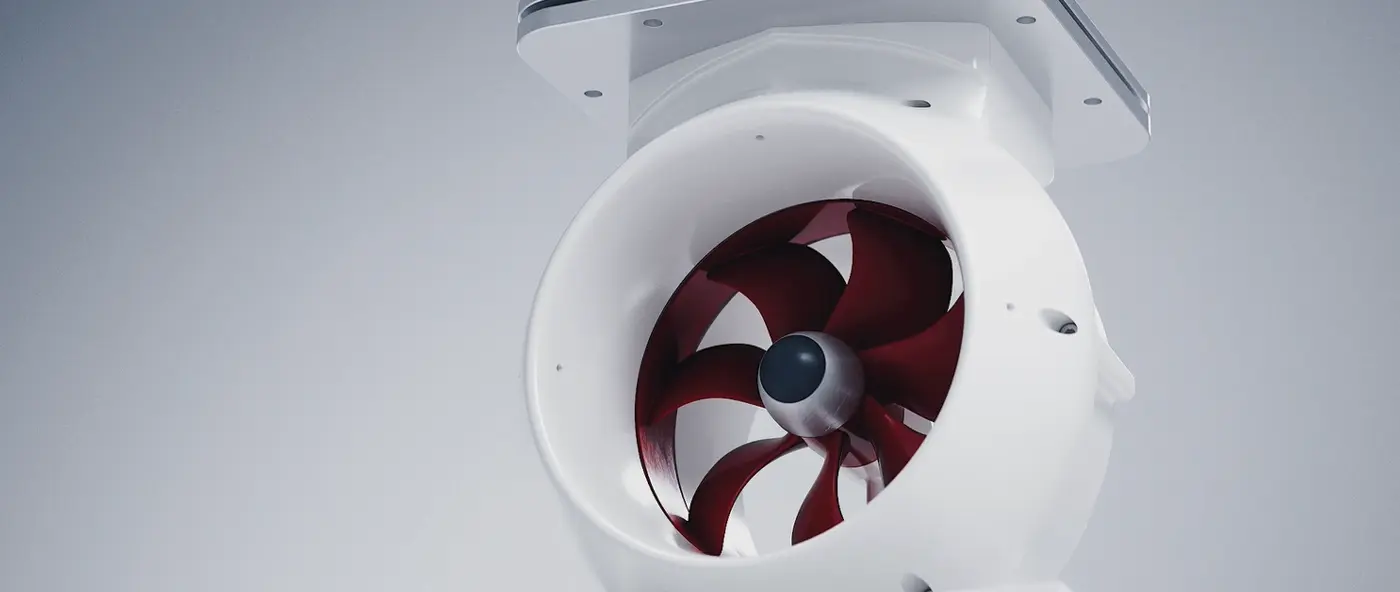
VETUS has introduced the E-POD as an integrated electric propulsion package that combines several components normally installed separately. The unit brings together the motor, suspension, cooling, gearbox, clutch, propeller shaft and propeller in a single system.
The design removes the need for a conventional engine box and a long shaft line through the hull. That can free interior space and simplify machinery layout, particularly on smaller leisure craft where every compartment has to serve more than one purpose.
Integrated package reduces installation complexity
Combining the propulsion components into one unit can reduce the number of alignment and mounting decisions required during a new build. It may also help designers use the space normally occupied by an inboard engine and shaft tunnel for storage or accommodation.
The practical installation still requires structural engineering, battery placement, charging equipment and suitable high-current cabling. Owners should also consider service access because compact packaging is only useful if routine inspection and maintenance remain straightforward.
Electronic braking supports rapid direction changes
VETUS says the E-POD uses Active Electronic Braking to stop the electric motor quickly before reversing its direction. That is necessary because an electric propulsion motor must decelerate and reverse rotation rather than relying on a conventional marine gearbox to change direction.
The company says this approach produces quick response when moving between ahead and astern. In close quarters, predictable control can be as important as maximum thrust, especially when wind or current leaves little time to correct a manoeuvre.
Electric pod design opens new layout options
VETUS presents the E-POD as both a propulsion product and a way to rethink the interior arrangement of a boat. Removing a traditional engine installation can create more freedom around cockpit floors, cabins and storage spaces.
For LBG readers, the important question is how the total system compares once batteries and charging hardware are included. The E-POD simplifies the propulsion unit itself, but range, recharge time and overall weight remain central to deciding whether an electric installation fits a particular boat and usage pattern.