
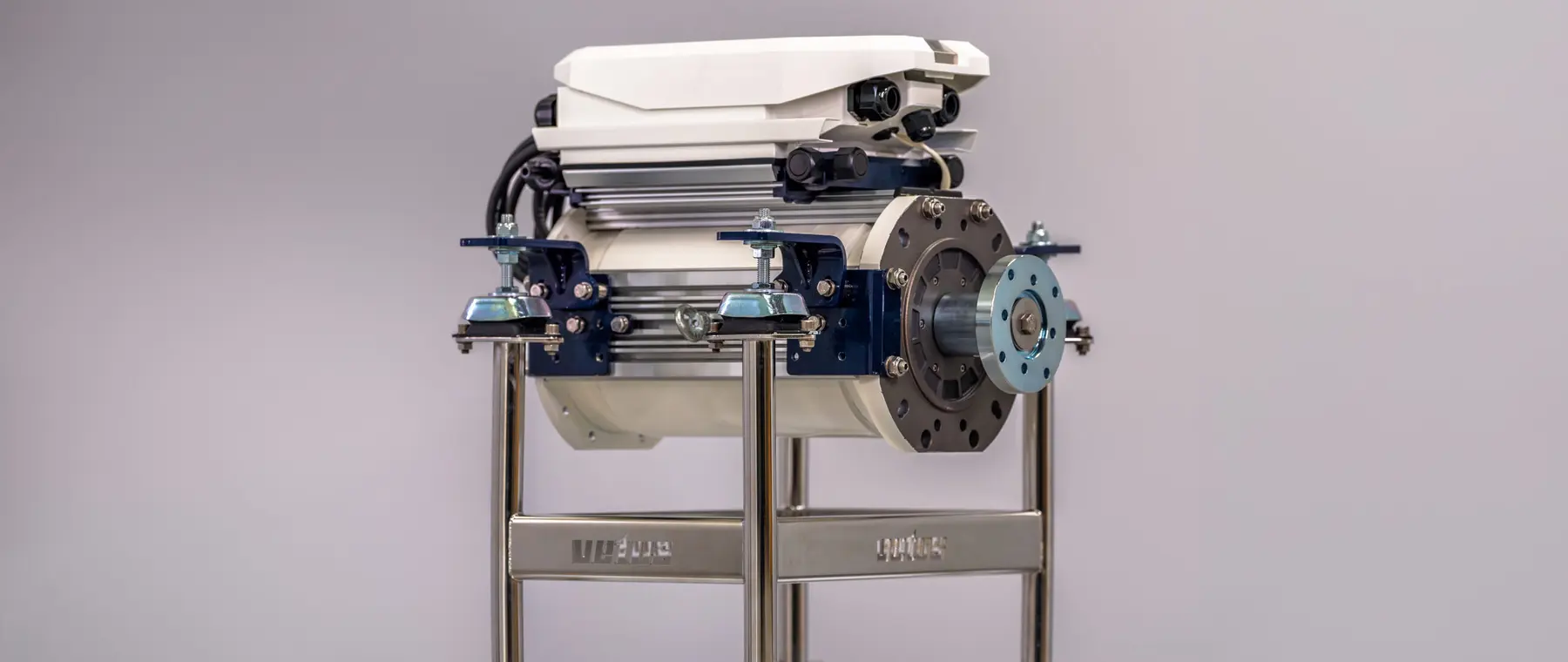
VETUS has expanded its E-LINE electric propulsion family with a new 22kW model, the highest-output motor in the range. The company quotes maximum torque of 130Nm and positions the system for larger leisure craft moving toward all-electric propulsion.
The new unit continues the compact inboard approach used across E-LINE rather than introducing a separate propulsion architecture. VETUS says the motor is available now and can be specified for vessels up to 15 metres and around 20 tonnes.
22kW motor adds headroom for heavier boats
The higher output broadens the range of hulls that can use the E-LINE system without stepping into a larger conventional diesel package. Torque delivery from an electric motor is available immediately, which can be useful for low-speed manoeuvring and acceleration.
Actual range remains dependent on battery capacity, hull efficiency, displacement and operating speed. Owners therefore need to size the complete energy system around their normal cruising profile rather than choosing the motor on power alone.
Sailing Assist manages propulsion behaviour
VETUS includes its Sailing Assist firmware to manage acceleration, cruising and emergency stopping behaviour. The system is intended to make throttle response more predictable while protecting the propulsion installation from abrupt changes in load.
The wider installation can use modular control levers, displays and a shunt for energy monitoring. Cooling can be configured around keel cooling or a freshwater circuit, giving builders and refit yards flexibility when packaging the system.
Compact installation targets new builds and refits
VETUS says the E-LINE motor can be installed on many existing engine foundations, which may simplify conversion projects. A complete retrofit still needs professional assessment of batteries, charging, cabling, cooling, shaft alignment and weight distribution.
For LBG readers, the 22kW model is significant because it pushes practical electric inboard propulsion further into larger leisure boats. It also gives owners comparing diesel replacement options another integrated system rather than a collection of separately sourced components.