
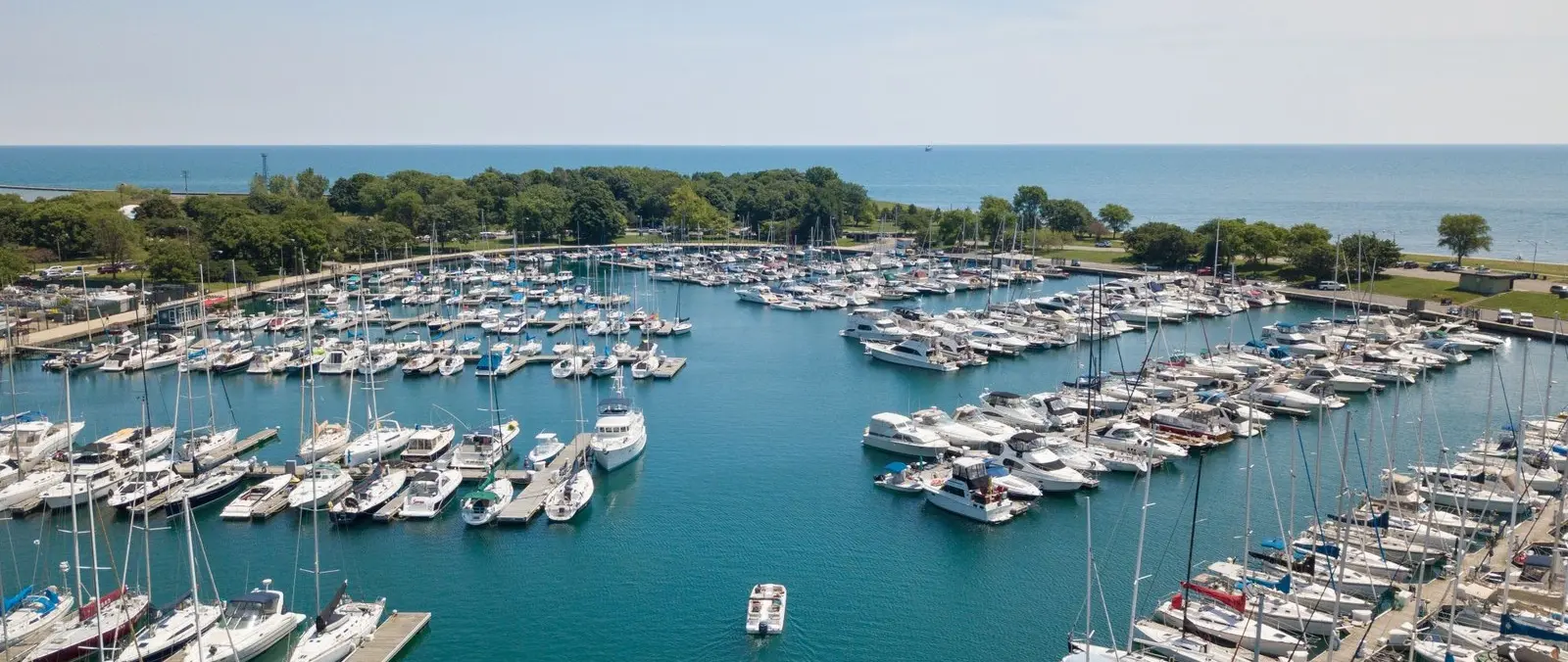
NMMA releases its latest registration picture
The National Marine Manufacturers Association has published headline findings from its 2025 United States Recreational Boating Statistical Abstract on total boat registrations. According to the association's announcement dated 2 November 2026, an estimated 15.2 million recreational boats were in use across the country during 2025, a decline of 0.8 percent compared with 2024. The figures provide a broad indication of the scale of America's active boating population during a period of changing regional demand.
The report distinguishes boats in use from those appearing in registration and documentation records, a difference that should be preserved whenever its numbers are reported. The public release gives selected national and regional findings, while the full statistical abstract is available separately through NMMA. This article uses the association's openly stated figures without pretending to have independently examined every table contained in the member and paid report.
A vast fleet with a modest national decline
At 15.2 million boats in use, recreational boating continues to represent a very large installed fleet in the United States, even after the association's reported 0.8 percent year-on-year decrease. That headline says something about the overall direction of the estimate, but it does not identify which product categories contributed most to the change. The release does not provide enough information to assign the movement to pontoons, fishing boats, sailboats or other types.
For businesses, the installed fleet matters because service activity does not disappear when new-boat demand slows. Engines require maintenance, storage facilities need capacity and marine accessories continue to wear out on boats already afloat. Those are general operational implications, not quantitative results taken from the report. A company considering investment should combine the fleet estimate with local demand, boat age, season length and verified service records rather than rely on a national headline alone.
Registration coverage reaches a series high
NMMA says registered and documented boats represented 76.9 percent of recreational boats in use during 2025, the highest proportion in its data series dating back to 2012. This is a share of the estimated fleet, not a claim that 76.9 percent of Americans own boats. It also should not be confused with a measurement of how many boats are active every weekend, because registration status and the frequency of use are separate questions.
One reason the distinction matters is that state registration rules can differ by boat type, size and propulsion. Federal documentation adds another route for qualifying vessels, while other craft may not appear in the same records. Without the complete methodology, a reader should not invent a precise number of previously unregistered boats that were newly captured. The confirmed fact is the proportion reported by NMMA and its status as a high point in the published series.
Florida leads state registrations
Florida remained the largest state for registered recreational boats, with about 1.2 million recorded during 2025, according to NMMA. The association says this represented 10.1 percent of registrations nationwide. Florida's place at the top is a concrete figure in the release and reflects the scale of the state's boating community across coastal and inland waters, but the single number does not reveal the age or value of its boats.
A state fleet of that size creates potential demand for storage, maintenance, marine insurance, fuel docks and training. Operators still need much more specific geographic information before deciding where to build or expand facilities, because boating patterns vary sharply between individual counties and waterways. The NMMA headline should be seen as a state-level indicator rather than a site-selection study. It cannot establish whether a particular marina has spare capacity or a local dealership faces rising orders.
The Great Lakes retain regional scale
The association identifies the Great Lakes as the largest boating region in its registration analysis, while reporting that registrations there declined compared with the previous year. These findings can coexist: a region may remain the biggest by total registrations and still experience a negative annual change. The public summary does not provide a complete numerical breakdown for each Great Lakes state within the text used for this article.
Seasonality is central to interpreting activity around the lakes, where winter storage, marina services and summer launch patterns create a different business rhythm from many southern boating areas. Yet it would be speculative to attribute the reported registration decline to weather, prices or specific regulation without supporting evidence. The information presently available confirms direction and relative regional scale; explanations of the causes require further research and more detailed data.
Southwest and inland areas show growth
NMMA says regional registration gains were strongest in inland and Southwest areas, with the Southwest leading the regional increases. Utah, Oklahoma and Arizona were among the states recording particularly strong state-level growth. Those examples underline that recreational boating is not confined to coastal destinations or traditional marine manufacturing centres, and that reservoirs and inland waterways also help sustain the national fleet.
The announcement does not supply exact percentages for those individual states, so ranking them numerically beyond the wording provided would be unjustified. Businesses assessing emerging opportunities need information on local launches, storage costs, access regulations, water availability and the types of boats being registered. Registration growth can point to potential demand but is not the same as a verified increase in spending. A careful operator will compare multiple years before committing to additional capacity.
California adds the most registrations
One of the more striking findings in NMMA's summary is that California added the largest number of registered boats of any state, even though the Southwest is described as the leading regional growth area. Absolute increases and percentage increases are different measures; a large state can add more boats numerically while a smaller state grows more quickly relative to its starting base. That distinction is essential to interpreting a list of leaders.
California's reported gain does not by itself show which type of boating attracted new owners or where within the state registrations increased. The public release provides no precise state total in the paragraph describing this finding. A dealer or marina operator therefore needs more granular figures before translating the result into a commercial forecast. It would be a mistake to suggest that every Californian boating market is expanding at the same rate.
What counts as a registration trend
Registration data can help describe the stock of boats within a jurisdiction, but the meaning of an annual change depends on definitions, record accuracy and the treatment of vessels entering and leaving the register. The NMMA abstract is designed to examine these trends over time, which is why its longitudinal series can be more informative than any single headline. This report deliberately separates those methodological considerations from the specific figures disclosed in the association's short public notice.
An increase in registrations does not necessarily imply an equal increase in new boat production, because ownership transfers, record renewals and previously existing vessels may affect records. Similarly, a reduction does not automatically mean that every boat has been scrapped or left the water. Businesses should view the data alongside manufacturer shipments, second-hand sales and local facility use. Each series measures a different part of recreational boating activity.
Access to detailed industry research
NMMA says members can access the digital versions of the 2025 Recreational Boating Statistical Abstract without an additional charge, while nonmembers may purchase the Total Boat Registrations Report for a stated price of 2,599 US dollars. That is a published access condition in the association's release, not an assessment of whether the report represents good value for a particular company. Pricing and access terms should be checked directly before purchase.
The data can be useful for manufacturers, insurers, suppliers, marina businesses and public bodies, provided its methodology and coverage fit the decisions being made. A national fleet estimate may support high-level planning, while a site investment normally requires information at a much finer geographic scale. The publicly available news item provides a useful first view, but it does not grant unrestricted access to the detailed tables and should not be represented as doing so.
How the 2025 findings inform 2027 planning
With 2027 planning underway across the marine industry, the release shows why businesses must distinguish a large existing fleet from the direction of new demand. The reported 15.2 million boats in use provides scale, while the slight national decline and contrasting regional trends point to an uneven market. Those observations can guide further questions about where service, training and equipment demand may be concentrated, without pretending to answer every commercial question.
The confirmed findings are straightforward: a 0.8 percent decline in total boats in use, a 76.9 percent registration and documentation share, Florida's leadership, a still-large Great Lakes region and notable growth in several inland and Southwest markets. They come from NMMA's own public summary and have not been embellished with invented state totals. The next responsible step is to consult the underlying data when an investment, public policy or operating plan requires greater precision.
Source: National Marine Manufacturers Association, 2025 Boat Registrations Report (2 November 2026).