The National Marine Manufacturers Association is using newly released federal economic figures to reinforce its argument that access to public waters is essential for recreational boating in the United States. In a 19 November 2026 announcement, the industry association highlighted figures published by the US Bureau of Economic Analysis a day earlier. According to the NMMA's summary, boating and fishing contributed $39.1 billion in value added to the American economy in 2025, making the combined activity a leading category in the outdoor recreation data. The release also says outdoor recreation as a whole generated $1.3 trillion in economic output and supported 5.3 million jobs. These figures describe past economic activity; they are not projections of boat sales or promises about future growth.
What the new numbers actually measure
The distinction between economic output and value added matters. Output broadly reflects the value of activity produced, while value added concerns the contribution remaining after intermediate inputs are accounted for. They are not interchangeable measures, and a reader should not compare the $39.1 billion boating-and-fishing value-added figure directly with the $1.3 trillion total outdoor recreation output as though both were calculated on the same basis. The NMMA statement reports the data in support of a policy argument, while the detailed definitions belong to the Bureau of Economic Analysis. For small-boat businesses, the useful point is that an activity often seen through individual leisure purchases also has wider economic connections to manufacturing, services, repair, hospitality and the places where people go afloat.
Why the category combines boating and fishing
Recreational boating and recreational fishing overlap, but they are not identical. Some fishing takes place from shore or from a vessel hired for a day, while many recreational boat owners rarely fish. The reported $39.1 billion refers to the combined category described in the federal release; it should not be presented as revenue attributable only to the sale of pleasure boats. A fishing skiff, family runabout, kayak or modest trailer boat can support spending in several related markets. So can local tackle shops, marinas, fuel providers, instructors and boat maintenance companies. The economic measure therefore helps illustrate a network of activities rather than one single product. Accurate reporting avoids dividing that total among sectors without a published methodology.
The question of water access
NMMA's political argument is that people must have usable places to launch, navigate and enjoy boats if the associated economy is to function. A boat sitting on a trailer has little recreational value to its owner when nearby ramps are unavailable or poorly maintained. Public launches, safe navigation channels, marina facilities, parking and shoreside services can all influence whether an owner uses a vessel regularly. The association says preserving access to public waters should be a federal priority. That is an advocacy position, not a finding issued by the Bureau of Economic Analysis itself. The data demonstrate economic activity; the recommended policy response is NMMA's interpretation of what government should do to sustain it.
Three legislative priorities named by NMMA
In an earlier 29 October letter to congressional leaders, NMMA called for action on three pieces of federal policy. These included the America the Beautiful Act, measures in the Water Resources Development Act, and the Sport Fish Restoration and Boating Trust Fund. The November announcement links the economic results to that request. Each priority affects the leisure-boat environment in a different way, including restoration of public facilities, access to waterways managed by federal agencies and programmes supporting boating-related infrastructure. The release asks lawmakers to act; it does not say that all measures have passed or that funding has been newly allocated. Distinguishing a lobbying request from enacted law is particularly important for owners who might otherwise assume that an announced access improvement has already been approved.
Why the restoration fund matters
The America the Beautiful Act is described by NMMA as a route to reauthorising a fund intended to address deferred maintenance on federal lands and waters. Recreational access infrastructure is one possible beneficiary. For boaters, ageing roads, docks, launch ramps or related public facilities can affect both convenience and safety. However, a broad infrastructure bill is not an immediate work order for any particular marina or lake. Site-specific projects require their own approvals, budgets and management arrangements. Small-boat users should consult the relevant park or waterway authority when making travel plans rather than rely on a national political statement as proof that a damaged facility has reopened. The policy debate is about the framework under which future maintenance and investment may become possible.
Water resources and managed facilities
NMMA also advocates changes through the Water Resources Development Act, including measures affecting recreation at US Army Corps of Engineers facilities, marina leasing and opportunities for private investment. Such issues may sound remote from everyday boating, but users of inland reservoirs and managed waterways often depend on clear operating rules and working infrastructure. Different leasing or access arrangements can influence which services are available and who maintains them. The association supports reforms that it believes would improve this environment. That does not establish that every private investment would benefit all users or that particular changes are free of trade-offs. Any proposal should be examined for its actual impact on public access, local communities, environmental management and the costs borne by boaters.
The boating and fishing trust fund
The Sport Fish Restoration and Boating Trust Fund is a longstanding mechanism for supporting recreation, conservation and public-access programmes. NMMA is calling for its reauthorisation, describing it as largely financed by boaters, anglers and manufacturers. A working funding mechanism can help sustain access projects beyond the cycle of a single local budget. At the same time, the presence of a national programme does not guarantee that a particular state or harbour will receive a specific amount in a given year. Grant allocations, rules and projects need separate verification. Owners who want to know whether a nearby ramp or boating facility may improve should follow announcements from responsible state agencies and the managing authority, not infer local spending from the size of the national recreation economy.
Manufacturing claims in context
The association reports that 95 per cent of boats sold in the United States are manufactured domestically, and that 93 per cent of American boatbuilders qualify as small businesses. These are claims supplied by NMMA in its advocacy announcement. They help explain why the group links waterway access with manufacturing and employment, but they are not the same as the federal value-added measurement and should be attributed accordingly. The term small business covers a broad range of manufacturers, from specialist workshops to firms producing standardised recreational craft. Their prospects can depend on component availability, labour, demand and the stability of local markets. Access policy is only one factor. An economic story must avoid reducing all of those conditions to a single cause.
What the figures mean for a first-time owner
A prospective boat buyer may not think about federal economic statistics when selecting a craft, but public access can be one of the biggest practical influences on ownership. A trailer boat that requires a long drive to an overcrowded ramp may be used less often than originally expected. Launching fees, parking restrictions, seasonal water levels and local rules also affect the full cost of a day afloat. Owners should therefore assess access before committing to a purchase and remain aware of public notices from local authorities. The new national economic figures provide context for the importance of those facilities, not an estimate of the expenses any household will face. Specific costs and availability must be established locally.
A policy debate, not a prediction
The association is urging bipartisan congressional action late in the 119th Congress. That does not guarantee agreement or enactment. Economic statistics can support arguments for public investment, but political decisions also involve priorities, budgets and competing claims on resources. The November release records the NMMA's position, and readers should be able to distinguish that position from the underlying government data. Similarly, a value-added total for 2025 should not be described as proof that the 2026 boating market is growing or that the next sales season will improve. More recent sales and employment information would be necessary to answer those questions. Clear time labels and careful treatment of the measurement basis keep the story useful beyond the initial headline.
The next developments to watch
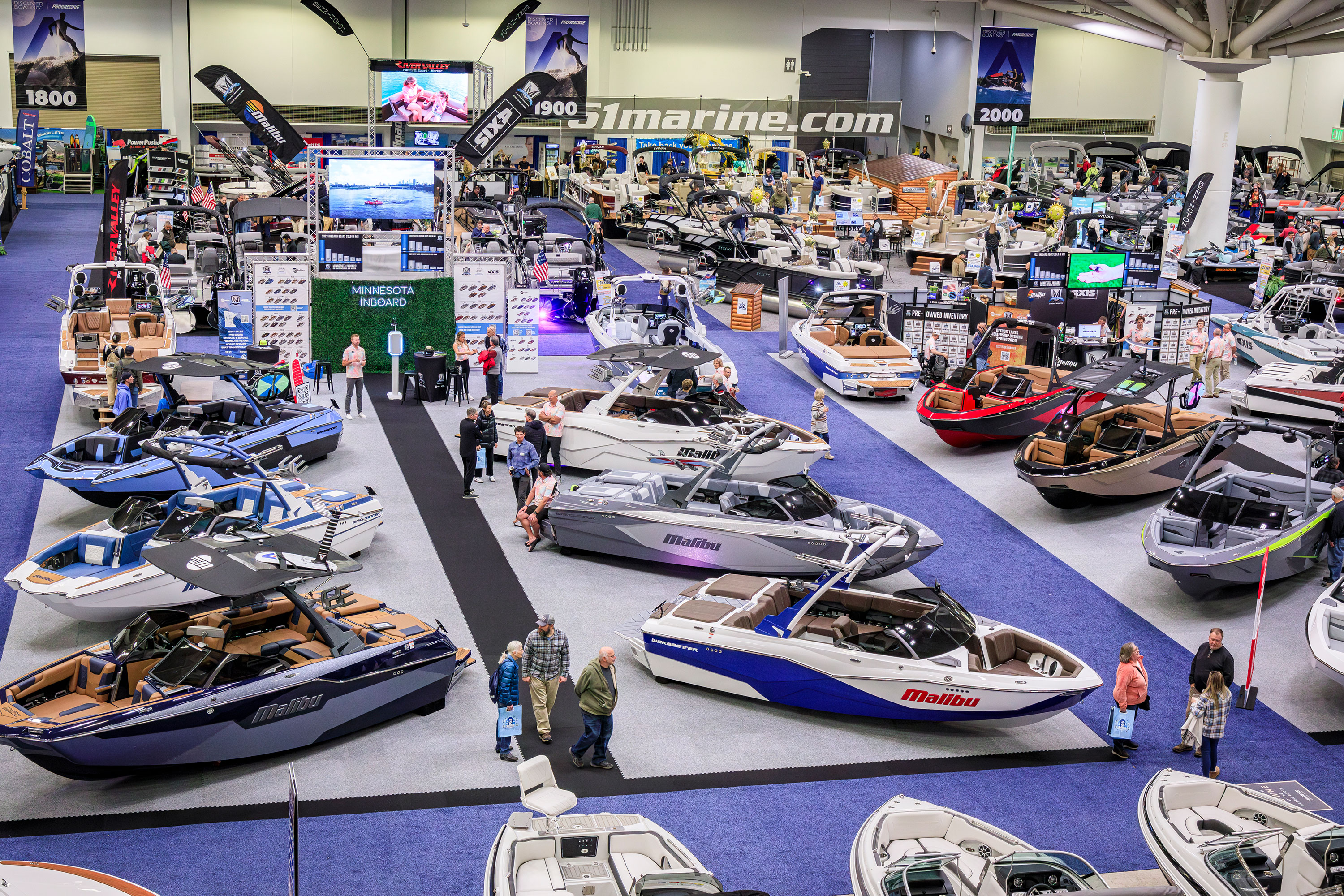
The confirmed facts are the 18 November release of BEA economic data, NMMA's 19 November interpretation, and the legislative priorities previously put to Congress. The association intends to keep advocating for public boating access and infrastructure. Subsequent reports should verify whether legislation advances, whether funding terms change and whether specific access projects receive approval. The accompanying photograph is an archival image from the official Minneapolis Boat Show media gallery, credited to Alex Carroll Photography; it illustrates American recreational boating and is not a visualisation of the BEA data or a photograph of congressional proceedings. For the leisure-boat sector, the message is that many individual trips on modest craft contribute to a measurable national industry, while the conditions that enable those trips remain a continuing public-policy question.
Sources and image attribution
Primary reported announcement: https://www.nmma.org/press/article/25707.
Official photographic provenance: https://www.minneapolisboatshow.com/photos. Image supplied by the originating organisation, credited in the photograph title; original copyright remains with the rights holder. Official image file. The photographs are documentary or clearly labelled archival illustrations, not evidence of events that have yet to happen.