A small fitting for an expensive part of the boat
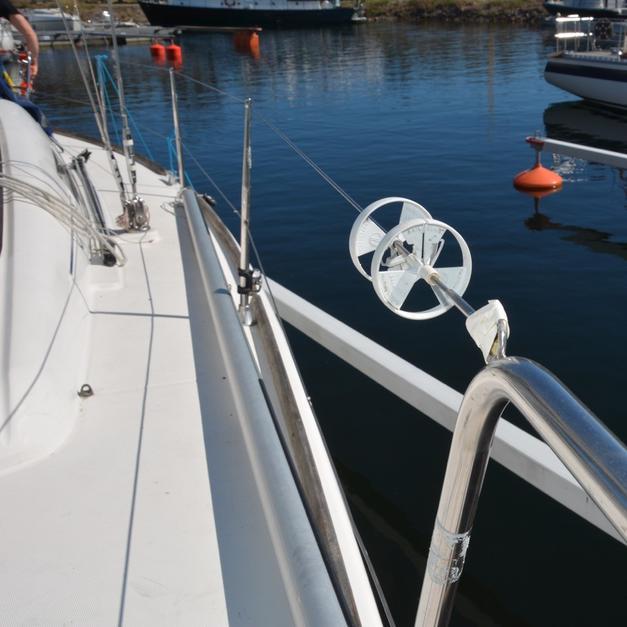
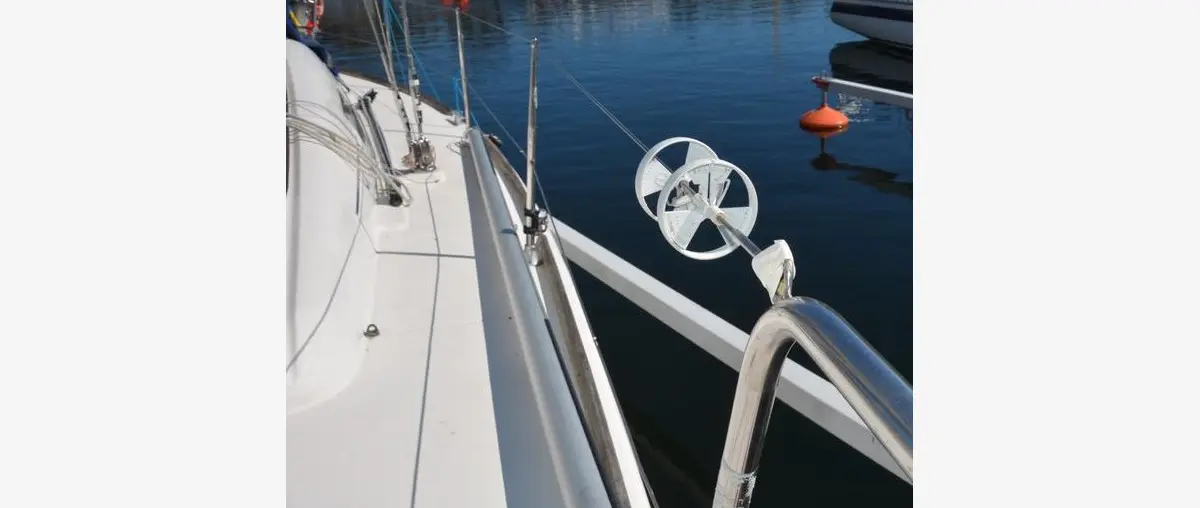
Danish accessory manufacturer UltraGlozz Co. ApS is showing its Sailguard sail protector in the current METSTRADE marine equipment catalogue, describing a small rotating wheel intended to reduce contact damage when a sail rubs against lifelines or rigging during manoeuvres. The manufacturer's product entry specifies a UV-resistant white plastic wheel with a nominal 76-millimetre diameter, a weight of 15 grams and compatibility with certain line or wire diameters between seven and nine millimetres. It also highlights a reopenable slot, allowing fitting without dismantling existing rigging. For owners of sailing boats under twelve metres, these are relevant features because a minor recurring abrasion point can eventually cause expensive sail repairs. The catalogue does not establish that the protector can prevent every tear or is suitable for every rig, and no specific first-launch date is supplied. Its interest is in whether a simple fitting can manage an identified wear point without changing how the sail or rigging operates.
What the first-party description actually establishes
UltraGlozz describes Sailguard as a freely rotating wheel that can be clipped around suitable lifelines, stays or shrouds. The supplier states that it is designed to reduce friction during tacks and jibes and may be installed without removing the underlying line or wire. The listing identifies the plastic material as UV resistant and gives measurements of diameter, weight and compatible rigging thickness. Those are concrete specifications, but they do not provide a tested reduction in friction for every sailcloth or an independently measured lifespan. Owners should confirm whether the particular version fits the diameter and type of rigging on their boat. A device that is too loose, too tight or unsuitable for a coated wire could create new wear rather than solve the original problem. The manufacturer's instructions should determine how it is positioned and secured.
Why sails can chafe during tacking
When a sailing boat turns through the wind, the headsail may pass close to shrouds, lifelines or other deck fittings. A large overlapping genoa can brush against several parts of the rig as it changes sides. Repeated contact can create wear, especially if the sail remains pressed against a sharp or abrasive surface under tension. A light sail may also flutter against a fitting during a manoeuvre, producing localised damage over time. The skipper should observe where the fabric touches the boat and whether the problem occurs during tacks, reaching or while sailing at a particular angle. The same mark appearing repeatedly in the same part of the sail can be a clue. A wheel or guard may be useful at a specific contact point, but it cannot compensate for poor trim, damaged rigging or an incorrectly positioned sail.
A rotating surface instead of a fixed contact point
Sailguard's central idea is a wheel that rotates as the sail moves against it, rather than forcing the fabric to slide across a stationary fitting. In principle, this can change the frictional interaction at a predictable contact point. The actual result depends on the pressure between the sail and wheel, the cleanliness of the surfaces and whether the wheel is free to turn. A device with grit or debris trapped in its moving surfaces could behave differently from one operating in clean conditions. The manufacturer should provide guidance on checking rotation and replacing a worn part. Owners should avoid treating the rotating design as a guarantee that contact will not damage the sail. A carefully chosen device may reduce a problem, but the condition of the sail and the loads involved still matter.
The value of a reopenable slot
A fitting that opens to pass around an existing line can be easier to install than one requiring the rigging to be dismantled. On a small cruiser, removing a lifeline or stay may involve specialist work, tension adjustments and unnecessary expense. The supplier says Sailguard's slot allows installation without removing rigging, which could make it attractive for retrofits. However, users need to confirm that the slot locks or remains secure in the intended configuration and that the fitting is approved for the particular line. It should not be forced over a diameter outside the stated range. A guard that slips out of position during sailing may become ineffective or cause a different hazard. Installation should follow the manufacturer's published steps and be checked after the first trips. Convenience is useful only when the fitted product remains in place safely.
Compatibility with seven- to nine-millimetre rigging
The product page lists a range of seven to nine millimetres for the lifelines or stays it is designed to fit. That is a substantial detail because small yachts can use different wire, textile or coated rigging sizes. An owner should measure the actual item rather than relying on the boat's model or age. If the lifeline has a plastic coating, the outside diameter may differ from the wire beneath it. The compatibility of the product with different finishes and materials should be checked. A fitting intended to rotate around a smooth wire may behave differently on a braided rope or textured surface. The supplier may offer several versions, but their specifications should be verified individually. Fitting the wrong size can undermine any benefit and may interfere with inspection of the underlying rigging.
What the 76-millimetre wheel changes
A wheel of approximately 76 millimetres in diameter creates a rounded contact surface between the sail and the underlying fitting. The radius and placement may help avoid a sharp edge or small high-pressure point, but no universal friction figure can be derived from its diameter alone. On a compact foredeck, the added projection must also be considered. It should not catch on sheets, interfere with sail movement or obstruct crew passing through the area. A product may be light enough to have little effect on overall boat weight while still changing the geometry around a busy section of rigging. The skipper should examine the boat from several angles and consider how the sail will behave on both tacks. A simple protective component needs to be positioned deliberately.
Inspecting the sail before adding accessories
A worn patch should be examined for the extent of damage and the underlying cause. If the sailcloth has already lost strength, a protective wheel cannot restore it. A sailmaker may recommend a repair or reinforcing patch, as well as reviewing the layout that caused the abrasion. The owner should identify whether the source is a lifeline, shroud, spreader or a deck fitting with an exposed edge. Sailguard is intended for particular round rigging elements, not every possible contact point. A damaged or sharp fitting should itself be repaired rather than hidden beneath an accessory. The most economical approach may combine a small protective device with appropriate sail maintenance and better handling. The objective is to avoid repeated damage while preserving the sail's shape and normal movement.
Different sails create different contact patterns
An overlapping genoa may brush against rigging more often than a small non-overlapping jib. A furling headsail can also have different reinforcement and shape from a racing sail made for light-wind performance. Sailguard's usefulness depends on which sail is being handled and where it makes contact. Owners should avoid installing guards indiscriminately on every wire in the hope of preventing all damage. A sailmaker or experienced rigger can help identify the particular locations that would benefit from a rounded, rotating surface. The same boat may need a different solution after a change of sail plan. Adjusting the product's position without understanding the cause of wear can move the problem rather than solve it. Observing the sail under normal conditions is the starting point.
Keeping sheets and lines clear
A sail protector attached to a lifeline or shroud should not become a point where a sheet catches during tacking. A trapped line can put unexpected loads on the fitting or rigging and create a handling problem. The owner should inspect the proposed location with the boat's normal running rigging in mind. A trial should include slow, controlled sail changes in suitable conditions, allowing crew to see whether the wheel stays in position. If a line catches, the arrangement needs to be reconsidered before it is relied upon. A small fitting can make a large difference to how equipment moves in a confined area. The best solution reduces one problem without producing a new obstruction for the crew.
UV resistance and ordinary wear
UltraGlozz identifies UV-resistant plastic in the official Sailguard description. That may help when the product remains exposed to sunlight, but ultraviolet resistance does not mean indefinite service life. Plastic components can be affected by impact, contamination, age and temperature. Owners should look for cracking, deformation or rough surfaces and follow the manufacturer's guidance on replacement. A wheel that no longer rotates freely should be investigated, not assumed to continue protecting the sail. Cleaning may help where dirt is the cause, but the product should not be dismantled or lubricated with inappropriate substances. A sensible inspection routine is straightforward, particularly when crew are already checking standing rigging and running gear before departure.
Does a lightweight accessory affect sailing performance?
The manufacturer quotes a weight of about fifteen grams. Such a small mass is unlikely to be a major consideration in the overall weight of an ordinary cruising boat, but the position and shape of the fitting may still influence how fabric moves near the rig. A skipper should not expect measurable speed improvement simply from installing Sailguard. Its stated purpose is wear reduction, and any secondary handling advantage must be evaluated on the actual boat. Owners interested in performance may prefer to identify why the sail is rubbing in the first place before adding equipment. Better sail trim or repositioned leads may sometimes be the more appropriate response. A useful accessory is one that addresses a recurring issue without complicating the sail plan.
A practical installation check
Before fitting a Sailguard, the owner should measure the rigging diameter, inspect its condition and identify the precise point of contact. The device should then be fitted according to the manufacturer's instructions, with attention to security and freedom of rotation. Crew can observe it during an ordinary tack in gentle conditions and check whether it remains in place. The sail should be examined afterward for any unexpected marks. It is sensible to repeat the inspection after several trips because the fitting may settle or move. An owner should not put hands near loaded lines or sails to adjust the wheel while the boat is manoeuvring. The work is small, but safe handling rules still apply.
Avoiding unsupported lifetime savings
Sails are expensive, and even modest damage can lead to repair costs. A product that reduces recurring abrasion could have financial value, but the manufacturer listing does not establish a guaranteed number of years added to sail life. The result will vary with frequency of sailing, sail material, rig geometry and maintenance. Owners can assess the benefit by recording where wear occurs and whether the problem improves after the change. Such observations are more credible than estimating savings from the size or price of the device. A sail already approaching replacement may not benefit in the same way as a new sail with a localised wear point. The purchase should be based on a specific problem that can be inspected, not a general promise that all sail maintenance will become unnecessary.
A current catalogue option for smaller sailors
Sailguard is an identifiable UltraGlozz product with a rotating protective wheel, an installation slot and published dimensional details. Its presence in the METSTRADE 2026 catalogue supports a current product review but does not establish a new November launch. For owners of recreational sailing boats under twelve metres, it offers a straightforward idea: change how the sail contacts a particular piece of rigging to reduce wear. The device must be correctly sized and placed, and damaged sails or sharp rigging should still receive proper attention. A small accessory can be worthwhile when it addresses a known problem without complicating the manoeuvre. The key is to combine it with careful observation, routine sail inspection and sensible rig maintenance rather than expect a wheel to solve every possible cause of chafe.
Original industry sources and image credits
Reporting based on UltraGlozz Co. ApS official Sailguard sailprotector product profile with 76mm wheel, 7–9mm rigging range and 15g weight; current METSTRADE 2026 catalogue.
Lead image: UltraGlozz Sailguard Uses a Rotating Wheel to Reduce Sail Chafe at Rigging — original producer product photograph. © UltraGlozz Co. ApS. Original supplier image.