A small mooring accessory for the busy side deck
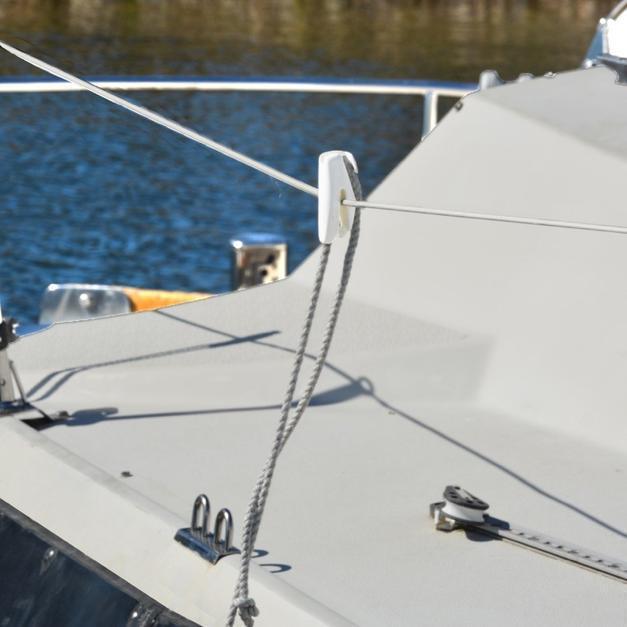
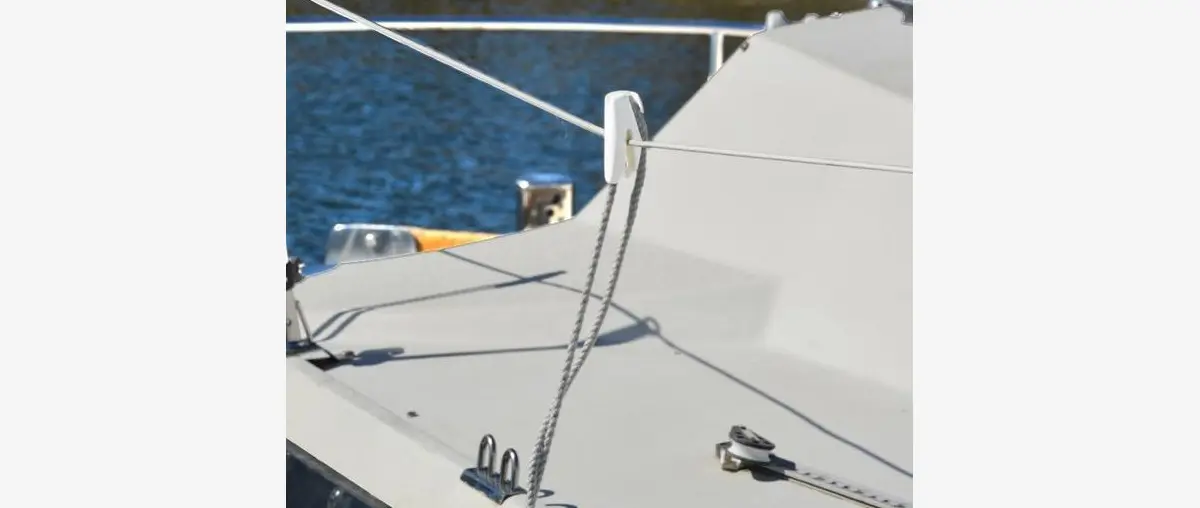
Danish marine equipment producer UltraGlozz Co. ApS is displaying its Fend-Fix fender hanger in the current METSTRADE catalogue, describing a compact accessory intended to make the height of a boat fender easier to adjust from a lifeline or guardrail. The supplier's own description emphasises one-handed operation, an anti-slip arrangement and a springy locking heel. It says the device can be installed, moved or removed without tying and untying conventional knots each time. For owners of boats under twelve metres, this is a practical subject because fenders may have to be repositioned at every new berth. A small crew can be occupied with helm control, mooring lines and watching other vessels, leaving little time for repeated rope adjustments. The public catalogue does not publish a universal load rating or the limits of every rail connection, so the product should be assessed as a handling aid rather than a guarantee that a fender will remain correctly positioned under all conditions.
The manufacturer’s confirmed features
The official Fend-Fix entry describes a fender hanger for lifelines and guardrails, with a mechanism intended to hold its position and allow rapid height adjustment. It identifies white and black UV-resistant plastic, and presents the product as suitable for short marina stops and other situations where a fender must be deployed quickly. The page refers to an award-winning design, but does not provide all relevant dates, test methods or maximum loads. It would be incorrect to infer a specific capacity or claim the unit can support any fender irrespective of its dimensions. A buyer should request the correct version, installation instructions and load limits from the manufacturer. The size and condition of the boat's rail or lifeline matter, as does the rope used to suspend the fender. Convenient adjustments remain safe only when the hanger is appropriate to the complete arrangement.
Why fender height can change from berth to berth
A fender protects the hull when it presses against a pontoon, quay or neighbouring vessel. Its correct vertical position depends on where the contact actually occurs, which can vary considerably between marinas. A low floating pontoon presents a different surface from a high stone quay. The boat's freeboard and the shape of the hull also influence where the protective equipment should hang. A fender set at the correct height for a home berth may be almost useless when tied to a different dock. The crew should therefore inspect the arrangement on arrival rather than assume the same position will always work. A product that makes height adjustment quicker could reduce the temptation to leave fenders in an unsuitable place, but it does not make the decision for the skipper.
The traditional knot still has a role
Many boat owners secure fender lines with familiar hitches or other knots appropriate to the circumstances. These methods are inexpensive, simple and can work well when the crew knows how to use them. A mechanical hanger offers a different method, potentially reducing the time spent tying and retying lines. That does not mean knots are obsolete or unsafe. The choice depends on the rail, fender, rope and conditions. An owner should compare the advantages of rapid adjustment with the additional need to inspect a moving or locking mechanism. A fender should be attached in a way that the crew can understand and verify. If a mechanical hanger jams or becomes damaged, it may be useful to retain the ability to secure the fender conventionally. Good seamanship includes understanding the alternatives.
One-handed operation and crew movement
The manufacturer promotes Fend-Fix as a way to keep one hand free while adjusting a fender. This is a meaningful idea on a narrow side deck, where a person may need a handhold for stability. However, the exact benefit depends on whether the device is easy to reach and whether the operator can use it without leaning beyond the rail. A crew member should never place hands between the hull and quay to adjust protection while the boat is moving against the dock. Fenders should be prepared in advance wherever possible, especially before approaching an unfamiliar berth. An easy-to-use hanger can support that routine but should not encourage adjustments in dangerous positions. The safest crew procedure begins with a clear plan and allows time to correct fender placement before the vessel is under heavy contact load.
Anti-slip claims need practical verification
The catalogue says the Fend-Fix design resists slipping on lifelines and guardrails. That may help keep a fender in the intended position, but the outcome will depend on the rail's diameter, material and surface condition. A smooth stainless tube, a coated lifeline and a textile safety line are not identical. The manufacturer should specify which arrangements are approved. A device that holds firmly when the boat is stationary may experience different forces when waves repeatedly push the fender against a quay. Owners should check the hanger after the first use and observe whether it stays in position during ordinary mooring. It should not be used as an anchor point for a different purpose unless explicitly approved. The presence of a spring or locking feature does not establish that it can safely carry all possible loads.
Selecting the correct fender line
A fender hanger interacts with the rope that suspends the protective body. The line's diameter, material and condition may influence whether adjustment is smooth and whether it remains secure. The manufacturer should provide an approved range of rope sizes and any restrictions on construction. A very slippery line may behave differently from a rough or worn rope. Owners should examine the line for chafe and avoid using damaged material even if it appears to grip inside the hanger. The ability to adjust height quickly is valuable only if the line is not released unexpectedly under load. A practical trial in calm conditions can establish how the mechanism operates with the fenders already aboard the boat. It is better to identify compatibility problems before approaching a busy marina.
A small fender is not a low-risk item
On a light open boat, one poorly positioned fender can allow contact between painted or gelcoated topsides and a rough dock. On a heavier craft, the forces can be larger and may cause damage even if the fender remains suspended. The hanger's purpose is to position a fender, not to absorb impacts itself. Owners still need to choose fender size and material for the boat and the expected loads. The protection should be placed where it can remain between the hull and the contact surface as water level and boat movement change. A fast adjustment mechanism may help, but it cannot compensate for insufficient fender capacity or an unsafe mooring arrangement. Good fender selection and a careful approach remain fundamental.
Lifeline placement has limitations
A lifeline or guardrail may be in a convenient position for hanging fenders, but it is also part of the boat's protective equipment. The crew should not overload or damage it with unsuitable attachments. A small vessel may have different rail strengths, wire diameters or connection details from a larger cruiser. Some boats use coated wire, while others have solid tubular rails or textile lifelines. The supplier's approved installation guidance should determine whether Fend-Fix fits the arrangement. An owner should avoid modifying essential safety rigging simply to accommodate the hanger. If the rail is unsuitable, a different attachment point or conventional method may be more appropriate. Protecting the boat's hull should not be achieved by compromising a structure that helps protect people aboard.
A practical advantage when rafting alongside
Small boats sometimes raft alongside another vessel rather than tie directly to a dock. In that situation, the contact points can differ from those at a fixed pontoon and may shift as the boats move. Fender height and spacing need particular attention. A hanger that allows rapid adjustment may be useful during preparation, but the crews must still coordinate where protection is placed. The fenders should be large enough for the vessels and their movement, and mooring lines should be arranged appropriately. A mechanical fender hanger does not make rafting safe in unsuitable weather or crowded conditions. The skipper should assess whether the arrangement is appropriate and prepare the fenders before contact. Quick adjustment is a convenience within that plan.
Short marina stops and repeated use
The Fend-Fix concept may be most useful to owners who move between several marinas or frequently stop at pontoons for fuel and supplies. A crew who adjusts fenders several times a day may appreciate reducing the number of knots to tie and release. Yet convenience should not result in the hanger being ignored between uses. It may be exposed to salt spray, UV and mechanical impact, so regular inspection remains necessary. An owner who seldom changes berth may find a simple fixed line arrangement equally practical. The value of the device is therefore linked to the owner's actual habits. A product that solves a repeated task can earn its place aboard more readily than a fitting used only because it looks innovative.
How the locking mechanism should be tested
A new hanger should be examined and operated before it is relied upon in a challenging docking situation. The crew can test installation on the intended rail and adjust a fender line while the boat is secured in calm conditions. The mechanism should hold the fender where expected, release in a controlled way and remain easy to understand after repeated use. If the manufacturer specifies a locking heel or another securing feature, its operation should be confirmed directly from the instructions. Crew should also check whether the unit can rotate or slide along the rail when the fender is pressed sideways. A simple trial can identify the correct orientation and limits without placing anyone at risk. Product demonstrations are useful, but the boat's own arrangement is the definitive test.
Storage, portability and replacing worn units
A removable hanger can travel with the boat and potentially be used on different suitable rails, which may reduce the need to carry permanently installed hardware at every berth. However, owners should avoid assuming universal compatibility. A replacement rail or a different fender line may require another version of the product. The device should be stored where it cannot become lost or damaged by other gear. Its plastic components should be inspected for cracks, deformation or signs of ageing, and any worn unit should be replaced according to the maker's guidance. The public catalogue does not provide a universal service-life estimate. A simple accessory becomes useful over time when spare parts or replacements remain accessible and the crew understands when it is no longer safe to use.
UV resistance is only part of durability
UltraGlozz specifies UV-resistant white and black plastic in the product listing. That can be relevant when a fitting remains exposed on a sunny boat, but sunlight is not the only source of wear. Salt, dirt, repeated bending, contact with hard metal and accidental impact can affect plastic components. The locking arrangement may also experience wear as the line is adjusted. Owners should clean and inspect the device in accordance with the manufacturer's instructions, rather than using harsh solvents or trying to repair damaged plastic with improvised adhesives. A fender hanger should function predictably every time. If it begins slipping or becomes difficult to release, the problem should be investigated before the next trip rather than tolerated because the item is inexpensive.
Comparing mechanical and conventional arrangements
An adjustable hanger is not necessarily better than a well-tied knot for every boat. Conventional lines can be reliable and require very little specialised equipment. A mechanical alternative may make adjustment easier for an owner who frequently changes berth or has limited dexterity, but it introduces components that require correct fitting and inspection. The crew should understand how to revert to an ordinary line attachment if necessary. There is also a cost consideration when several fenders are carried. Purchasing a full set of hangers should follow a successful practical trial with the boat's actual rails and lines. The strongest reason to choose Fend-Fix is that it solves a real handling problem without complicating the mooring routine.
A current catalogue product with clear limits
Fend-Fix is presented by UltraGlozz in the current marine equipment catalogue as a one-handed fender hanger that uses an anti-slip locking arrangement and UV-resistant plastic. The listing does not establish a specific first-release date or a universal performance rating, so it should not be labelled a brand-new November 2026 invention. For recreational boats below twelve metres, its practical value is the possibility of placing fenders at the correct height more quickly and with less effort. The owner still needs appropriate fender sizes, sound mooring lines and a safe plan for approach and departure. A carefully selected hanger can make that preparation easier, especially with a small crew, but a simple accessory cannot replace the skipper's judgement about where a boat will contact the dock.
Original industry sources and image credits
Reporting based on UltraGlozz Co. ApS official Fend-Fix fenderhanger source profile specifying one-handed adjustment, locking heel and UV-resistant plastic; METSTRADE 2026 catalogue.
Lead image: UltraGlozz Fend-Fix Aims to Make Fender Height Changes a One-Handed Job — original producer product photograph. © UltraGlozz Co. ApS. Original supplier image.