
What has been released
The Yacht Harbour Association has moved its revised Code of Practice from announcement to practical availability for members, with volumes one and two of the eighth edition formally launched in November 2026. British Marine's 5 November statement identifies the released volumes as Marina Planning and Design and Marina Operations. The revision was developed with specialist consultancy Marina Projects after consultation with operators and other industry participants. The announcement matters beyond marina management offices: berthing quality, access, maintenance and emergency arrangements shape the day-to-day experience of owners of ordinary leisure boats.
The distinction between a published resource and an enforceable legal rule is important. This is an industry Code of Practice, not a claim that all marinas have received a new statutory licence or that every provision automatically applies to every site. Owners should continue to follow the rules of their specific berth, local authority requirements and applicable law. The news is that a substantial professional reference has become available to TYHA members, offering operators a basis for reviewing facilities and working practices.
A four-volume structure with two available
British Marine explains that the new edition is organised into four specialist volumes. The first covers marina planning and design; the second addresses marina operations. The other two are directed at boatyard planning, design and operations and at superyacht marina planning, design and operations. Crucially, the November release announcement concerns volumes one and two. The association says these replace the seventh edition completely in their respective field, rather than serving merely as a short supplement or update sheet.
That restructuring has a practical logic for operators handling everything from trailer boats and modest cruisers to larger visiting vessels. Design decisions and daily operations overlap but are not identical responsibilities. A pontoon's layout affects movement, yet its day-to-day safety also depends on inspections, staff training and the way visitors are briefed. A multi-volume reference may help professionals separate the questions while still understanding their connection. That is an editorial interpretation of the structure, not a claim to have inspected the member-only document's full text.
Why small-boat owners should pay attention
A skipper in a six-metre runabout may never read a marina design manual. Yet the experience of launching, tying alongside and reaching shore depends on the quality of decisions made from such guidance. Small craft often have relatively low freeboard, minimal crew and limited protection when approaching a pontoon in wind or current. Clear route signs, suitable access, lighting, non-slip surfaces and sensible separation of movements can make visiting less stressful. These are examples of user-facing factors, not a checklist of mandatory clauses attributed to the Code.
Operators also have to balance private berths, visitor space, commercial activity and pedestrians on the same waterfront. When the layout is confusing, a newcomer may make a hurried manoeuvre or leave a boat in the wrong place. When instructions and contact points are clear, the same crew can arrive calmly. A more detailed professional framework can encourage discussion about those recurring friction points, although the benefits will depend on whether each marina chooses to implement suitable practices.
Environmental expectations are part of the update
British Marine identifies sustainability and environmental management among the revised Code's priorities. That is directly relevant to harbours where small craft launch, refuel, wash down, dispose of waste and sometimes spend long periods unattended. Owners often see environmental measures through everyday conveniences: where waste can be deposited, how oily materials are handled and whether information about protecting the water is easy to find. Better processes may be almost invisible when they work, but their absence can cause lasting harm.
Operators face site-specific decisions about drainage, energy, water use, habitat and waste. A written professional framework can help organise those questions, yet it should not be mistaken for evidence that any named marina has achieved a particular environmental standard. The revised publication's emphasis is a starting point for better practice, not an automatic certificate. Boat owners can contribute by using available facilities properly, reporting spills and avoiding the discharge of rubbish or contaminants into the water.
Safety and emergency preparedness
The launch statement also refers to operational resilience, safety, emergency preparedness and staff competence as concerns of the modern marina industry. These are not glamorous subjects, but they become extremely important during a fire, a pollution incident or a sudden weather change. A small-boat crew may need to know the location of a shore-side alarm, the quickest safe route away from the pontoon and how to contact staff after hours. Procedures need to make sense to visitors as well as people who work there every day.
No code can eliminate every risk. The practical question for management is how a site's design, equipment, training and communications work together in foreseeable situations. For owners, the reasonable response is to learn the local emergency arrangements rather than assume all marinas use identical systems. Ask where help can be summoned, keep access clear and check the boat's own safety equipment. Industry guidance is strongest when it complements competent behaviour aboard.
The role of Marina Projects and consultation
Marina Projects contributed technical expertise to the revision, drawing on its work in planning, design and operations. The association describes broad consultation with stakeholders in the UK and internationally, including reference to established standards and regulatory frameworks. The Code has a long history: British Marine's release traces the first edition back to 1977. Revisions over that period have had to respond to changing vessel designs, expectations of service and the pressures on waterfront space.
The development process also shows why the finished publication should not be treated as the work of one operator or a sales brochure for one site. Different marinas face different tidal ranges, local laws, vessel mixes and commercial pressures. A useful code must give practitioners a way to think through those differences. Its real influence will be judged by how operators apply it, maintain records, train teams and adapt facilities over time, not by the publicity surrounding the release.
Digital delivery and access
According to British Marine, the new Code is being made available to TYHA members through the Digify digital platform. The announcement directs members who need access to the association's operations team. That means an ordinary boat owner should not assume the complete volumes are openly downloadable without membership. It also means journalists should be careful about describing detailed requirements they have not verified against the actual text; the official launch summary provides the confirmed scope, not a free copy of every technical section.
The association has already held industry roadshows and says online sessions will help members explore the guidance. Training and discussion can matter as much as publication: a complex document used only at annual review time is less useful than an approach understood by the people responsible for pontoons, fuel berths and visitor arrivals. Operators will need to decide which parts apply to their circumstances and what changes are proportionate. Members can use the official contact route to obtain the source material.
What to ask your marina
For ordinary owners, the announcement creates an opportunity for constructive questions. How are visitor instructions updated? Are pontoons and access routes regularly inspected? Is there a clear emergency contact? Where should a newcomer wait before entering a tight berth, and are fuel and waste facilities managed with appropriate care? None of these questions requires a berth holder to pretend to be a marina engineer. They focus on the practical result that sailors and motorboat users experience.
An operator may already have good procedures unrelated to the new publication. The release is not evidence that older marinas are deficient, nor that every modern facility needs expensive rebuilding. It is a reason to discuss continuous improvement. Small-boat owners have a legitimate interest because they use the same infrastructure as larger craft but often with fewer hands aboard. Well-organised shore arrangements make a disproportionate difference to someone arriving alone or with children.
The next stage is implementation
The eighth edition's first two volumes now provide a common professional reference for planning and day-to-day marina operation. Whether that translates into noticeable improvements will depend on interpretation, investment and consistent management at individual sites. The other volumes have their own specialist audiences, and the November announcement should not be read as confirmation that every part of the four-volume set is already available. This is a significant publication milestone, but implementation is the longer process.
Leisure Boat Guide will treat the revised Code as an industry development with direct consequences for small-boat access and marina experience. The primary facts come from British Marine's 5 November launch notice and its earlier preparation announcement; readers seeking the full technical provisions should consult TYHA directly. For boaters, the useful test remains straightforward: safe landings, clear guidance, competent staff and a marina that looks after the water as carefully as it looks after the boats.
Sources and image credit
Primary announcement: British Marine / The Yacht Harbour Association. Additional official context: reference 1.
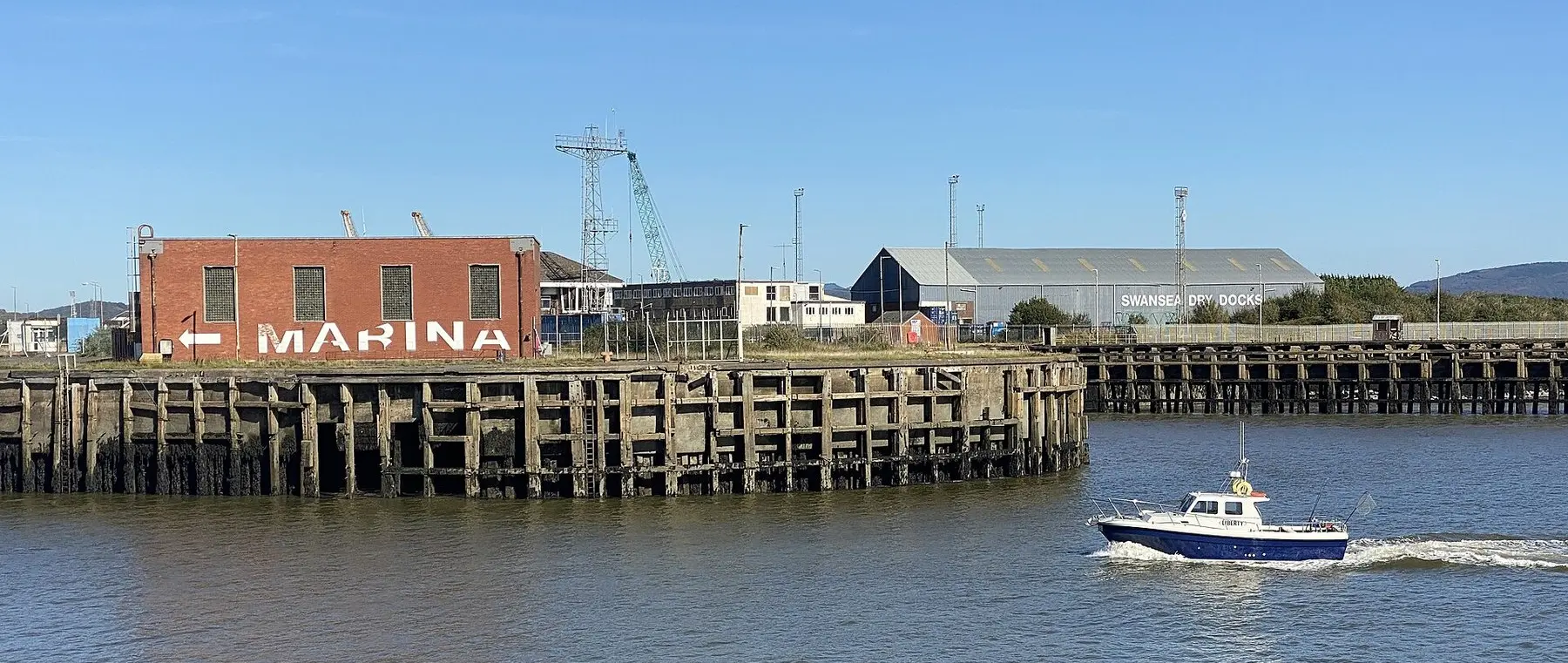
Illustrative photograph of a small boat approaching Swansea Marina, not the TYHA code launch. Photograph: Alan Hughes / Wikimedia Commons, CC BY-SA 2.0; resized and recompressed for web and shared under the same licence.
