
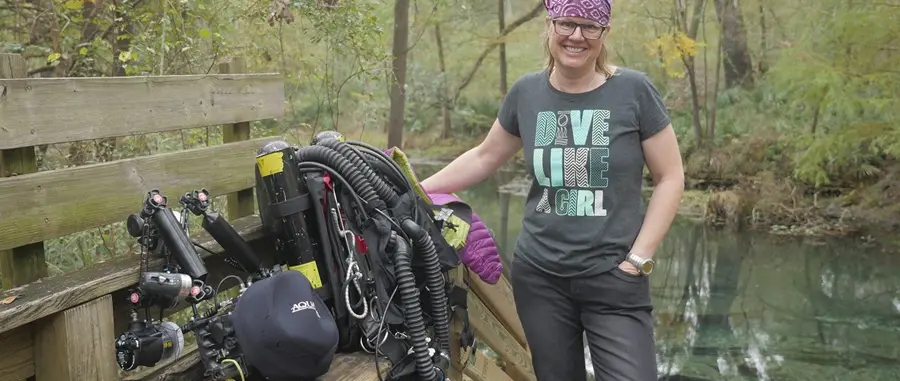
Torqeedo has added Canadian cave diver, polar explorer and filmmaker Jill Heinerth to its global Electric Explorers ambassador programme. Her work will use the company’s compact Travel XP electric outboard to reach remote and environmentally sensitive dive locations.
The programme brings together scientists, conservationists and watersports users who operate electric boats in real-world conditions. For leisure boat owners, the useful part is seeing small electric propulsion applied outside sheltered demonstration settings.
Travel XP provides 1,600 watts of input power
Torqeedo lists the Travel XP used by Heinerth with 1,600 watts of input power and a 1,512Wh lithium-ion battery. The package is designed around portability, making it suitable for dinghies and other small craft where a permanently installed propulsion system is unnecessary.
Range still depends heavily on hull efficiency, speed, weather and payload. Owners considering electric propulsion should therefore plan around realistic operating conditions rather than relying on a single headline runtime figure.
Quiet propulsion supports dive-site access
Heinerth’s work often involves photography, cave diving and exploration in locations where noise and local disturbance matter. Electric propulsion reduces engine noise at low speed and removes exhaust emissions at the point of use.
Those advantages can also matter to anglers, wildlife watchers and tender users. They do not remove the need for battery management, charging planning and a suitable reserve for changes in wind or current.
Electric Explorers links products with field use
Torqeedo says its ambassador programme is intended to demonstrate how electric propulsion can expand access to nature while encouraging responsible use of waterways. The company has been part of Yamaha Motor Group since 2024 and develops electric and hybrid drives for recreational and other marine applications.
For LBG readers, the Heinerth partnership is relevant because it puts a compact portable outboard into a demanding exploration context. It also shows the direction of travel for small-boat propulsion as battery systems become more integrated and easier to transport between craft.