
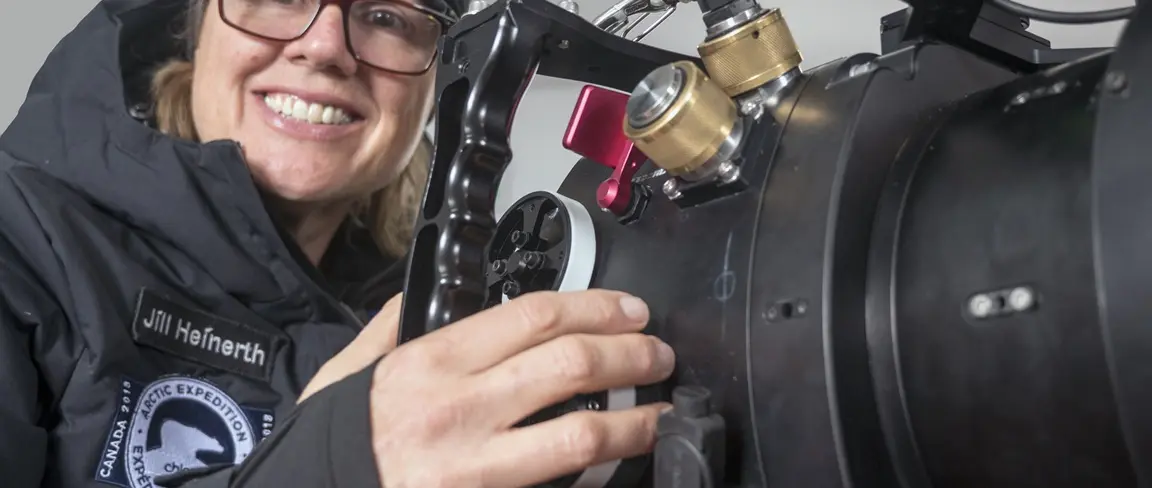
An explorer known for extreme underwater environments
Heinerth is known for expeditions into caves, polar regions and other demanding underwater environments. She is also the first Explorer-in-Residence of the Royal Canadian Geographical Society and has spent much of her career documenting places that few people can reach directly.
Torqeedo says that experience makes her a natural fit for its Electric Explorers programme. The initiative works with people whose projects combine time on the water with exploration, science, storytelling and environmental awareness.
Travel XP provides compact electric access
Heinerth uses Torqeedo’s Travel XP electric outboard to move equipment and teams toward dive locations. The portable system has 1,600 watts of input power and is designed for small craft where low noise, straightforward handling and easy transport are useful.
For divers and photographers, quiet propulsion can be particularly valuable when approaching wildlife or operating in sensitive environments. Electric drive also avoids local exhaust emissions at the point of use and reduces the need to carry conventional fuel aboard small support boats.
Electric propulsion expands beyond marina use
Torqeedo’s announcement positions electric outboards not simply as marina or tender equipment but as working tools for people travelling into remote areas. Heinerth’s expeditions provide a practical example of a compact system being used where portability and access matter as much as outright speed.
That use case is relevant to leisure boaters who operate dinghies, fishing craft, tenders and small exploration boats. Range and charging still need to be matched carefully to each journey, but electric propulsion can be particularly effective on shorter missions and repeated local trips.
Programme links recreation with environmental respect
Torqeedo says its ambassador programme is built around pleasure, power and respect for the waters people share. Heinerth’s work combines exploration with photography and public communication, helping audiences understand underwater environments that are often difficult to experience firsthand.
For the wider boating community, the partnership reflects a growing overlap between recreation, technology and stewardship. New propulsion choices are increasingly being assessed not only for performance but also for noise, local emissions and how they affect the places boaters want to enjoy.
Official sources: www.torqeedo.com.