
A handbook for owners considering electric propulsion
Torkmar has released a free handbook titled Successful Electric Boating, aiming to help small-craft owners understand how propulsion, batteries and renewable charging work together. British Marine announced the publication in its October industry news, presenting the guide as a practical response to questions about range and the complexity of electric conversion. The core message is that a successful installation depends on matching the entire system, not simply replacing a diesel or petrol engine with an electric motor.
Electric propulsion can be appealing for sheltered-water cruisers because of low mechanical noise and the potential for gradual, comfortable travel. Yet every vessel has a particular hull form, load and speed profile, which influence the power needed to move it. The guide encourages owners to take these variables seriously before spending money on equipment.
Matching motors and batteries is the starting point
A boat's energy use increases as speed and resistance rise, so cruising range cannot be established from battery capacity alone. The controller, propeller and motor characteristics also affect how efficiently stored electricity is converted into useful thrust. Torkmar's handbook examines the coordination between those components, offering an engineering perspective on a subject often described through a single advertised distance.
An owner planning a conversion should create a realistic record of normal journeys, including typical speed, time underway and the availability of charging. An optimistic range estimate is not a substitute for a safety margin, especially when wind, river current or extra passengers increase energy demand. Independent technical review may be appropriate before modifying an older hull.
Solar power is one part of the energy balance
Solar arrays can contribute to a small boat's electricity needs, but their output changes with season, weather, shading and the angle of the panels. The handbook considers how solar generation can fit alongside a battery bank and the propulsion system. A roof full of panels will not automatically provide continuous full-speed operation, and precise expectations should come from an energy calculation.
Careful owners will also evaluate cable dimensions, fusing, isolation arrangements and the mechanical security of panels and batteries. Electrical installations in a wet environment need appropriate marine-grade components and careful attention to fire and shock risks. Solar capacity may be useful for extending slower trips and maintaining auxiliary systems without eliminating the need for suitable shore charging.
Torkmar's wider practical experience
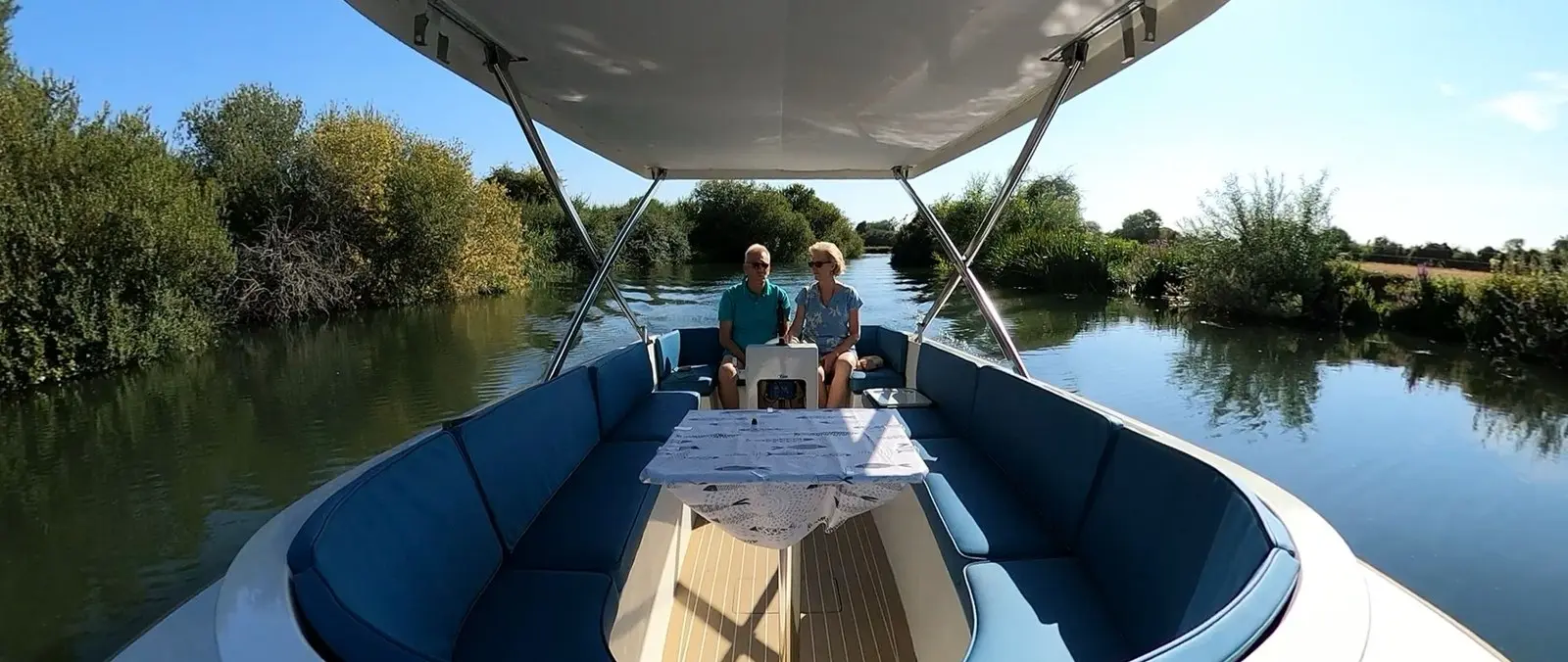
The company has also demonstrated solar-assisted electric cruising through its DB1 project, which completed a 124-mile Thames passage between Lechlade and Teddington. That earlier result illustrates what can be achieved with a vessel designed and operated around energy efficiency. It should not be treated as proof that a different boat with heavier loading or a faster target speed could repeat the distance.
The new handbook builds on that experience but targets readers who want to understand principles applicable to their own craft. A lightly built inland river boat and a planing motorboat have fundamentally different power needs. The best results often come when the speed and the route suit an efficient displacement-style journey.
Enjoying the journey rather than pursuing a range claim
Torkmar's publication argues that moving more slowly and integrating the onboard systems can change the experience of travel, making the journey itself more enjoyable. Quiet propulsion may encourage observation of waterways and easier conversation aboard, but the suitability of an electric system ultimately depends on the boat's mission and access to charging infrastructure.
The handbook is offered through Torkmar's downloads page and readers should obtain the latest version from the company itself. Before committing to a conversion, owners must verify specifications and legal requirements with appropriate specialists. The announcement adds an educational resource to the electric-boating discussion rather than introducing a new propulsion unit or promising unlimited range.