
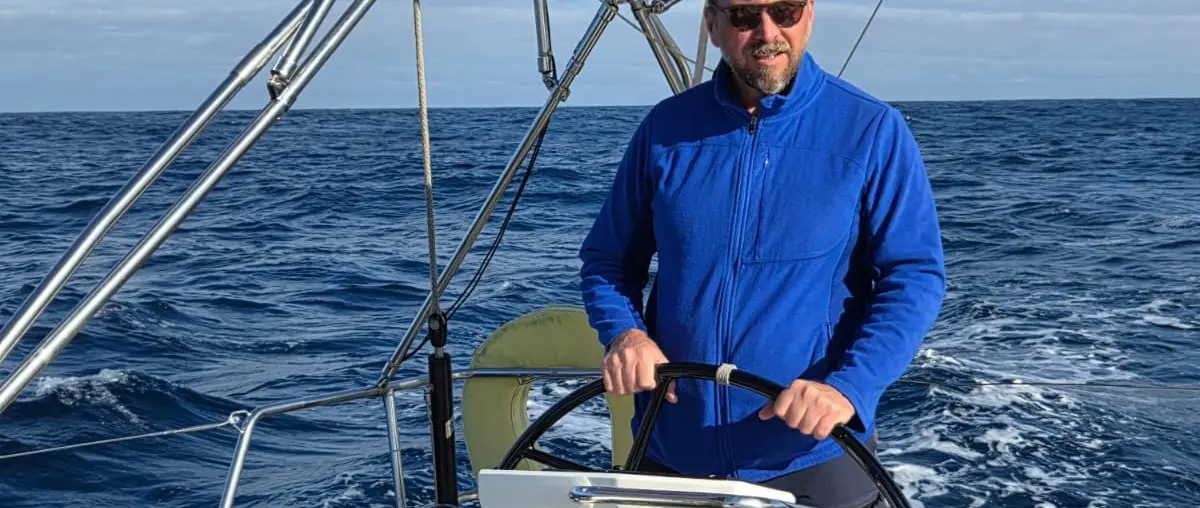
The Royal Yachting Association has named Tom Stierle as the recipient of the RYA Yachtmaster of the Year 2025 award. The Swiss-based sailor was presented with the trophy by Mike Golding OBE at Southampton International Boat Show on 18 September 2026.
The award recognises an exceptional candidate from among sailors completing the RYA Yachtmaster Certificate of Competence. Nominations come from the organisation’s worldwide network of Yachtmaster examiners, making the prize a recognition of examination performance and seamanship rather than a racing result.
A long route through practical training
Stierle first learned to sail on the Rhine and Swiss lakes before building offshore experience in the Mediterranean and Baltic. He later progressed through RYA training in Scotland, Wales and the Solent while continuing his career as a surgeon.
His preparation included an extended period of study during a three-month sabbatical, part of which he spent working aboard a hospital ship. The RYA says he used the period to deepen both theoretical knowledge and practical navigation skills before attempting the Yachtmaster examination.
The exam included an overnight Isle of Wight passage
According to the RYA, Stierle’s examination involved a demanding overnight passage around the Isle of Wight with tidal gates and a transit through the Needles at sunrise. That kind of assessment tests practical decision-making under real navigation and timing constraints rather than knowledge alone.
Yachtmaster certification is not awarded through a single compulsory course. Candidates must first build sufficient experience and qualifying sea time before taking the practical examination, often using a series of training courses to prepare for that assessment.
What the award means for aspiring skippers
The story is useful to recreational sailors because it shows that advanced qualifications are built through accumulated practice, navigation, passage planning and judgement. The award recognises one candidate, but the route to competence is relevant to anyone progressing from local sailing toward more demanding cruising.
For Leisure Boat Guide readers, the key point is that formal training works best when paired with substantial time on the water. Courses can structure learning, while real passages expose skippers to the changing conditions and decisions that cannot be reproduced fully in a classroom.