
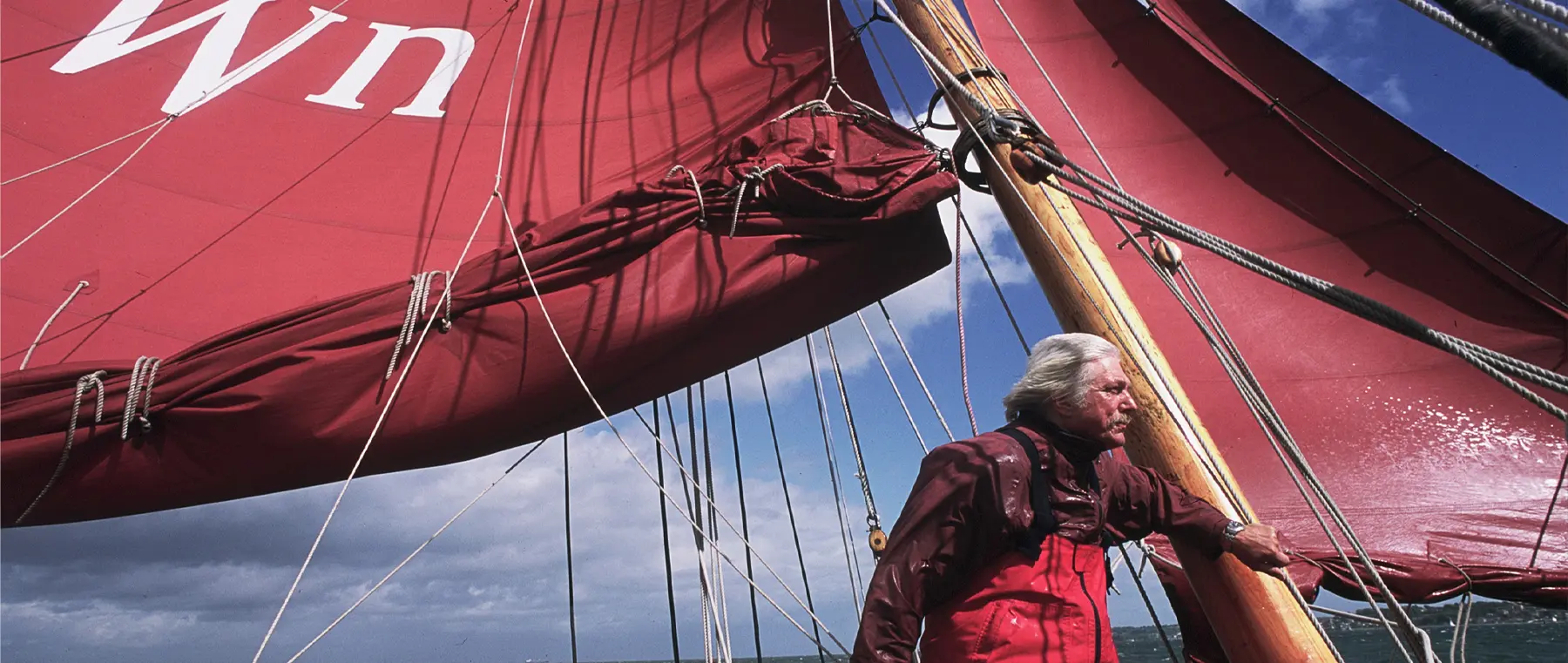
The Boat Building Academy in Lyme Regis is introducing its first Traditional Navigation course, led by sailor, author and navigation instructor Tom Cunliffe from 16 to 20 November 2026. The five-day programme is designed to give modern sailors the ability to establish position, shape a course and account for tidal effects without depending on electronic navigation systems.
Navigation without GPS is the point, not nostalgia
The course focuses on paper charts, conventional position fixing, course shaping and tidal calculations. The Academy says students will work with real-world charted locations around the British Isles and across the English Channel rather than simplified classroom exercises, so the methods can be related directly to practical coastal and offshore passage planning.
That makes the course relevant even on boats equipped with modern chartplotters and phones. Electrical faults, damaged displays, lost charging capacity or a failed antenna can remove several layers of electronic navigation at once, while a marked paper chart, log and basic instruments remain independent of the boat’s power and data network.
Cunliffe brings pre-GPS ocean experience
Cunliffe’s offshore sailing experience began long before GPS became routinely available to leisure sailors. The Academy is using that background to teach traditional methods as an operational backup rather than presenting them only as maritime history.
The syllabus includes position fixing, course planning and tidal effects, with practical passage-planning exercises intended to show how those calculations work when a yacht is moving through real geography. Students are expected to finish the course able to establish where they are and find a safe harbour using non-electronic methods.
A five-day course in Lyme Regis
The November course runs for five days at the Boat Building Academy and is currently listed at £795, with a minimum of five attendees required for it to proceed. The Academy has also listed a further Traditional Navigation course for November 2027.
This is not a substitute for the electronic-navigation training most skippers now use every day. Its value is redundancy: understanding what the electronics are calculating, retaining the ability to challenge an implausible position and having a workable method when the screen or power supply is no longer available.
Traditional skills still support modern seamanship
For leisure sailors, the useful lesson is broader than whether to carry a paper chart. Good navigation still depends on maintaining a mental picture of the boat’s position, understanding tide and course, checking multiple sources and recognising when an instrument is telling you something that does not make sense.
Modern electronics make those tasks faster and more accurate, but they work best when the skipper understands the underlying navigation. Courses that deliberately remove the screen can therefore strengthen rather than reject modern bridge practice by making the crew less dependent on any single system.