
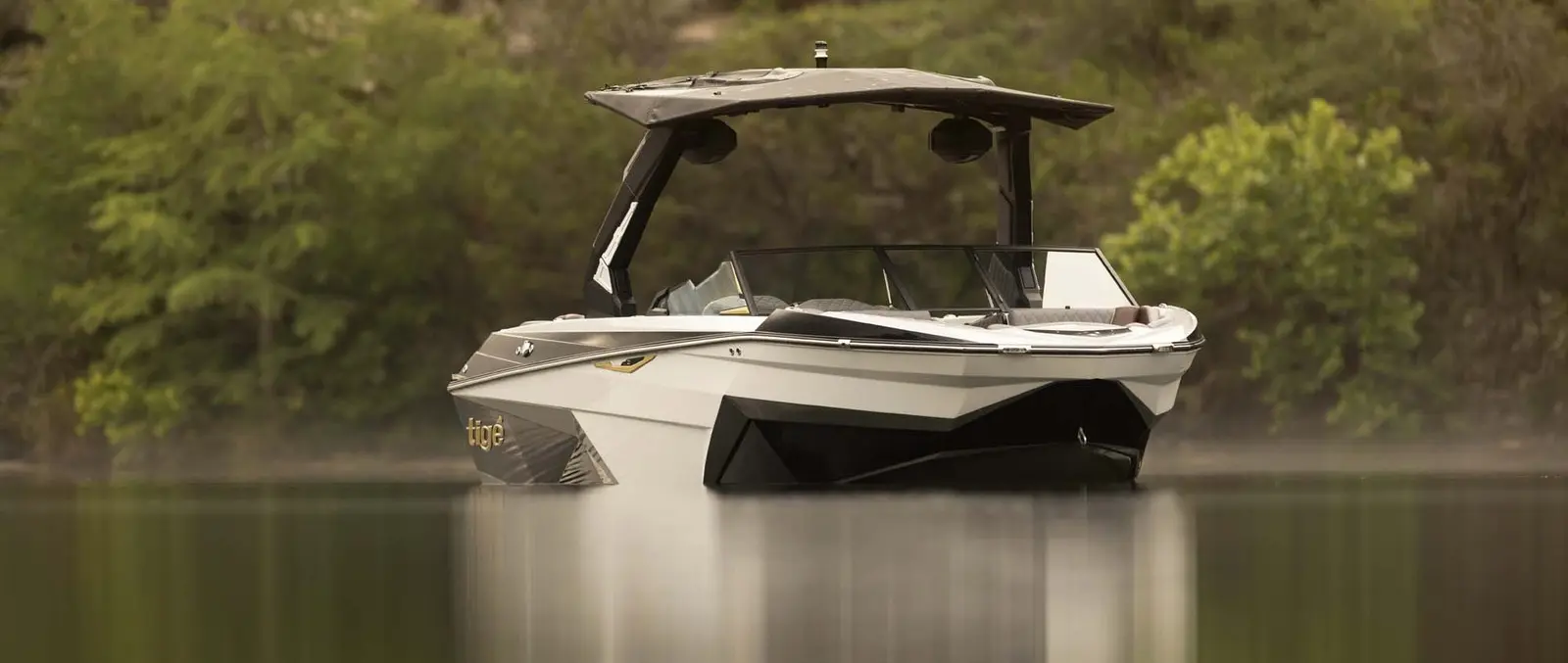
A new 21-foot entry in the Z Class
Tigé Boats has introduced the 2027 Z1 as a new 21-foot member of its wake and surf line-up. Although first announced in July, the model is relevant to the autumn purchasing season as owners compare next-year boats and arrange demonstrations. Its size places it comfortably within the under-twelve-metre leisure segment, where trailerability and manageable storage remain significant buying considerations.
The Z1 is intended to deliver the wave-shaping and premium appointments associated with Tigé's larger craft in a shorter hull. A compact wakeboat can be attractive to families who use inland lakes rather than long coastal passages, but a smaller overall length does not automatically mean low weight or inexpensive ownership. Ballast, tower height and trailer dimensions must be checked for the actual model and options.
Hull, ballast and wake control
The manufacturer positions the Z1 around consistent wakesurf and wakeboard performance. In this category the wave is created by a combination of hull design, controlled speed, ballast distribution and wake-adjustment hardware. A prospective owner should ask for a demonstration with the expected number of crew aboard and a rider at the level the family actually intends to support.
It is especially important to distinguish manufacturer claims from independently verified water tests. A promotional photograph cannot show how a boat handles chop, how long it takes to fill or drain ballast, or how easy the controls are for a less experienced driver. Buyers will learn more from a real outing that includes several manoeuvres, not just a perfectly staged surf pass.
Everyday cockpit considerations
A specialist towboat still needs to work as a family dayboat when nobody is riding. The Z1's compact length makes circulation, storage and seating layout important. Owners should check where boards, ropes, flotation devices and coolers can be secured without blocking access, and whether the passenger seating remains comfortable during ordinary cruising.
The tower and seating arrangement also affect loading, docking and overnight storage. Bridge clearance or garage height can become a deciding issue for an owner who intends to tow the boat home. Inspecting the boat both with its sporting equipment in use and in its stowed configuration gives a clearer picture of whether the design suits the family's routine.
Safety and waterways come before wave size
Wakesurfing relies on the boat operating in a controlled manner, typically at speeds lower than many conventional towing activities. That does not remove the risk created by a heavy boat, ballast and wake energy near other water users. Operators should obey local wake and distance rules, keep riders well clear of the propeller and follow the manufacturer's approved procedures.
The towing driver needs an unobstructed view and an attentive observer where required by local regulations. Riders should use suitable personal flotation devices, and everyone should understand communication signals before leaving the dock. A dealer demonstration is a good opportunity to ask how the boat's controls support safe operation, but training remains the skipper's responsibility.
Tigé's Z Class development
Tigé builds performance-oriented towboats at its facility in Abilene, Texas, and the Z Class sits within a range that also includes larger models and its ATX sister brand. The Z1 extends the line towards customers seeking a smaller physical footprint without abandoning the dedicated watersports concept. That makes it a relevant comparison against other compact wakeboats, not against every type of recreational craft.
Buyers should verify final 2027 specifications, power options, pricing, delivery dates and warranty coverage through the manufacturer and authorised dealer. The launch's central claim is clear: a shorter 21-foot hull designed around purpose-built wake and surf capability. Its suitability depends on the household's tow vehicle, local lake rules and genuine balance between sports use and ordinary family boating.