
A new electric drive option for North American sailors
French marine propulsion manufacturer TEMO has brought its OUTPOD system to the United States, following a public appearance at the Annapolis United States Sailboat Show in October 2026. The design combines a submerged electric pod with an externally mounted transom arrangement, offering a different approach from a permanently installed saildrive or a conventional electric outboard. The company says orders can now be placed through its American operation.
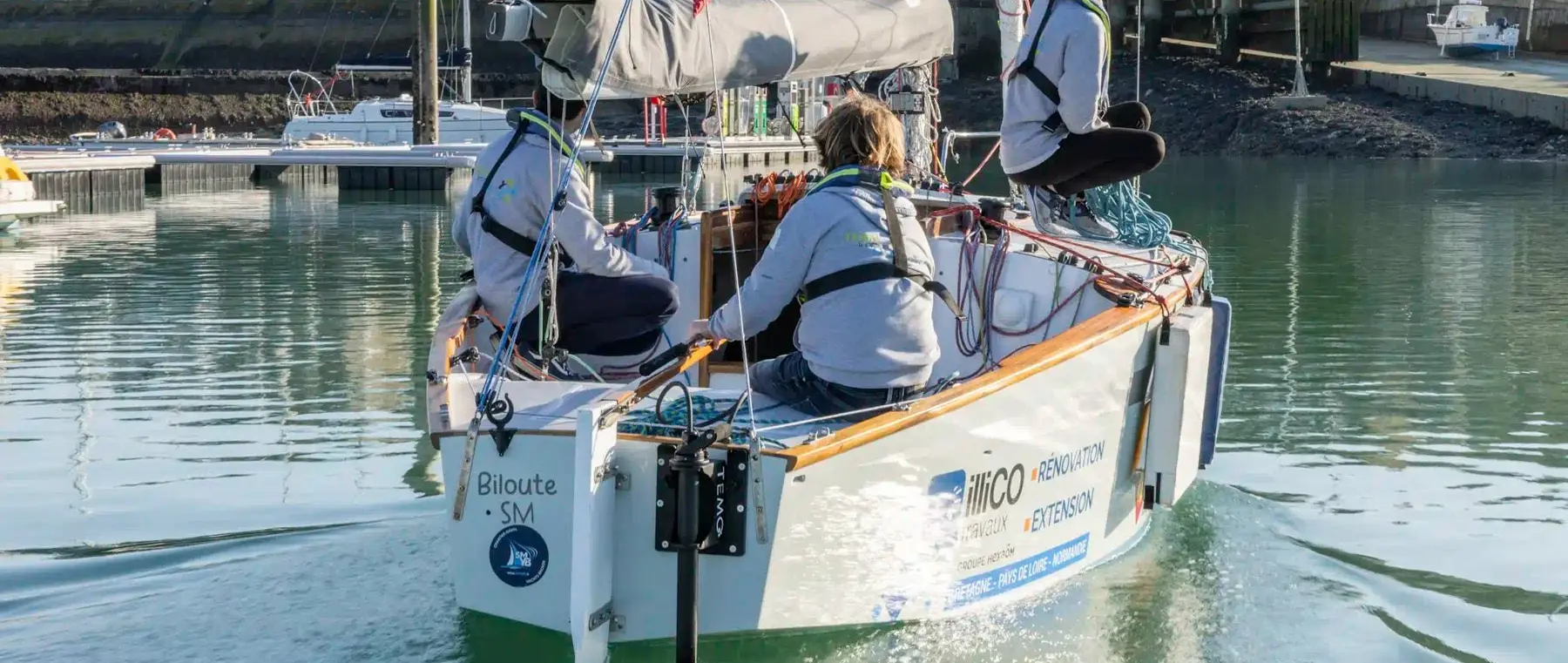
The important design decision is the position of the motor. Instead of cutting a large opening through a hull to install an underwater pod, OUTPOD uses a bolt-on fitting at the transom. For owners considering a refit, this could reduce the structural work required, although the actual installation still needs assessment of the vessel's stern arrangement and the demands placed on its structure.
The system is intended primarily for sailing craft that use propulsion during manoeuvring and in calms. TEMO has been developing electric marine equipment in Europe and now supports American customers from Portland, Maine. Its North American introduction makes the products accessible to another market, but prospective buyers should still check installation support, lead times and the warranty conditions applicable to their own location.
Removing the motor's drag under sail
One of the most unusual features is an adjustable vertical mast that allows the pod to be raised clear of the water. The motor can be lifted using a halyard, reducing the drag of carrying an unused propeller below the hull during a passage under sail. A removable slide arrangement also helps owners retrieve the pod for maintenance or storage without treating it as a permanent underwater fitting.
On small sailboats, drag can have a noticeable effect when wind is light. The ability to lift a propulsion unit is therefore relevant even if an owner is already satisfied with the power available for harbour work. The practical benefit will depend on how easily the system can be raised, where its components fit and whether the particular installation interferes with steering or deck activities.
TEMO also describes a rotating arrangement that supports manoeuvring and energy recovery. A reversible electric machine may be able to recover some power while sailing, but hydrogeneration is not free energy: it creates resistance and depends on suitable speed and electrical management. Buyers should ask for realistic performance data for their intended boat rather than assume that the equipment will eliminate the need for shore charging.
OUTPOD 1000 and 3000 power options
The range includes the OUTPOD 1000 and OUTPOD 3000. TEMO publishes a 1,300-watt rating and approximately 30 kilograms of static thrust for the smaller unit, while the larger model is listed at 3,100 watts and 67 kilograms of static thrust. These are engineering specifications, not direct equivalents to the cruising speed a particular yacht will achieve under power.
Both versions use a 48-volt electrical architecture. The manufacturer places the motor at the transom while allowing the battery mass to be carried farther inside the vessel, potentially improving weight distribution compared with a heavy outboard and integrated battery hanging off the stern. A complete installation still needs correct cable sizing, protection, charging arrangements and a secure battery location.
TEMO offers removable battery packs of approximately 2.3 kilowatt-hours, as well as arrangements intended to work with compatible existing batteries. The amount of usable motoring time will depend on power demand, hull resistance and environmental conditions. A boat moving against a current can consume its available energy much faster than the same boat travelling in sheltered water at a lower throttle setting.
Costs and practical installation questions
The manufacturer announced North American list pricing of $2,600 for the OUTPOD 1000 pack and $5,400 for the OUTPOD 3000 pack at the October launch. Those figures should be treated as announced prices rather than guaranteed installed costs. Taxes, batteries, mounting work, electrical integration and delivery conditions may change the amount an owner actually pays.
For a retrofit, a competent marine electrician and the boatbuilder's structural guidance are advisable before fitting the system. The stern must accept the mounting loads, and the motor's travel needs clearance for the full lifting range. Owners should also verify how the unit is secured in rough weather and what happens if the lifting or electrical equipment becomes unavailable during a passage.
TEMO promotes the ability to repair rather than routinely replace its motors and provides a three-year warranty for qualifying private use after registration. Those claims are worth considering, but buyers should review the precise exclusions and service arrangements. A reliable electric auxiliary system is as much about proper installation and support as it is about the nominal output of its motor.
Where an electric pod makes sense
OUTPOD is particularly relevant to sailors who want to avoid an outboard stored on the pushpit and are reluctant to make major changes below the waterline. The removable design and possible regeneration offer a more flexible alternative. However, it is not necessarily the right solution for every hull, especially where transom geometry, steering gear or heavy motoring demands are incompatible with the arrangement.
Owners should compare the equipment with a conventional outboard, saildrive and other electric solutions using actual propulsion requirements. A small coastal sailboat may need only short bursts of thrust, while a heavier displacement cruiser could demand sustained power for much longer periods. The correct specification is determined by expected use, not by the appeal of a new product concept.
TEMO's American introduction broadens the options for quieter auxiliary propulsion in sailing. The OUTPOD combines several practical features that may be valuable on the right boat, from lifting the motor to placing batteries inside the hull. The next meaningful step for interested owners is an installation-specific assessment and a realistic energy budget, rather than assuming that every advertised advantage will apply unchanged to their own vessel.